Quick answer: For most auto repair shops, the best floor coating is a polyaspartic (polyurea) system like Duralast® — not standard epoxy. A shop floor has to shrug off hot tires, oil and brake fluid, dropped tools, and constant traffic, and polyaspartic beats epoxy on nearly all of it: it resists hot tire pickup, handles automotive chemicals better, is roughly five times stronger, won’t yellow, and — critically for a shop — cures in about a day instead of taking your bays out of service for a week. Epoxy is cheaper up front and fine for light-duty spaces; for the heaviest truck bays, a cementitious urethane is the premium pick. The right choice comes down to how hard your shop runs.
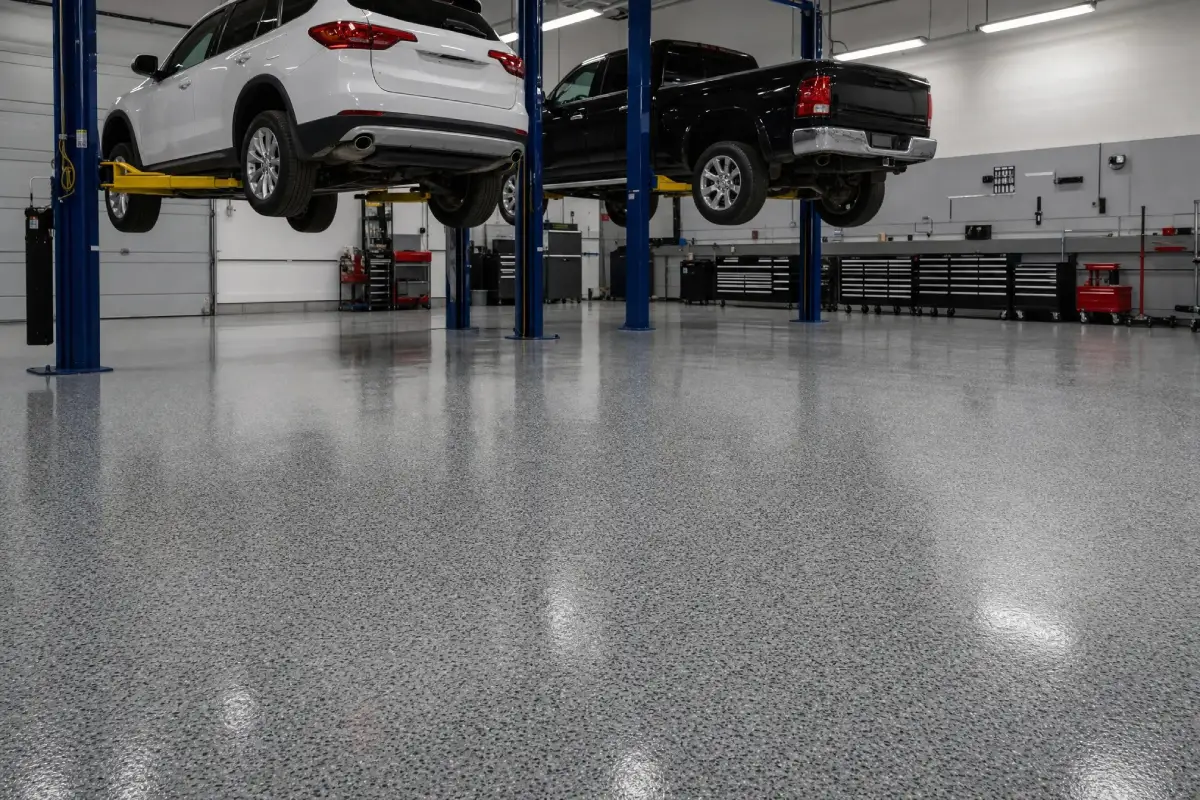
Your shop floor is working equipment, not just a surface to stand on. It takes a beating every single day — hot tires rolling in, oil and solvents spilling, tools and parts hitting the deck, jacks and lifts concentrating tons of weight on small points. The wrong coating cracks, stains, peels, and yellows within a couple of years; the right one looks sharp and holds up for a decade. So which one should you actually put down?
The short answer is that most Cleveland mechanics who do their homework end up with a polyaspartic system for their automotive floor coating, because it solves the specific problems an auto shop creates better than epoxy does. Below, we’ll walk through exactly what a shop floor has to survive, compare the real options honestly, and help you match the right coating to how hard your shop runs.
Key Takeaways
- For most auto shops, polyaspartic (like Duralast®) is the best all-around floor coating.
- It resists hot tire pickup — the #1 reason epoxy floors fail in shops.
- Polyaspartic is ~5X stronger than epoxy and more resistant to oil, salt, and chemicals.
- It cures in about a day, so your bays aren’t out of service for a week.
- Epoxy is cheaper up front; cementitious urethane is the pick for the heaviest truck bays.
What an Auto Shop Floor Actually Has to Survive
Before you can pick the best coating, it helps to be honest about the punishment a working shop floor takes. A good auto-shop coating has to stand up to all of this at once:
- Hot tire pickup: warm tires that grip and peel a weak coating right off the concrete — the signature auto-shop failure.
- Automotive chemicals: motor oil, gasoline, brake fluid, antifreeze, battery acid, and harsh degreasers.
- Impact: dropped wrenches, parts, and equipment that chip and crack brittle coatings.
- Heavy point loads: floor jacks, jack stands, and lift posts concentrating thousands of pounds on small areas.
- Abrasion and traffic: constant rolling tool carts, creepers, and vehicles grinding at the surface.
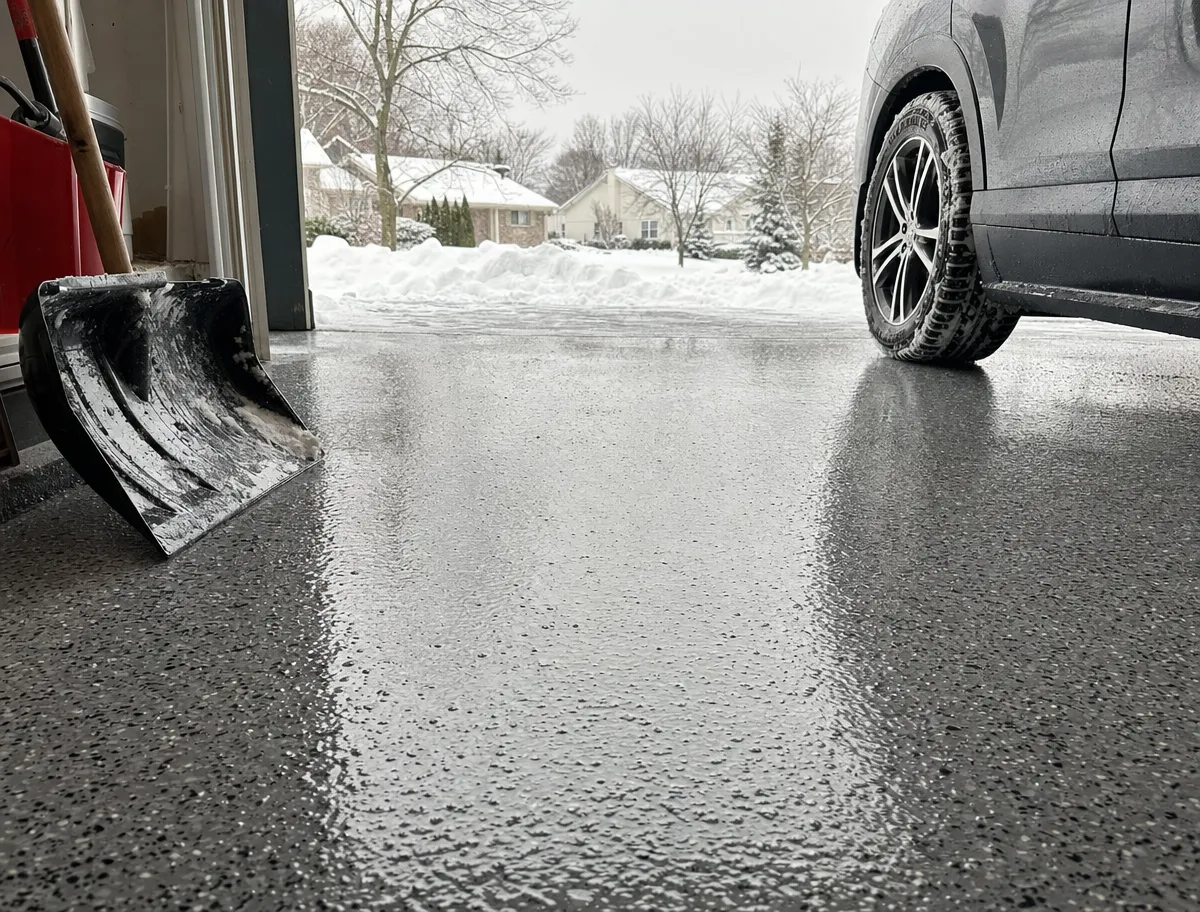
- Road salt and moisture: Cleveland winters drag salt and slush in on every vehicle.
Any coating can look good on day one. The best floor coating for an auto repair shop is the one that still looks good — and still protects the slab — after years of all of the above.
The Main Options: Epoxy, Polyaspartic, and Urethane
Three coating families dominate shop floors, and they’re not equal. Epoxy is the traditional, budget-friendly choice — a hard, glossy, two-part resin with decent chemical resistance. Polyaspartic (technically a fast-curing aliphatic polyurea) is the modern high-performance option: stronger, more flexible, UV-stable, and far faster to cure. And cementitious urethane is the heavy-duty industrial tier, built for the most extreme abuse like daily pressure-washing and heavy truck traffic.
For the typical light-to-medium auto repair shop, the real decision is epoxy versus polyaspartic — so that’s where it pays to look closely.
Why Hot Tire Pickup Ends Most Epoxy Floors
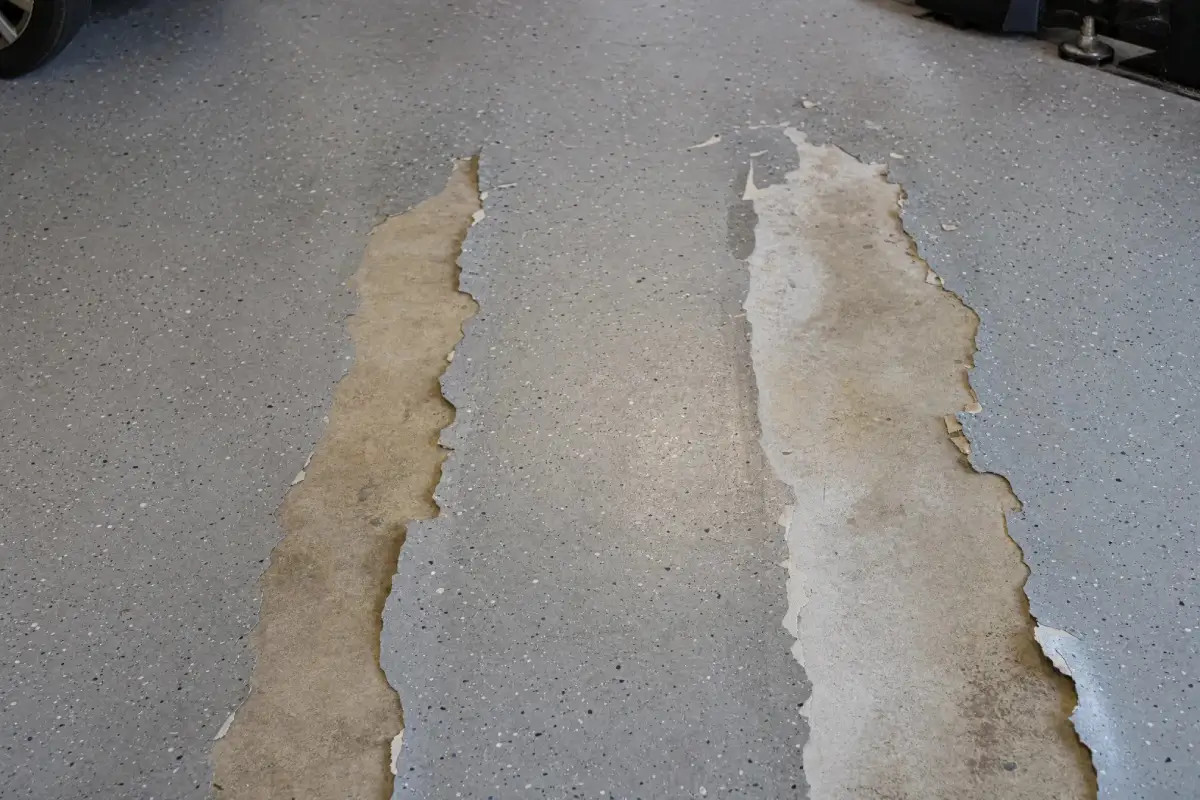
If you’ve seen an epoxy shop floor with patches lifted away right where the tires sit, you’ve seen hot tire pickup — and it’s the single most common reason epoxy fails in an auto shop. Here’s what happens: a vehicle’s tires heat up during driving, then cool on the coated floor. As the rubber cools, it grips the coating, and when the car pulls out, the tire can peel the coating right off the concrete.
Standard epoxy is especially vulnerable because it’s rigid and bonds less flexibly to the slab. Polyaspartic coatings resist hot tire pickup thanks to a stronger, more flexible bond — one of the clearest, most practical reasons mechanics choose them. In a shop where cars pull in and out all day, this difference alone can decide how long your floor lasts.
Epoxy vs. Polyaspartic for an Auto Shop
Here’s an honest head-to-head on the factors that matter most in a working shop:
| Factor | Standard Epoxy | Polyaspartic (Duralast®) |
| Hot tire pickup | Prone to it | Resists it |
| Oil & chemical resistance | Good | Better |
| Abrasion & impact | Good | ~5X stronger than epoxy |
| UV stability | Yellows over time | UV-stable, won’t yellow |
| Cure time / downtime | Several days | About 1 day |
| Up-front cost | Lower | Higher |
| Lifespan & long-term value | Shorter | Longer |
Epoxy isn’t a bad product — it’s hard, chemical-resistant, and easy on the budget, and it’s perfectly fine for a light-duty space. But on the factors that decide an auto shop floor’s life, polyaspartic wins most of the matchups, and the up-front savings on epoxy often disappear once you factor in a shorter lifespan and the downtime of recoating.
What Cleveland Mechanics Actually Use (and Why)
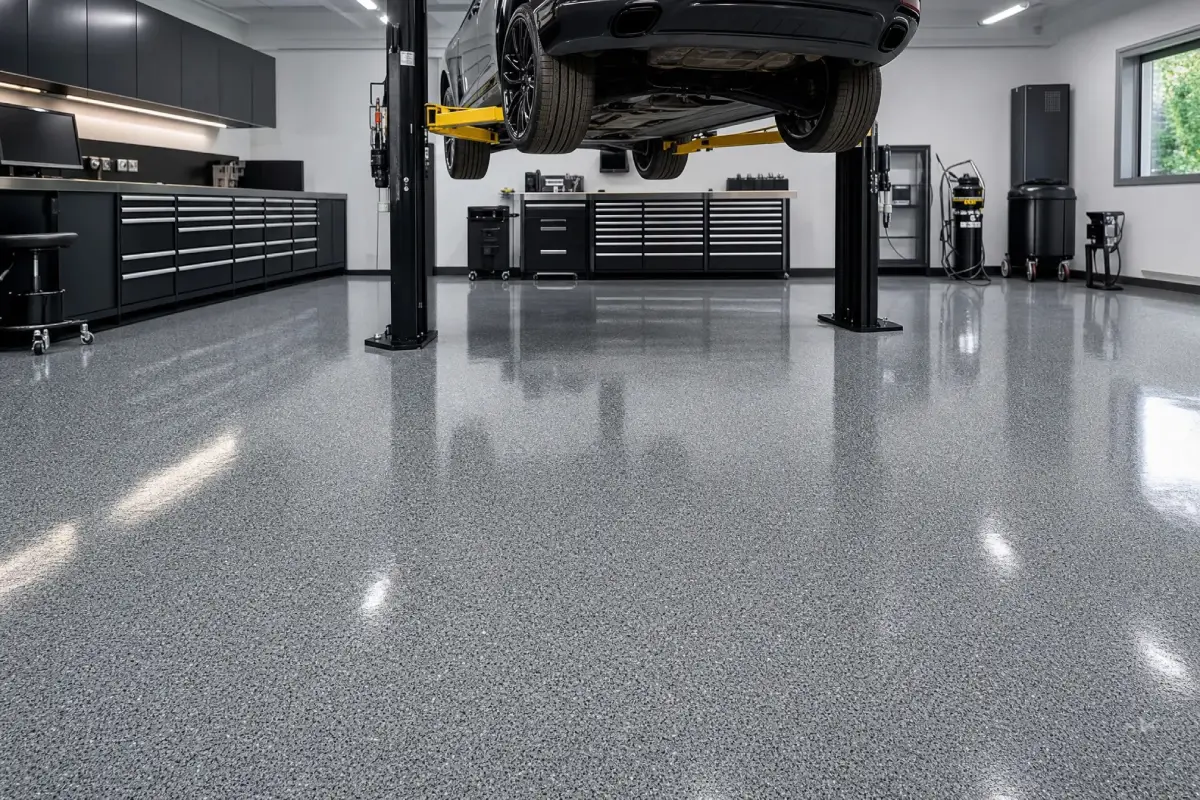
Put it all together and a clear pattern emerges. For the typical Cleveland auto repair shop — oil changes, brakes, tires, general repair — a polyaspartic system (like the Duralast® system we install) is the sweet spot: it handles the chemicals, resists hot tire pickup, takes the abuse, looks sharp, and goes back into service fast.
There are sensible variations. Some shops use a hybrid build — an epoxy base coat for thickness and cost savings, topped with a polyaspartic coat for the chemical resistance, UV stability, and hot-tire protection where it counts. And for the most extreme spaces — heavy truck bays, transmission shops, anywhere the floor gets pressure-washed daily — a cementitious urethane is worth the premium. The point is that the best system is the one matched to your shop’s real workload, not a one-size-fits-all answer.
Don’t Forget Downtime: The One-Day Advantage
Here’s a factor mechanics feel more than homeowners do: every day your bays are offline, you’re losing money. This is where polyaspartic’s fast cure becomes a business decision, not just a technical spec. A standard epoxy floor can take several days — sometimes up to a week — to cure hard enough for vehicle traffic. A polyaspartic system typically cures in about a day, so it can often go down over a weekend and have lifts running again Monday morning.
For a busy shop, that difference can be worth more than the entire cost gap between the two coatings. When you price out a floor, price the downtime too — it’s a real part of the math.
Prep Is Everything — No Matter Which Coating You Choose
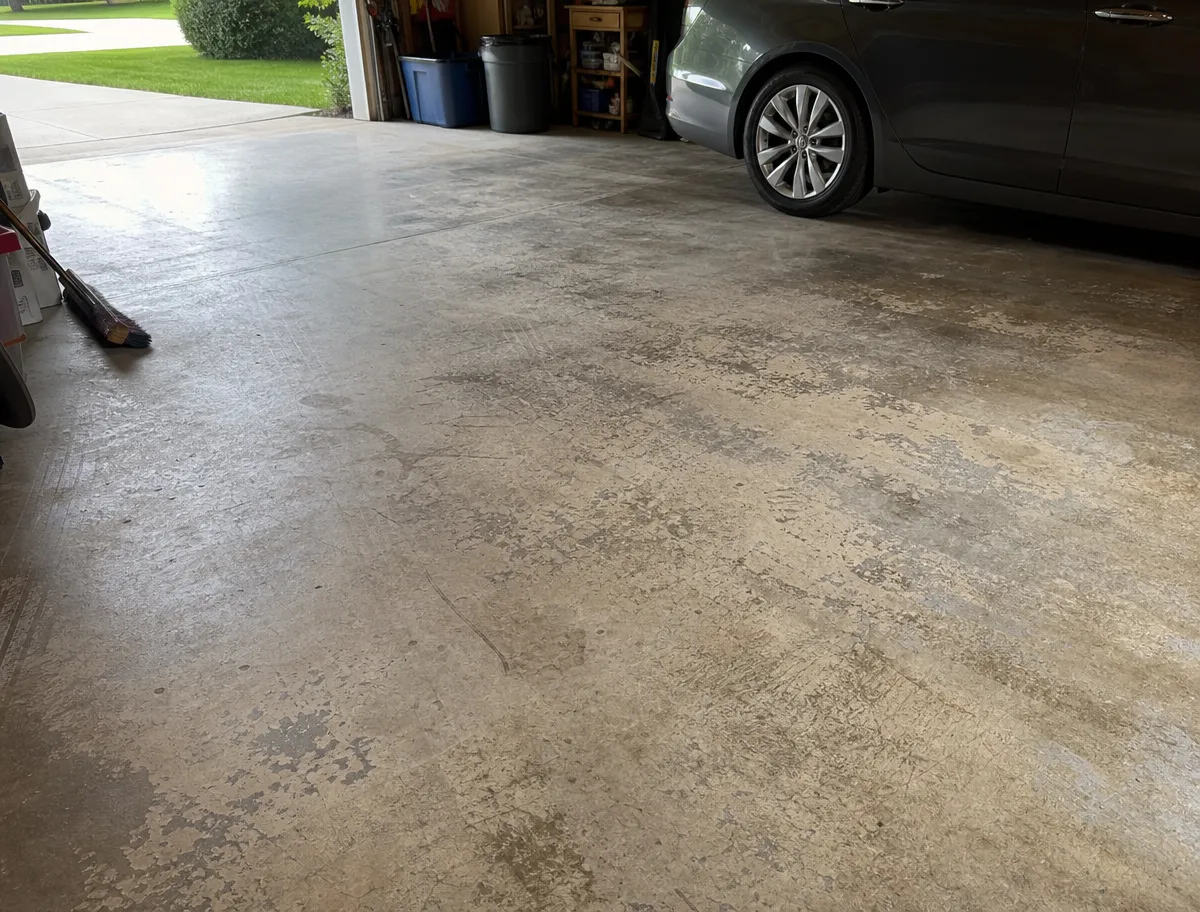
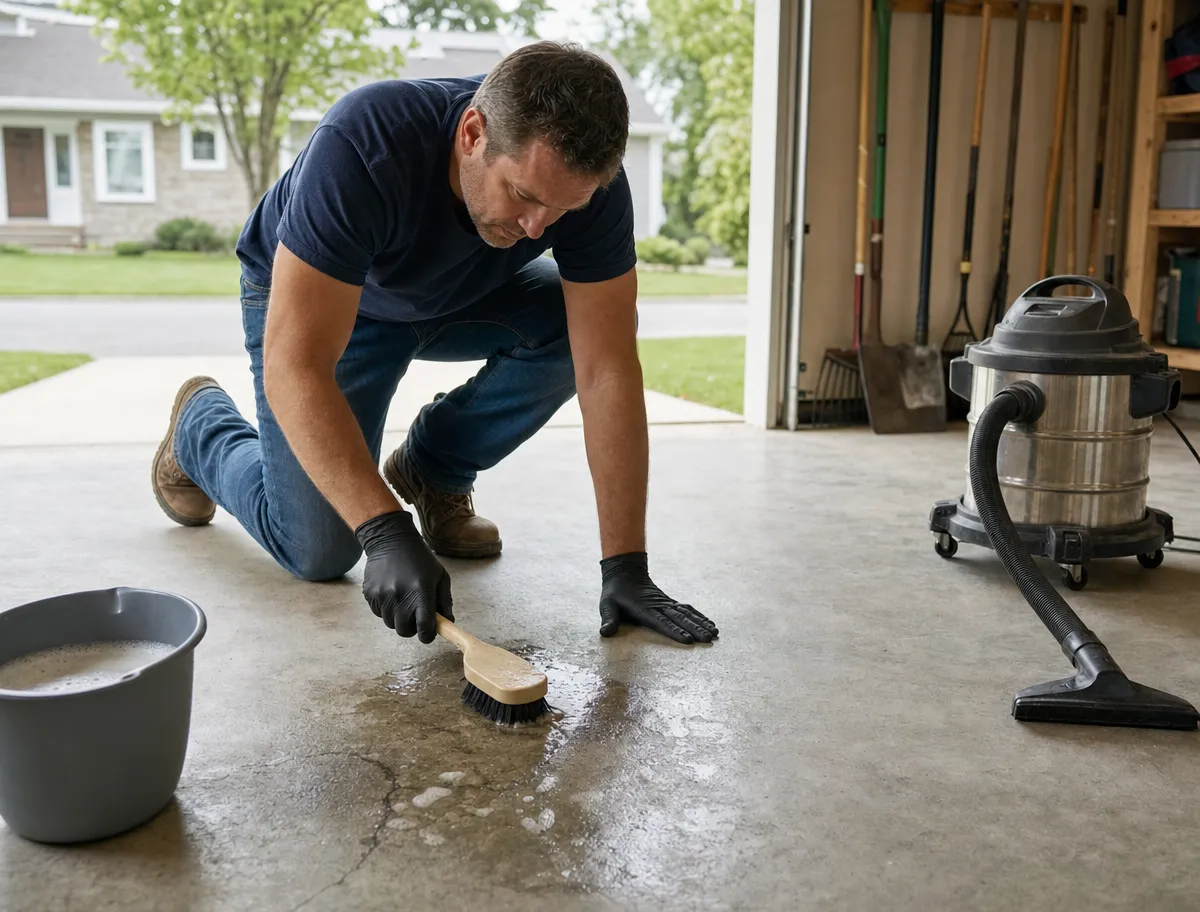
One truth cuts across every coating type: most floor failures come from poor surface preparation, not the product. A coating can only bond as well as the concrete beneath it allows, and an auto shop slab is often contaminated with years of oil soaked deep into the pores.
That’s why professional prep is non-negotiable. At J&P Coatings, every floor starts with diamond grinding to clean and profile the concrete so the coating bonds mechanically, followed by crack and pit repair and a seamless, layered installation — the meticulous process that’s made us Cleveland’s #2 national Duralast® installer. A premium coating rolled over an oily, unground slab will fail no matter how good the product is, which is the main reason DIY shop floors so often peel within a season.
Best Auto Shop Floor Coating, at a Glance
- Polyaspartic (Duralast®) is the best all-around coating for most auto repair shops.
- It resists hot tire pickup, handles oil/chemicals, is ~5X stronger, and won’t yellow.
- It cures in ~1 day — far less shop downtime than epoxy’s several days.
- Epoxy is cheaper up front; cementitious urethane suits the heaviest truck bays.
- Coating a shop floor in Greater Cleveland? Call J&P Coatings at (440) 557-3141 or request a free quote.
Frequently Asked Questions
What is the best floor coating for an auto repair shop?
For most shops, a polyaspartic (polyurea) system like Duralast®. It resists hot tire pickup, handles oil and automotive chemicals better than epoxy, is roughly five times stronger, won’t yellow, and cures in about a day. Epoxy is cheaper but less durable; cementitious urethane is the premium pick for the heaviest truck bays.
Is epoxy or polyaspartic better for an auto shop?
Polyaspartic, for most shops. It beats standard epoxy on hot tire pickup, chemical and abrasion resistance, UV stability, and cure time. Epoxy costs less up front and works for light-duty spaces, but it yellows, is prone to hot tire pickup, and takes days to cure.
What is hot tire pickup, and does it ruin epoxy floors?
It’s when warm tires cool on the floor and peel the coating off the concrete as the vehicle moves. Standard epoxy is especially prone to it because it’s rigid. Polyaspartic resists it thanks to a stronger, more flexible bond — a major reason it’s preferred for shops.
How long does an auto shop floor coating last?
A professionally installed polyaspartic floor can last many years in a working shop — considerably longer than a typical epoxy floor, which often needs recoating within five to ten years. Lifespan depends heavily on prep and matching the system to the workload.
How long does my shop have to close for the floor?
With polyaspartic, usually about a day — you can often coat over a weekend and run bays again quickly. Standard epoxy can take several days to a week to cure before it handles vehicle traffic, meaning much more lost revenue.
Related Guides
- Automotive Floor Concrete Coatings
- Automotive Floors
- Polyaspartic Floor Coatings
- Garage Floor Coatings
- Compare Flooring Options
The Bottom Line
The best floor coating for an auto repair shop is the one built for what a shop actually dishes out — and for most Cleveland shops, that’s a professionally installed polyaspartic system. It resists hot tire pickup, laughs off oil and salt, takes the impacts and traffic, stays bright instead of yellowing, and gets your bays back in service in about a day. Epoxy can make sense on a tight budget or in a light-duty space, and the heaviest truck bays may warrant cementitious urethane — but for the everyday working shop, polyaspartic is what holds up.
Thinking about coating your shop floor? J&P Coatings installs automotive and industrial shop floor coatings across Greater Cleveland and Northeast Ohio, matched to your shop’s workload and installed over properly prepared concrete. Reach out for a free, no-pressure quote.
About J&P Coatings: J&P Coatings is a family-owned floor coating contractor based in Middlefield, OH, serving Greater Cleveland, Northeast Ohio, and Northwestern Pennsylvania since 2018. Recognized as the #2 national Duralast® installer in 2024 with 120+ five-star reviews, J&P installs Duralast® polyaspartic and epoxy systems for garages, automotive and industrial shops, basements, and commercial floors over professionally diamond-ground concrete, backed by a limited transferable warranty. Call (440) 557-3141 for a free quote.