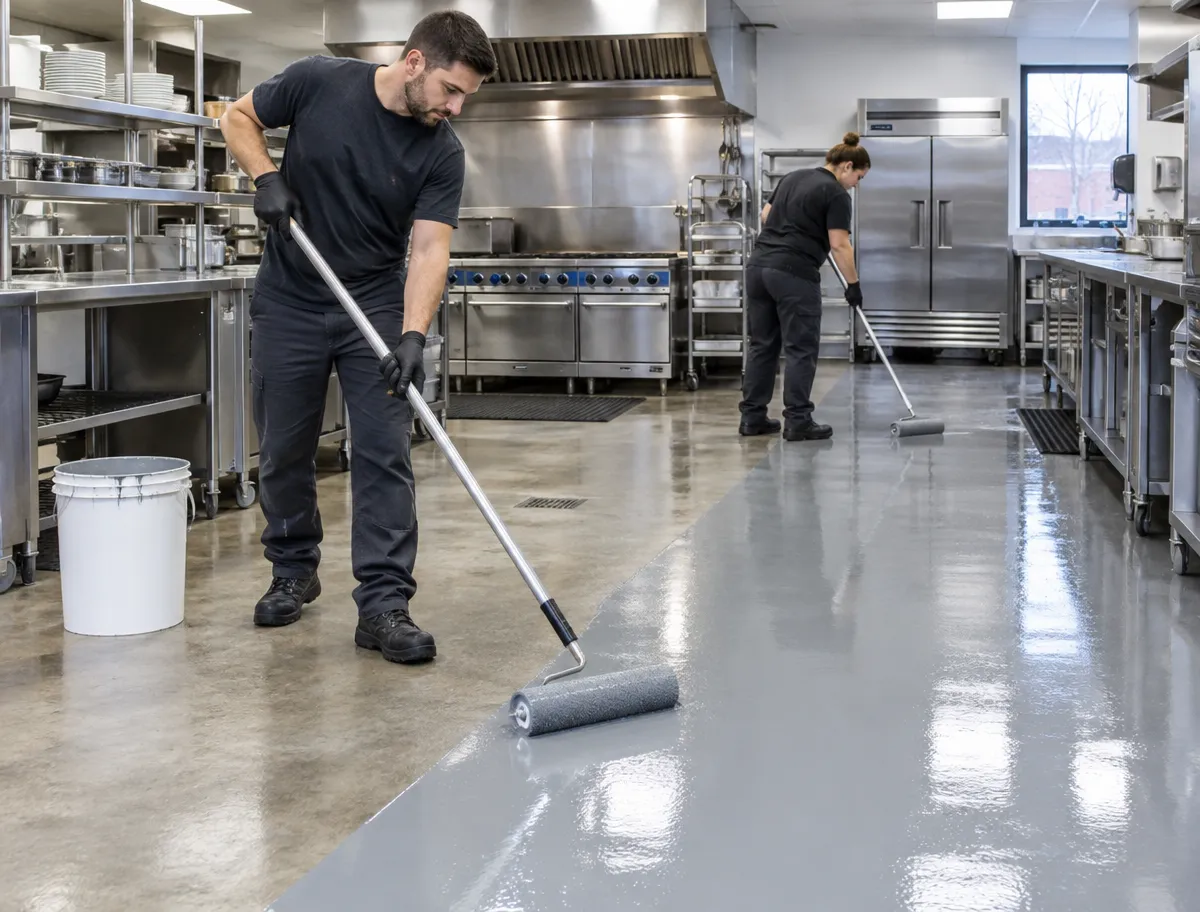
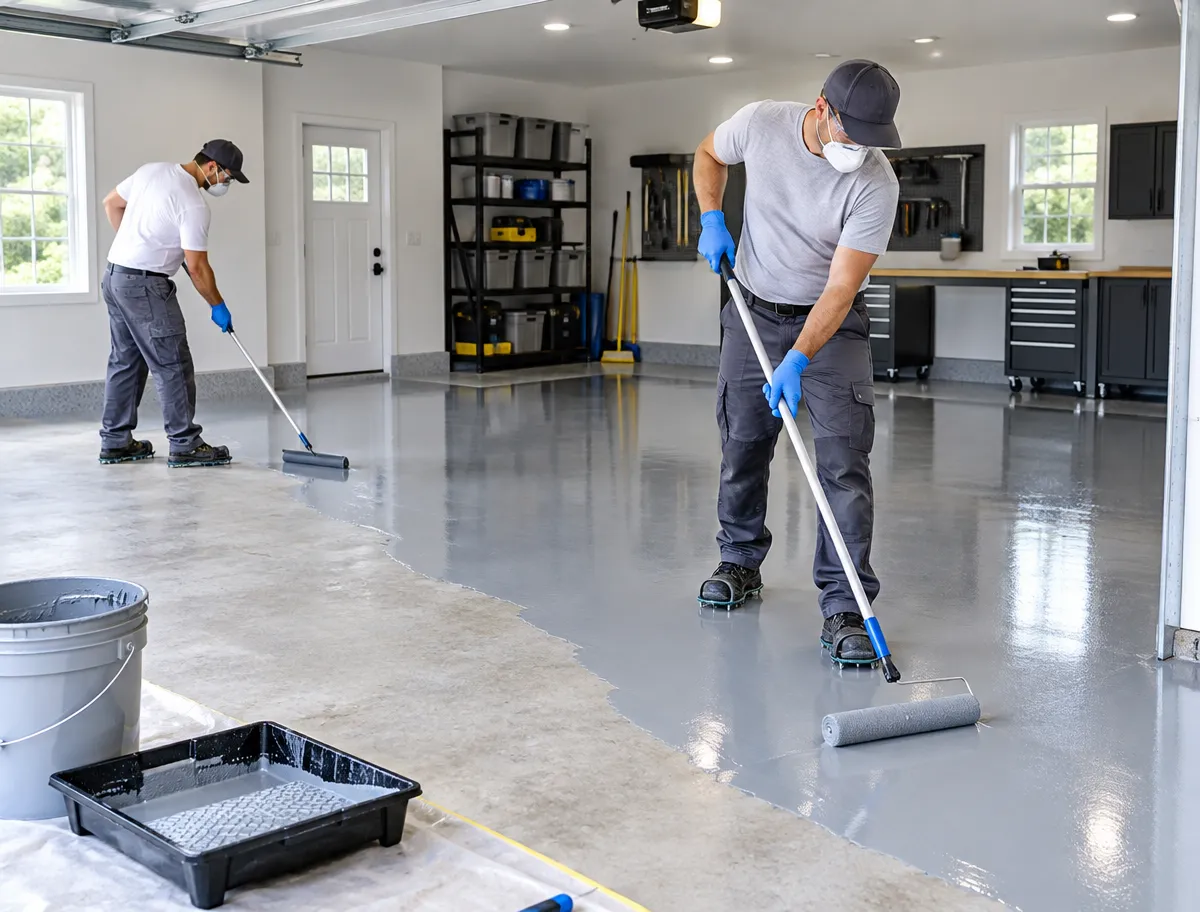
Auto repair shop floor coating in Greater Cleveland typically runs $6 to $8 per square foot for a commercial-grade polyaspartic system, which is meaningfully higher per square foot than residential garage pricing — a direct result of the chemical resistance, traffic load, and prep requirements a working service bay demands that a homeowner’s two-car garage doesn’t.
Cost by Shop Size
Total project cost scales with square footage, but per-square-foot pricing also shifts slightly at different scales due to setup and mobilization costs being spread across more area on larger jobs.
| Shop Size | Typical Sq Ft | Estimated Cost Range |
| Small independent shop (1-2 bays) | 1,500 – 2,000 sq ft | $9,000 – $16,000 |
| Mid-size shop (3-4 bays) | 2,000 – 3,000 sq ft | $14,000 – $24,000 |
| Larger commercial facility (5+ bays) | 3,000 – 4,000+ sq ft | $21,000 – $32,000+ |
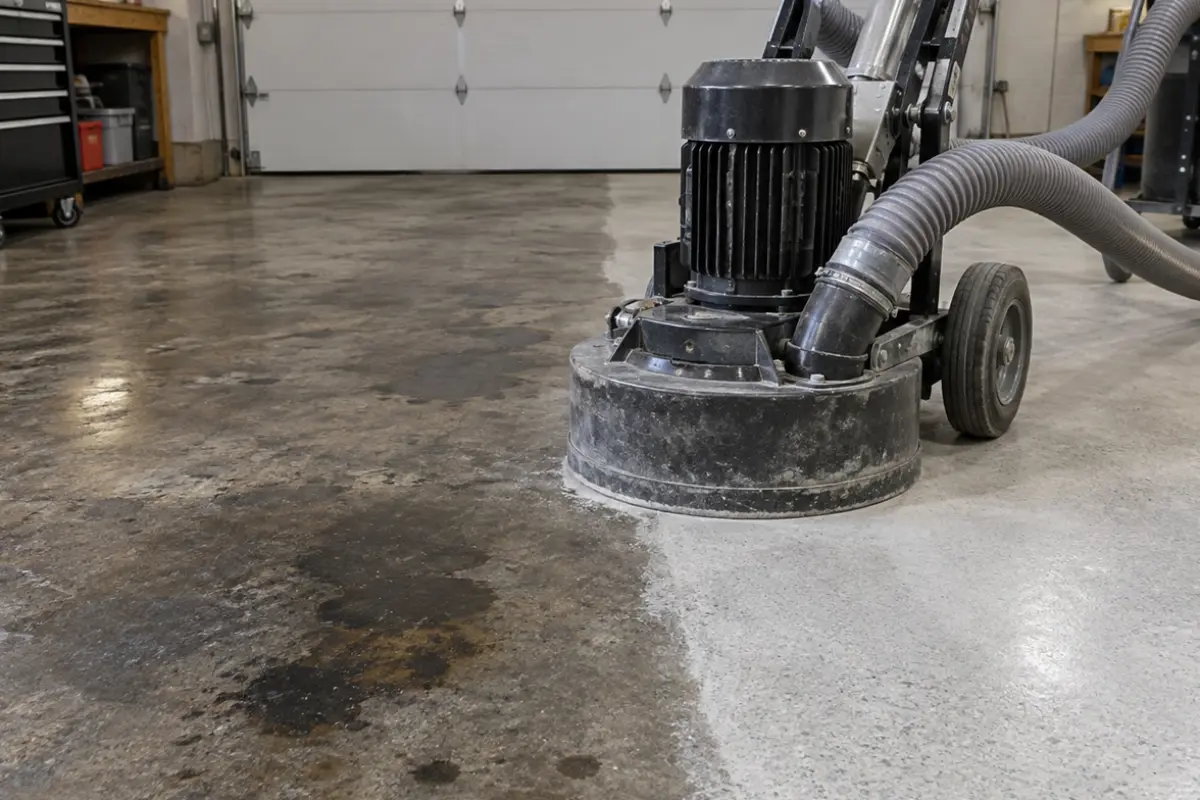
Why shop pricing isn’t just “garage pricing times four”: a service bay isn’t simply a bigger garage — it has lift pads bearing concentrated point loads, drain locations requiring careful edge work, and typically more severe oil contamination requiring deeper diamond grinding before coating can even begin.
Why Commercial-Grade Chemical Resistance Costs More
A residential garage occasionally sees a motor oil drip; a working service bay sees constant exposure to oil, brake fluid, coolant, gasoline, and industrial degreasers, often simultaneously across multiple bays. This isn’t a cosmetic difference — it requires a system genuinely specified for that chemical load, not a residential-grade product applied at commercial scale. Polyaspartic systems hold up to this exposure significantly better than standard epoxy, but the material and application depth needed for genuine commercial chemical resistance is part of what separates shop pricing from residential pricing per square foot.
What OSHA Compliance Adds to the Conversation
Per OSHA’s walking-working surfaces standard (29 CFR 1910.22), employers must keep workroom floors clean and, to the extent feasible, dry, and maintain walking-working surfaces free of hazards like spills and corrosion. A properly coated shop floor — non-porous, easy to keep clean, resistant to the chemical spills a service bay generates — directly supports meeting this standard in a way bare, oil-stained concrete does not. This isn’t the primary driver of coating cost, but it’s a genuine compliance consideration shop owners should factor in alongside the aesthetic and durability benefits.
What Drives Cost Within a Given Shop Size
- Existing floor condition: heavy oil contamination or extensive cracking requires more prep time and material than a relatively clean, sound slab.
- Number of lift locations: each lift pad needs careful evaluation and detail work around anchor points.
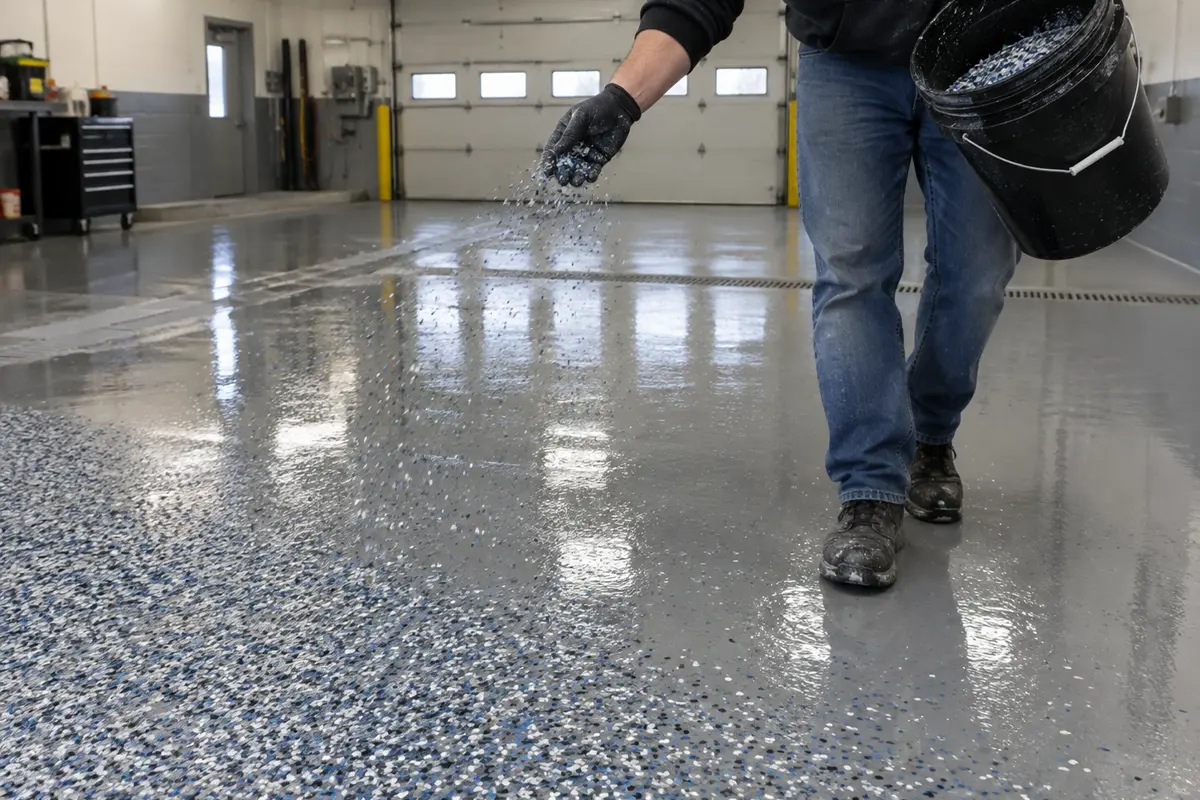
- Chip density and finish choice: heavier decorative chip broadcast for service bays costs more than a lighter or solid-color finish.
- Scheduling around business operations: phasing work bay-by-bay to keep the shop partially operational can add time versus a full shutdown.
Getting an Accurate Number for Your Shop
Square footage alone doesn’t determine your actual quote — an on-site evaluation of your specific bay layout, lift locations, and existing concrete condition is what produces a reliable number. J&P provides free, same-day on-site estimates for exactly this reason, evaluating oil contamination depth, existing cracks, and traffic patterns before quoting.
Frequently Asked Questions
Why does auto shop floor coating cost more per square foot than a home garage?
Commercial service bays require deeper diamond grinding to remove heavier oil contamination, chemical-resistant materials specified for constant industrial fluid exposure, and detail work around lift pads and drains that residential garages don’t need.
How long does it take to coat a multi-bay auto repair shop?
Most shop-scale projects can be completed in 1-3 days depending on square footage, with the option to phase work bay-by-bay to keep part of the shop operational during the project.
Does the type of work done in the shop affect the coating needed?
Yes — a shop doing heavy fluid work (oil changes, transmission service) has different chemical exposure than one focused primarily on bodywork or diagnostics, which can affect the specific system and chip density recommended.
Is it worth coating an older, heavily stained shop floor rather than replacing the concrete?
In most cases, yes. Diamond grinding removes the contaminated surface layer, and a properly prepped older slab can typically be coated successfully rather than requiring full concrete replacement, which is a significantly larger expense.
Auto repair shop floor coating costs more than residential garage coating for real, specific reasons — chemical exposure, traffic load, and prep depth all scale up at commercial volume. Getting an on-site evaluation is what turns a general per-square-foot range into an accurate number for your specific bays.
J&P Coatings: Commercial-Grade Floors for Cleveland Auto Shops
J&P Coatings installs Duralast® polyaspartic systems specified for commercial service bay chemical and traffic loads, with on-site evaluation of lift locations and oil contamination before any quote.
Contact us today for a same-day estimate specific to your shop’s square footage and layout.
Ready for a shop-specific quote?
J&P evaluates your bay layout, lift locations, and oil contamination on-site — same-day estimate, no pressure.
Get a Shop Floor Estimate | (440) 557-3141