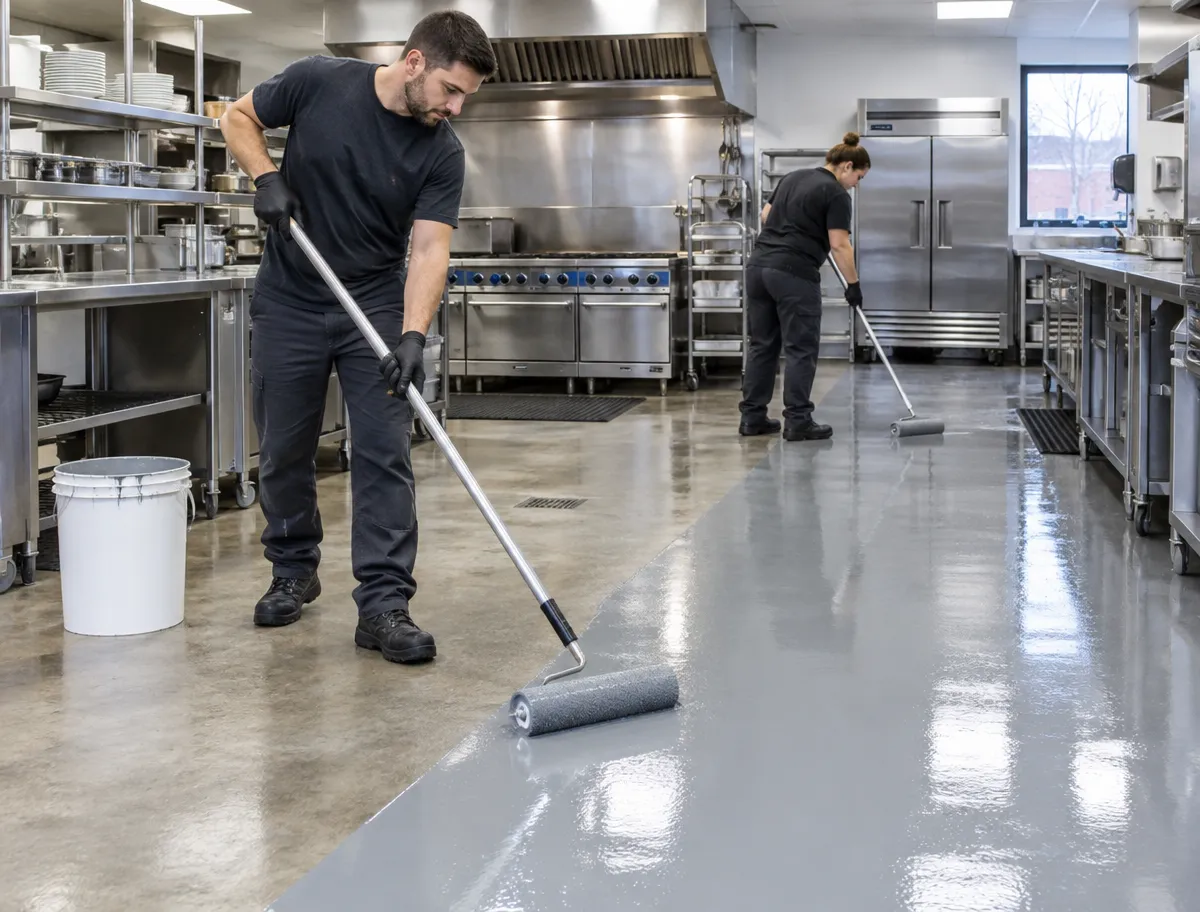
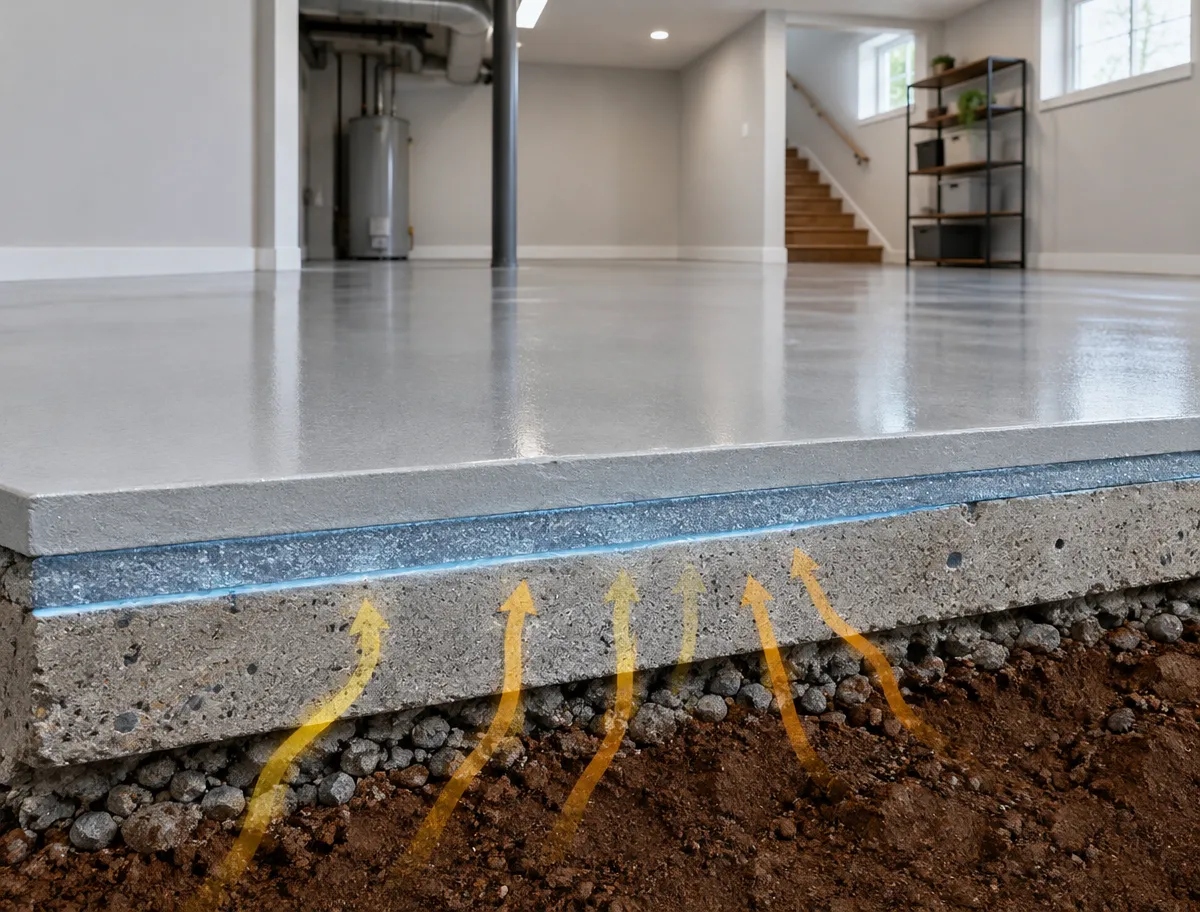
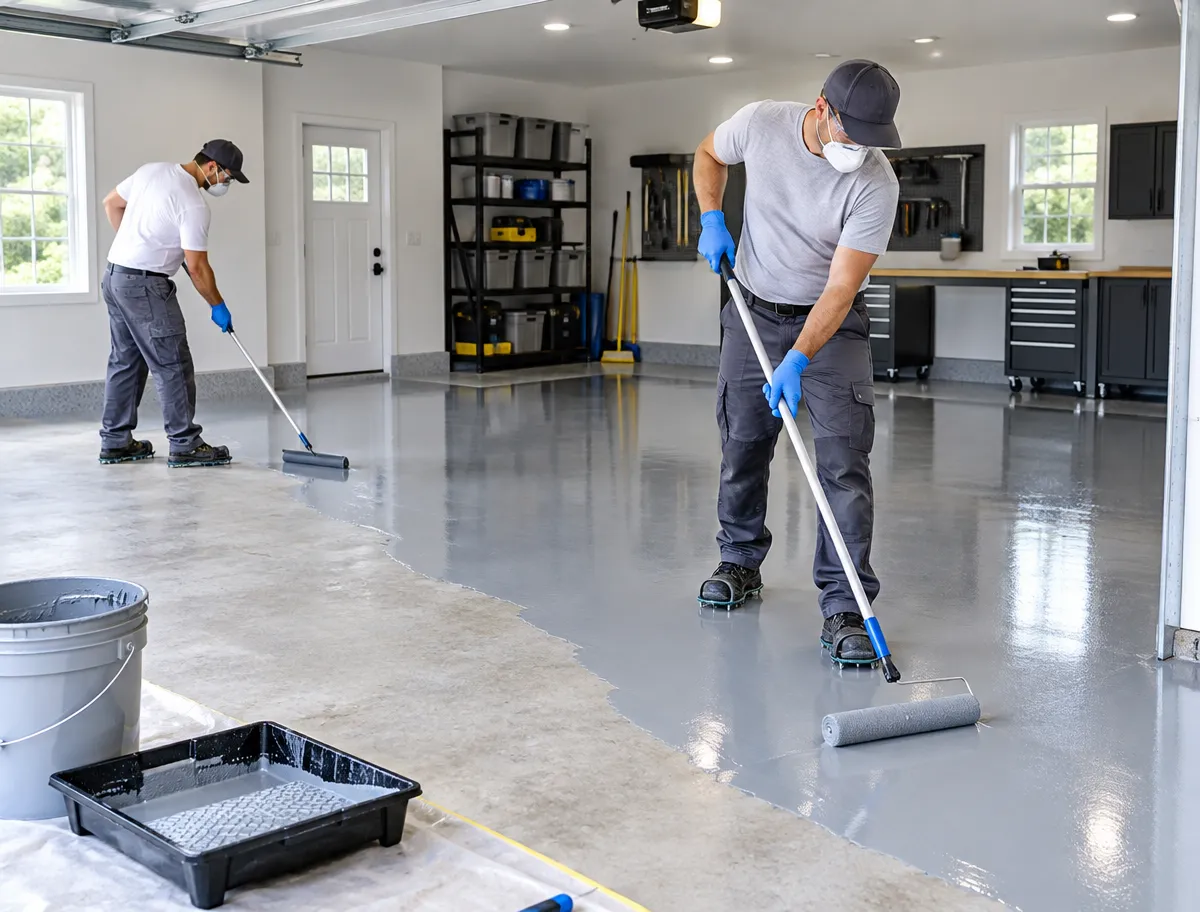
The best coating for an Erie patio or pool deck is a flexible, salt-resistant system, such as a polyurea base with a UV-stable polyaspartic topcoat, installed in warm, dry weather on properly ground concrete and finished with a slip-resistant texture. Erie’s winters call for that because of lake-effect snow: according to National Weather Service Cleveland, Erie averages about 100.9 inches of snow a year, compared with roughly 64 inches at Cleveland Hopkins in NOAA’s 1991–2020 normals. A patio there gets buried, shoveled, salted, and thawed again and again, and that is harder on a coating than the freeze-thaw cycling Ohio homeowners already read about.
What Lake-Effect Winters Do to a Patio That Ordinary Freeze-Thaw Doesn’t
We already cover how freeze-thaw cycling cracks concrete in our guide to freeze-thaw resistant patio coatings. Lake-effect adds a different set of stresses on top of it, and they are the reason an Erie spec should look different from a mild-winter spec.
| Lake-Effect Stress | Why Erie Amplifies It | What It Means for the Coating |
| Repeated heavy snow events | Erie averages about five winter warning events a season, so a patio is cleared again and again | Abrasion resistance matters, and so does how the snow gets removed |
| Months of snow, slush, and meltwater | Long stretches of snow cover and thaw put water on the slab far longer than a mild winter does | A non-porous surface that sheds water and brine, not one that soaks it up |
| Heavy salt and deicer use | More snow and ice means more salt tracked or thrown onto patios and steps | A topcoat rated for salt resistance, and sparing use of deicers |
| Snow banked at edges and steps | Plowed and shoveled snow piles against patio borders, then melts and refreezes there | Good edge detailing, and a textured finish where meltwater re-ices |
| Wet, icy foot traffic | Pool decks and steps stay slick in shoulder seasons and after storms | A slip-resistant texture, not a smooth gloss |
Erie’s Snow, by the Numbers
These figures come from National Weather Service Cleveland, which maintains Erie’s climate records.
- 100.9 inches: Erie’s average annual snowfall, with a December average of 27.5 inches.
- About 5 winter warning events a season: an event means 6 inches in 12 hours or 8 inches in 24 hours.
- 125 to 165 inches: the range of Erie’s ten snowiest seasons.
- 166.3 inches: the certified total for the 2017–18 season, which broke the previous record of 149.1 inches from 2000–01.
Sources: the average, warning-event, and top-ten figures come from NWS Cleveland’s climatology review of Erie, and the 2017–18 season total and prior record come from the NWS Cleveland State Climate Extremes Committee decision, which revised Erie’s original December 2017 measurements downward after review.
A fair comparison: Cleveland Hopkins sits on the west side of the metro area and gets less snow than the eastern snowbelt. J&P’s own Lake County page notes that Lake County shares the snowbelt with Geauga and Ashtabula, and that it gets some of the heaviest lake-effect snow in Ohio. If your Ohio property is in that eastern belt, the lake-effect advice below applies to you too.
Which Coating Holds Up Best in an Erie Winter?
The choice comes down to how each option deals with flexing slabs, salt, and sun. Lifespan, cost, and the paint comparison are covered in detail in our other guides, so this is the Erie-specific summary.
| Option | How It Handles an Erie Winter | Watch-Outs |
| Duralast polyurea base + polyaspartic topcoat (what J&P installs) | The polyurea base is made to flex with slab movement, and the polyaspartic topcoat resists salt and UV | Higher upfront cost than paint; needs proper grinding and prep |
| Standard epoxy | Bonds well but is generally more prone to UV yellowing and surface wear outdoors | Shorter service life than polyaspartic in J&P’s own comparisons |
| Concrete paint or thin acrylic sealer | Lowest upfront cost | J&P’s guidance is that paint often fails within a single Ohio winter, and Erie gets more snow than most of Ohio |
J&P Coatings’ Duralast polyaspartic system is the polyurea-base, polyaspartic-topcoat build described above. J&P’s Lake County page puts the snowbelt case plainly: the base flexes through freeze-thaw, and the topcoat handles salt and won’t yellow, which it describes as a real step up from the epoxy kits that crack and lift after one snowbelt season. For how paint compares, see why paint often fails after one winter, and for what to expect over the years, see how long a patio coating lasts.
Pool Decks in Erie: Three Things That Change
- The deck sits under snow for months: a covered pool means the surrounding concrete goes through the full winter of snow, salt, and meltwater, so sealing it before the first storm matters more than it would in a milder climate.
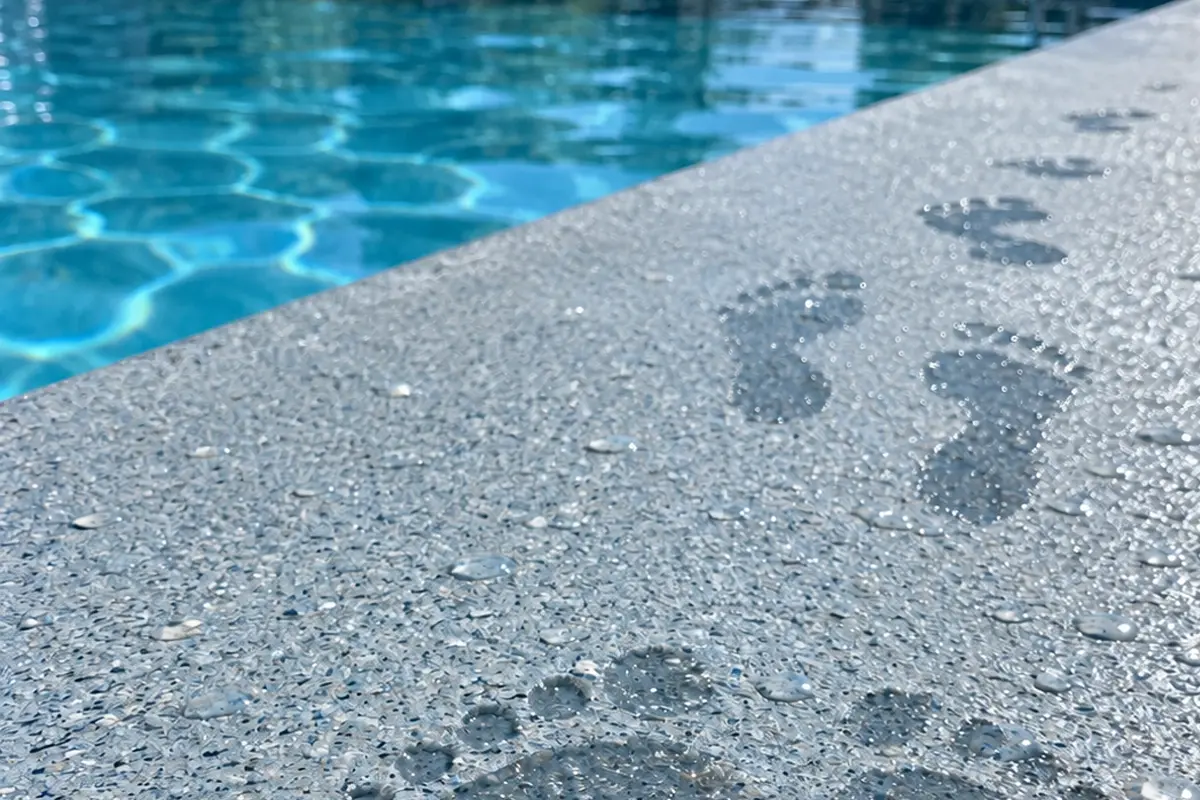
- Summer traction is a safety requirement: wet feet on a pool deck need a textured surface. J&P offers a Shark Bite Grip texture and decorative quartz or flake finishes, which our guide to slip-resistant pool deck coatings covers in detail.
- Pool chemicals and winter salt both hit the same surface: the topcoat has to tolerate chlorine in summer and deicers in winter, so ask the installer how the system is rated for both.
When to Install in Erie
Coatings need a workable weather window. J&P’s guidance is that most products specify an application range of roughly 50 to 90 degrees Fahrenheit and dry conditions during installation and curing. Erie’s snow season starts early, with a November average of about 8.5 inches and a December average of 27.5, so the practical window runs from late spring through early fall. Booking in summer gets you a coated patio before the first storm, and J&P’s Duralast system is a one-day install, so the job doesn’t tie up your yard for long.
Caring for a Coated Patio Through an Erie Winter
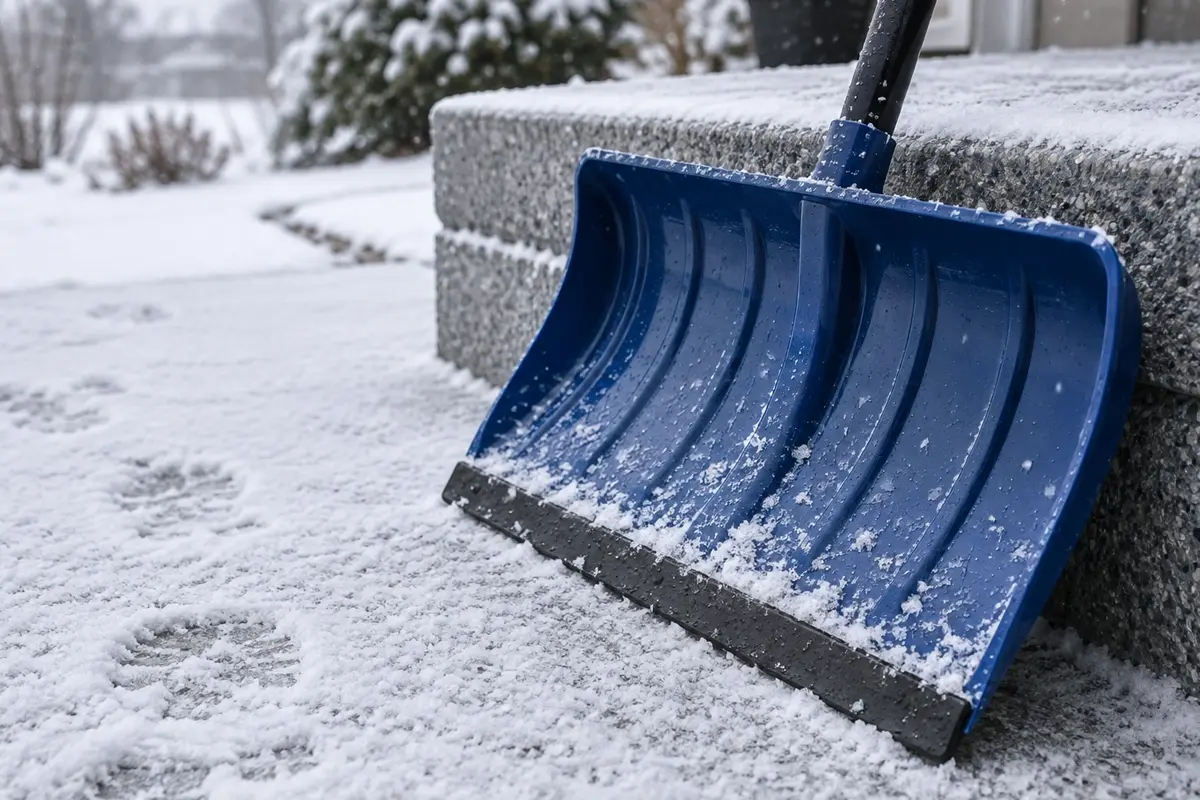
- Use a plastic shovel or one with a rubber wear edge: J&P’s guidance is non-abrasive tools, since a steel blade scraping a coated surface all winter is the fastest way to wear it.
- If you use a snowblower, ask your installer how to set it: raising or adjusting the skid shoes so the housing doesn’t scrape the surface is a common precaution.
- Go easy on salt: J&P recommends limiting corrosive deicers where possible, and a coating rated for salt gives you a margin when you do need them.
- Clear snow promptly from steps and pool edges: a textured coating improves traction, but nothing stops ice from forming on a surface that stays wet and cold.
What to Ask an Erie Installer
- How will you prepare the slab? diamond grinding and crack repair come before any coating, on any patio.
- What is the topcoat rated for? salt, UV, and chlorine if there’s a pool.
- What texture will the finish have? ask to see a sample wet, not just dry.
- What does the warranty cover? read the terms, including exclusions. J&P’s limited transferable warranty terms are laid out on its warranty page.
Patio and Pool Deck Coatings in Erie County
J&P Coatings serves Erie County, Pennsylvania from its shop in Middlefield, Ohio. Its Erie page lists service in neighborhoods including Glenwood, Southeast Hills, Harborcreek, Little Italy, and West Bayfront, and the patio concrete coatings page covers the service itself. For another Lake Erie snowbelt market, see J&P’s Lake County, OH page.
Frequently Asked Questions
Does Erie really get more snow than Cleveland?
At the airports, yes: about 100.9 inches a year at Erie against roughly 64 at Cleveland Hopkins. But the eastern Ohio snowbelt, including Lake and Geauga counties, gets heavy lake-effect snow too, so the gap depends on where in Northeast Ohio you’re comparing.
When is the best time to coat a patio in Erie?
Late spring through early fall, when temperatures stay inside the roughly 50 to 90 degree window most coatings require and conditions are dry. Booking in summer finishes the job before the first storm.
Can I shovel or snowblow a coated patio?
Yes, with care. Use a plastic or rubber-edged shovel, ask your installer how to set a snowblower so it doesn’t scrape the surface, and avoid steel blades.
Will a coating keep my pool deck from getting icy?
No coating prevents ice. A textured, slip-resistant finish improves traction on a wet or icy surface, but you should still clear snow promptly and treat the deck as slippery after a storm.
An Erie patio or pool deck faces more than freeze-thaw. It faces months of snow, repeated shoveling, and salt. Choosing a flexible, salt-resistant system, installing it in warm weather, and clearing snow with the right tools is what lets a coating last through those winters.
J&P Coatings: Duralast Polyaspartic Patio and Pool Deck Coatings for Erie County
J&P Coatings installs a Duralast polyurea base with a UV-stable polyaspartic topcoat for Erie County patios and pool decks, working from its Middlefield, Ohio shop and backing residential work with a limited transferable warranty.
Contact us today for a free estimate before the snow starts.
Planning an Erie patio or pool deck coating before next winter?
J&P Coatings gives Erie County homeowners a free, no-obligation estimate and assesses your slab before recommending a system.
Get a Free Erie Estimate | (440) 557-3141