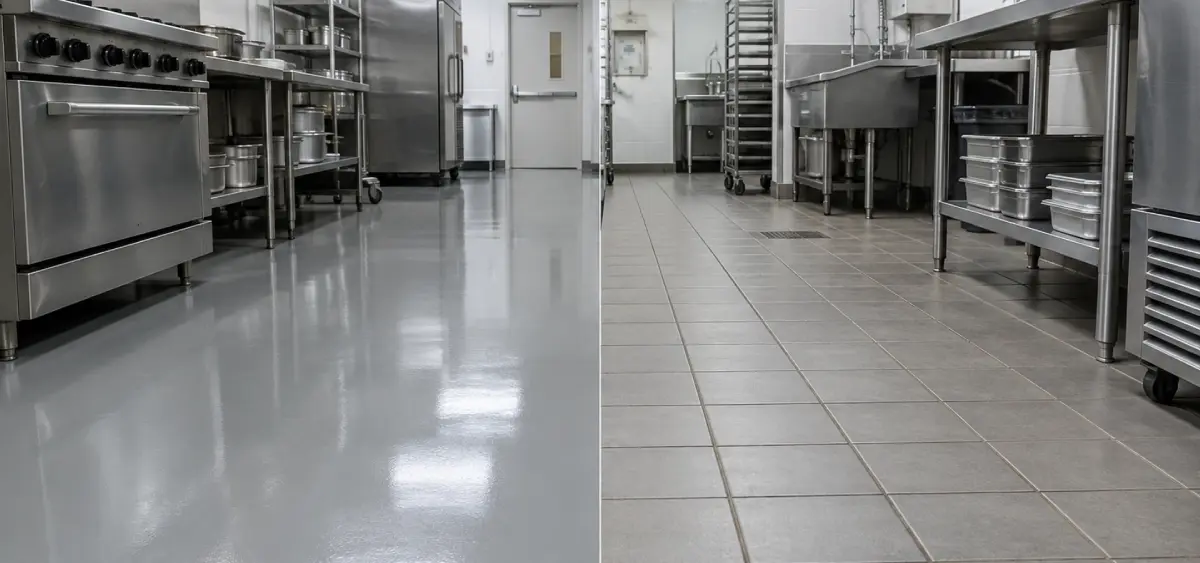
For a working commercial kitchen, a seamless floor coating generally outperforms tile on the three factors that matter most day to day: grout lines that trap bacteria, tile’s vulnerability to cracking under repeated thermal shock, and the real downtime cost when grout eventually needs replacing. Tile isn’t a bad material — it’s just working against the specific conditions a commercial kitchen creates, in ways a seamless system doesn’t.
Grout Lines: The Core Problem Tile Can’t Avoid
Every tile installation, no matter how well done, has grout lines — and grout is porous by nature. In a commercial kitchen, that porosity becomes a genuine sanitation liability: grease, food particles, and moisture work into the grout over time, and it becomes progressively harder to clean out no matter how diligent the cleaning crew is. This is exactly why FDA Food Code surface requirements call for food establishment floors to be smooth and easily cleanable — a standard a seamless coating meets structurally from day one, while a tiled floor has to fight its own grout lines to maintain over years of service.
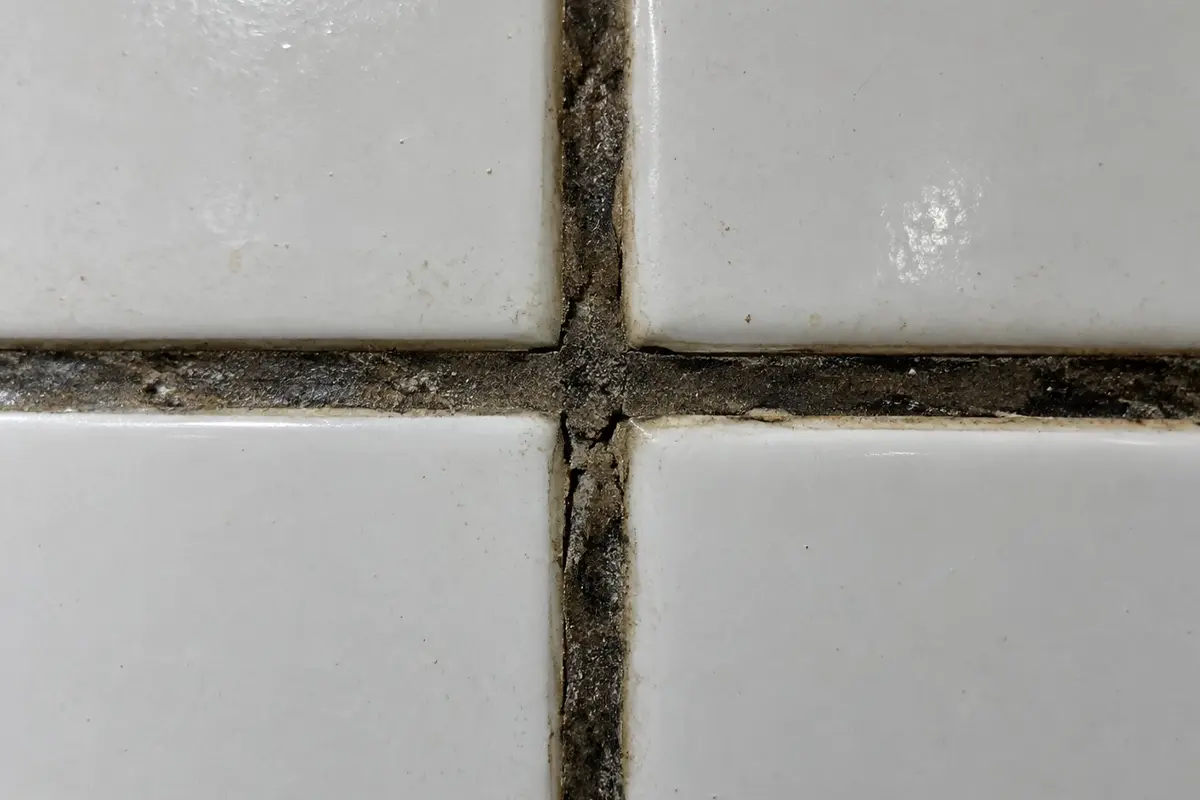
Why this becomes a bigger problem over time, not a smaller one: new grout is at its cleanest and least porous. Every cleaning cycle, every hot washdown, and every year of service degrades it further — meaning a tile floor’s sanitation risk compounds with age in a way a seamless coating’s does not.
Tile Cracking Under Thermal Shock
Commercial kitchens subject floors to extreme, rapid temperature swings — boiling water, hot fryer oil, and steam washdowns hitting a floor that may sit near a walk-in cooler. Tile and grout can crack or degrade under this kind of repeated thermal cycling, and once a tile cracks or grout fails, moisture gets underneath, compounding both the structural and sanitation problems at once. For the full technical breakdown of thermal shock mechanics and which coating systems actually withstand it, see our thermal shock resistant kitchen flooring guide — the short version is that a properly specified commercial kitchen floor coating is engineered specifically to flex with these swings, which tile and grout simply aren’t.
Side-by-Side Comparison
| Seamless Floor Coating | Tile | |
| Bacteria/mold risk | Minimal — no grout lines or seams | Grout lines trap moisture, grease, and bacteria over time |
| Thermal shock resistance | High (polyaspartic/urethane systems built for kitchens) | Tile can crack, and grout can degrade, under repeated hot/cold swings |
| Repair when damaged | Localized recoat of the affected area | Individual tiles often need to be broken out and replaced |
| Maintenance downtime | Routine cleaning only, no recurring service | Grout requires periodic resealing; failed grout means partial kitchen closure to redo |
| Health code cleanability | Smooth, seamless — matches easily-cleanable standard directly | Achievable but harder to maintain over time as grout wears |
The Regrouting Downtime Problem
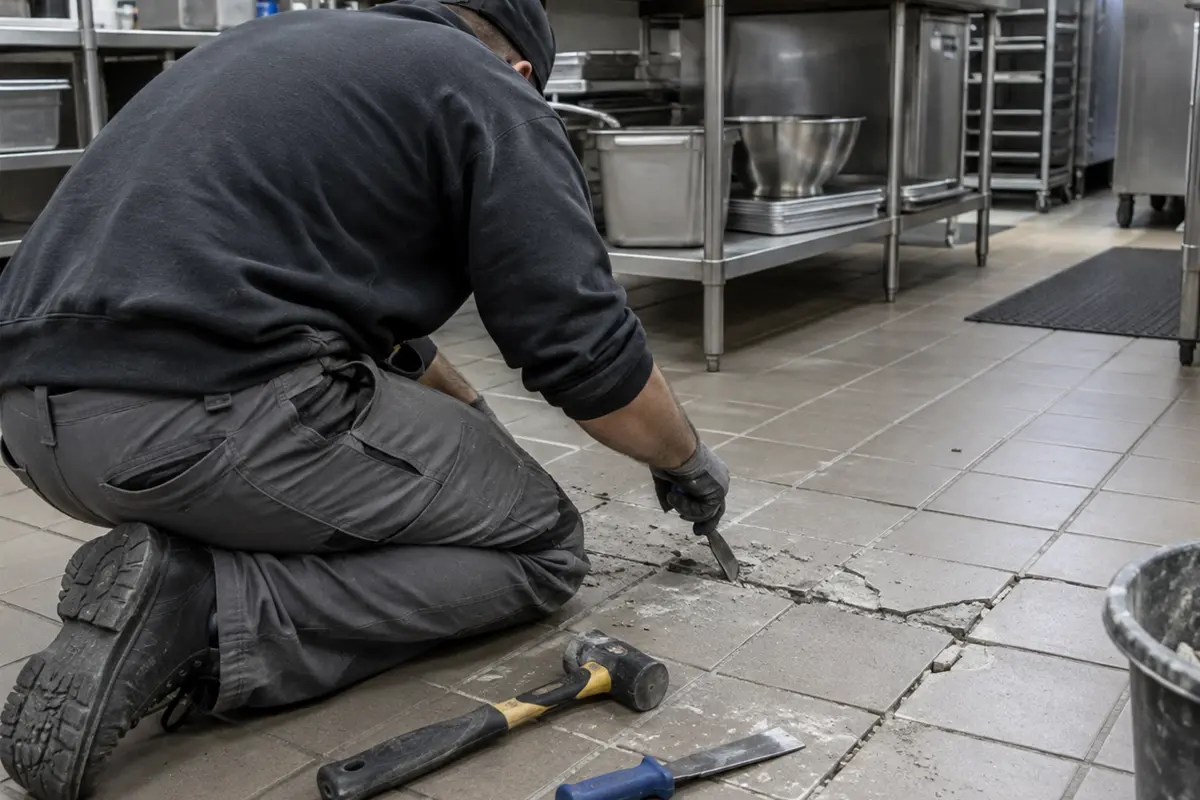
This is the cost most restaurant owners underestimate until they’re facing it. Regrouting a commercial kitchen floor isn’t a quick touch-up — it typically means closing off the affected area (or the whole kitchen, depending on layout) while grout is removed, replaced, and cured, often over multiple days given commercial kitchen square footage and the need for proper cure time before returning to service. A seamless coating, by contrast, doesn’t have this recurring maintenance event built into its lifecycle at all — repairs are localized and don’t require an ongoing grout-replacement cycle every few years.
Is There a Case for Tile?
Tile can still make sense in specific contexts — a lower-traffic prep area, a budget-constrained buildout where tile’s lower material cost matters more than long-term maintenance, or a design requirement calling for a specific tile aesthetic. But for the highest-traffic zones of a working kitchen — fryer lines, dish pits, main cook lines — the maintenance and sanitation tradeoffs consistently favor a seamless system.
Frequently Asked Questions
Is tile ever a good choice for a commercial kitchen?
It can work in lower-traffic areas or where budget constraints and design requirements outweigh long-term maintenance considerations, but for high-traffic cook lines and wash areas, the grout-related sanitation and durability tradeoffs generally favor a seamless coating.
How often does commercial kitchen tile grout need to be replaced?
It varies by traffic and maintenance, but grout in a high-use commercial kitchen commonly needs resealing or partial replacement well before the tile itself wears out, since grout degrades faster than the tile surface under constant grease and moisture exposure.
Does a seamless coating meet the same health code standards as tile?
Yes — a properly installed seamless coating meets the smooth, durable, easily-cleanable requirements in the FDA Food Code and is generally easier to maintain in that compliant condition over time than a grouted tile floor.
How long does it take to replace tile with a seamless coating?
Most commercial kitchen coating projects are completed in a single day or two, similar to the process described in our flooring options comparison — significantly faster than a full tile tear-out and replacement.
Tile isn’t inherently a poor choice, but a working commercial kitchen creates exactly the conditions — constant moisture, grease, and thermal cycling — that expose grout’s weaknesses fastest. A seamless coating sidesteps those specific vulnerabilities from day one, which is why it’s become the default recommendation for high-traffic Ohio restaurant kitchens.
J&P Coatings: Seamless Kitchen Floors for Ohio Restaurants
J&P Coatings installs seamless, health-code-compliant commercial kitchen floor systems across Greater Cleveland, NE Ohio, and Erie County, PA, with the diamond-grinding prep and thermal-shock-rated materials that make the difference between a floor that lasts and one that fails.
Contact us today for an honest assessment of coating vs. tile for your specific kitchen.
Replacing failing tile in your Ohio kitchen?
J&P Coatings assesses your kitchen and recommends the system that fits — no pressure, free evaluation.
Get a Free Kitchen Assessment | (440) 557-3141