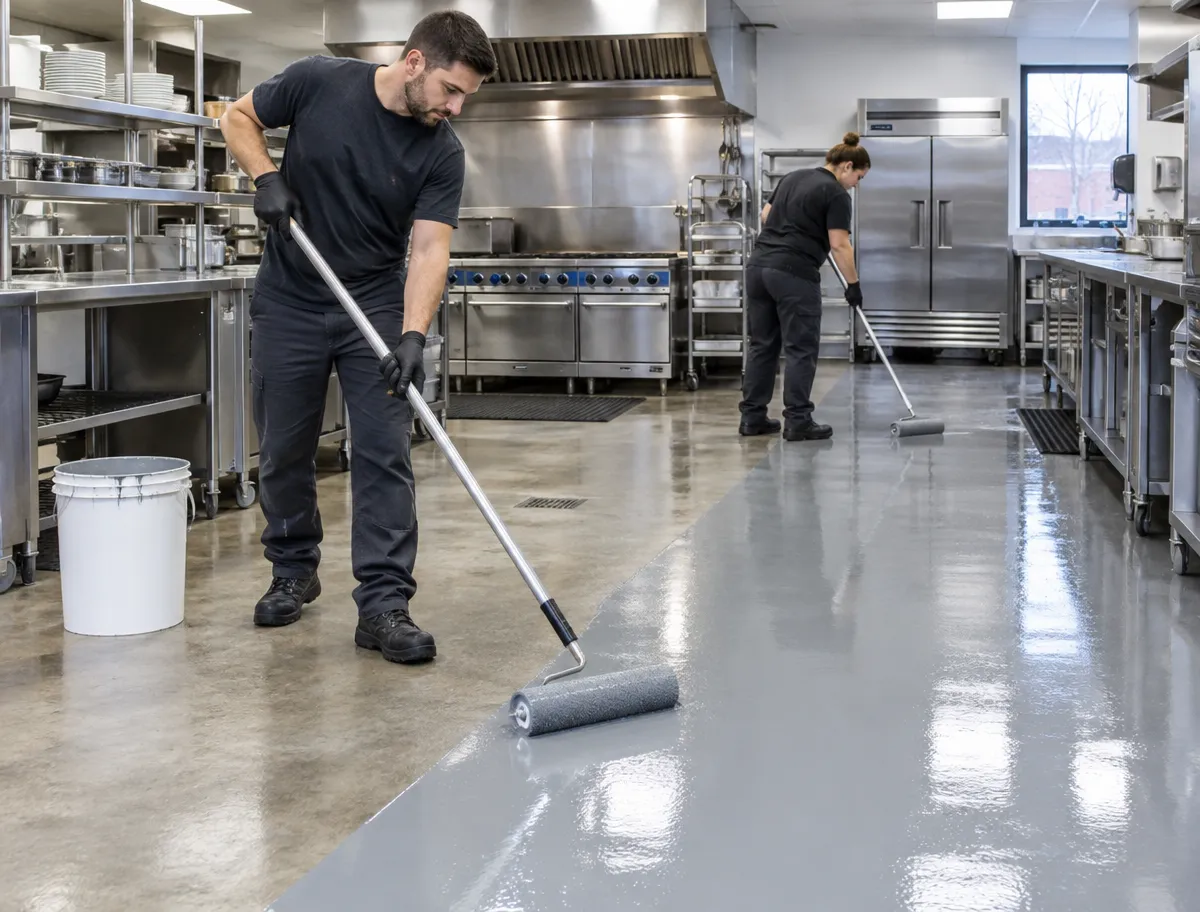
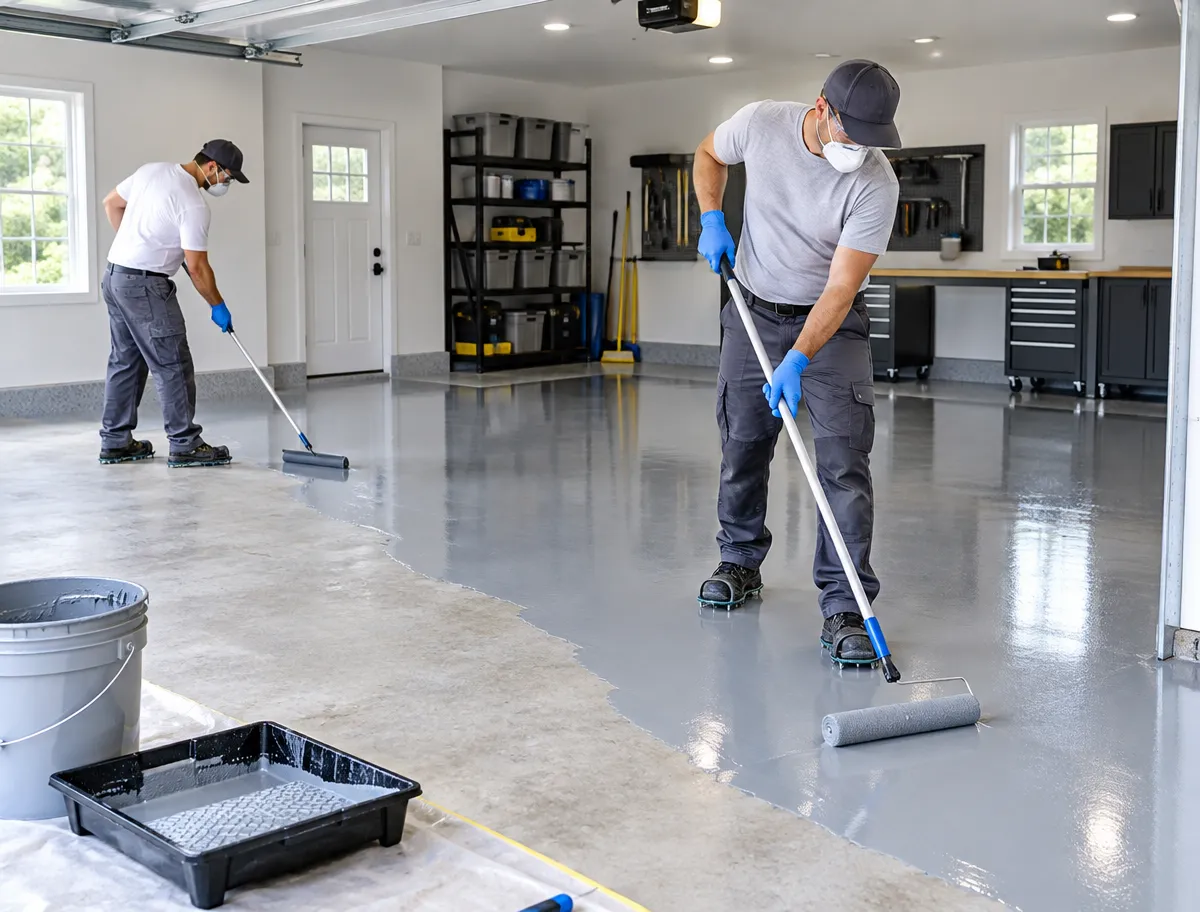
Quick Answer: To choose industrial floor coating thickness, match the system to your facility’s traffic, chemical exposure, and climate. Light foot-traffic areas typically perform well with roughly 10 to 20 mils, forklift and pallet-jack aisles usually need high-build systems of about 20 to 40 mils, and zones with heavy impact, harsh chemicals, or thermal shock may call for slurry or mortar systems of 1/16 to 1/4 inch. A site assessment of loads, slab moisture, and cleaning routines should set the final spec.
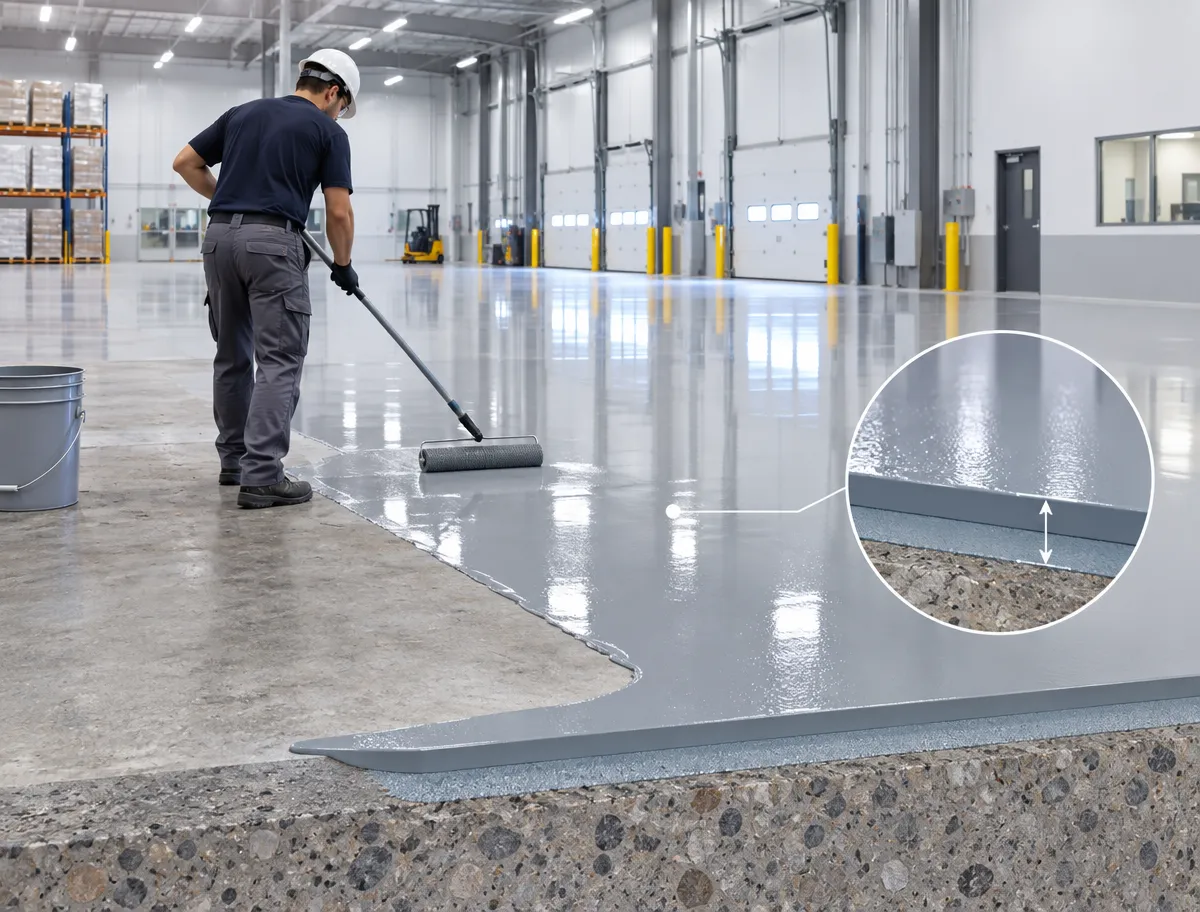
Coating thickness depends on traffic load, chemical exposure, and surface wear in the facility. Polyaspartic systems from J&P Coatings cure fast, returning floors to service within a single day, and their layered application builds the thickness needed for forklifts, abrasive cleaners, and heavy equipment without peeling or bubbling over time.
What Are the Key Takeaways on Industrial Floor Coating Thickness?
- Industrial floor coatings require proper thickness to resist heavy equipment, chemicals, and constant cleaning demands.
- J&P Coatings has served Greater Cleveland, Northeast Ohio, and Western Pennsylvania since 2018 with proven expertise.
- Correct coating thickness prevents peeling, bubbling, and premature failure in factories, warehouses, and commercial kitchens.
- J&P Coatings backs every industrial flooring installation with a limited transferable warranty for long-term protection.
What Should You Assess Before Choosing Coating Thickness?
Four operational factors determine proper coating specification: chemical exposure, traffic load, facility type, and regional climate conditions. Facility managers who skip this assessment risk premature coating failure and costly reapplication within a short service window. A structured evaluation, not a guess, protects the capital investment a new floor system represents.
Daily operational stress drives the first assessment. Plant engineers should inventory exposure to chemical spills, abrasive cleaning chemicals, and the volume of foot and vehicle traffic the floor absorbs each shift. Forklift movement and the regular transport of heavy equipment add mechanical stress that thinner coatings cannot withstand over time. Facilities that underestimate these loads often see cracking or delamination well before the coating’s expected lifespan ends.
Facility type matters just as much as daily use. Food production plants, manufacturing floors, and repair facilities each carry distinct durability and safety requirements. Each environment combines moisture, chemical exposure, and equipment loads differently. A repair facility handling solvents needs different protection than a food plant managing washdown cycles and sanitation standards.
How does climate affect coating thickness decisions?
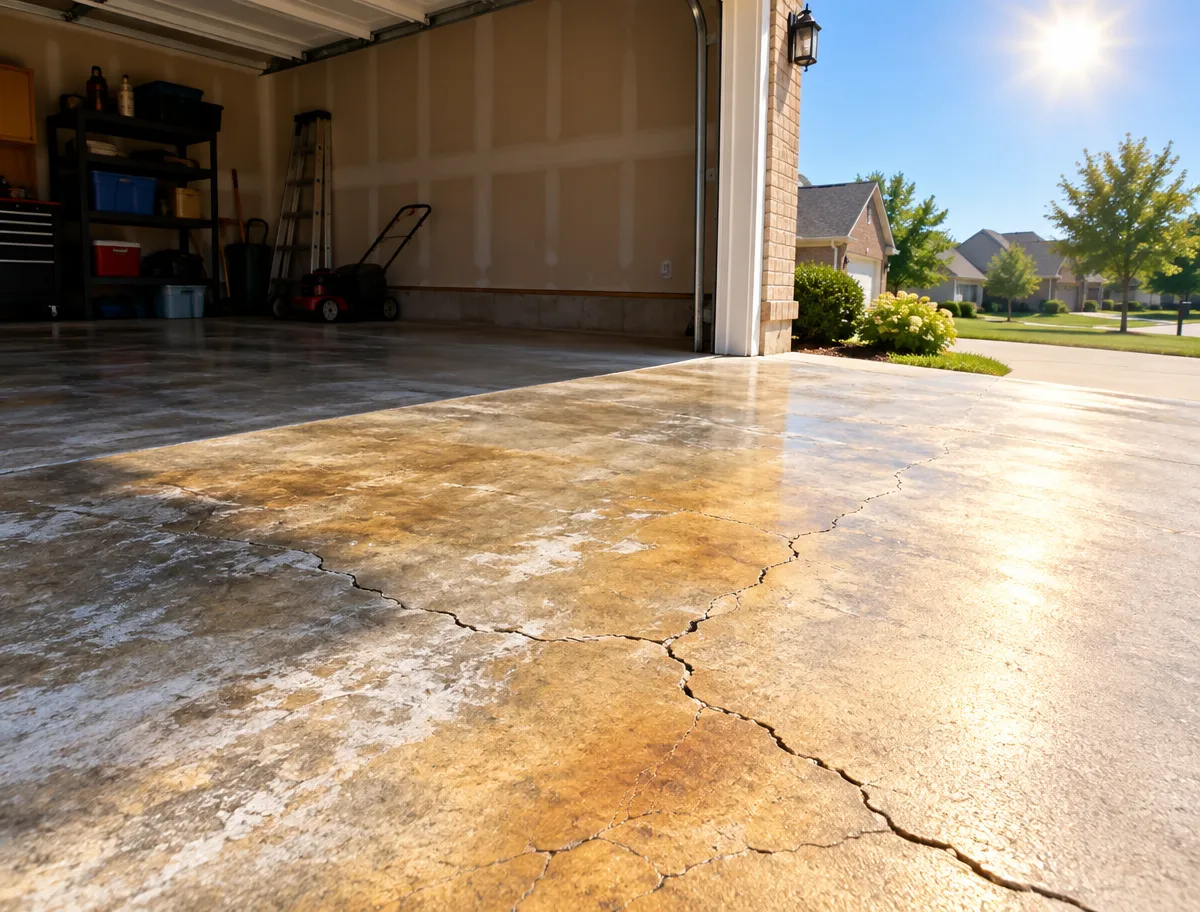
Regional weather conditions change how a coating performs over its service life. Facilities across Greater Cleveland, Northeast Ohio, and Western Pennsylvania face freeze-thaw cycling, moisture intrusion, and seasonal temperature swings that stress concrete differently than stable indoor climates. J&P Coatings, a family-owned contractor, draws on field assessments across these regions to match thickness specifications to real climate performance data rather than generic manufacturer guidelines.
Choosing industrial floor coating thickness ultimately requires weighing these four factors together, not in isolation, before specification begins.
How Do Traffic Loads Determine Coating Thickness?
Traffic load sets the baseline for every thickness calculation. Forklifts, pallet jacks, and constant foot traffic place far more stress on a floor than occasional pedestrian use. That stress dictates how robust the coating system must be. Facility managers evaluating how to choose industrial floor coating thickness should start by cataloging the equipment that crosses the floor daily, not just the heaviest item stored on it.
Heavy-duty flooring exists specifically to withstand harsh industrial and manufacturing conditions. A coating specified for a quiet storage room will not survive a shipping dock. Matching thickness to actual use prevents premature failure.
The ranges below are typical industry starting points by use case. Final film build should be specified after a site assessment and confirmed with nondestructive dry film thickness testing once the coating is applied.
| Use Case | Typical System | Approximate Total Thickness |
|---|---|---|
| Light foot traffic, storage rooms, offices | Thin-film coating | 10 to 20 mils |
| Pallet jacks, forklifts, moderate chemical contact | High-build multi-coat system | 20 to 40+ mils |
| Heavy equipment, impact, harsh chemicals, frequent washdowns | Slurry or self-leveling system | 1/16 to 1/8 inch (about 60 to 125 mils) |
| Thermal shock, steam cleaning, severe impact | Troweled mortar system | 3/16 to 1/4 inch (about 190 to 250 mils) |
What Floor Conditions Push Thickness Requirements Higher?
Facilities running forklifts, heavy machinery, and high-traffic schedules face extreme wear and tear that thin coatings cannot absorb. Chemical spills and temperature swings compound that wear, accelerating cracking and surface breakdown. These are the conditions that justify a thicker, impact-rated build rather than a standard finish.
Consider these load factors when scoping thickness:
- Frequency of forklift and pallet jack traffic
- Weight of equipment and stored materials
- Exposure to chemical spills or cleaning agents
- Temperature fluctuations across shifts or seasons
Does a Thicker Coating Always Mean Better Protection?
Not necessarily, because material strength changes the equation. Duralast® Polyaspartic Coating measures five times stronger than standard epoxy. A thinner specified build still holds up against heavy facility loads. That strength advantage lets facility managers avoid over-specifying thickness while still achieving long-term protection.
Durability also depends on how the coating responds to repeated impact. Duralast® resists chipping and peeling under sustained wheel, pallet jack, and foot traffic, a performance standard that reduces the need for excessive film build to compensate for weaker materials.
📞 Need a Thickness Spec for Your Facility? J&P Coatings will evaluate your traffic loads, chemical exposure, and slab moisture before recommending a system. Request a free facility assessment today.
Which Exposure Risks Require Thicker Floor Coatings?
Heavy equipment loads, constant cleaning cycles, chemical exposure, and thermal swings determine how thick a coating system must be. Facility managers who weigh these risks before specifying a coating thickness protect their investment. Those who skip this step often face premature wear within a short time of installation. Industrial floors carry burdens that residential garages rarely see, and the coating must match that burden exactly.
Extreme conditions compound quickly in a working plant. Heavy loads from racking and machinery, high traffic from forklifts and personnel, repeated washdowns, harsh chemical contact, and thermal stress from hot processes or cold storage all push a floor toward failure. Each factor adds a separate layer of stress that a thin coating cannot absorb on its own.
What chemical exposures call for added protection?
De-icing salts, automotive fluids, and cleaning agents degrade standard coatings over time. Duralast® Polyaspartic Coating resists salt and oil, a feature suited to facilities regularly exposed to these substances. Operations near vehicle bays or winter salt tracking benefit from this resistance directly.
Do different commercial spaces need different coating profiles?
Yes. Commercial kitchens, showrooms, and automotive facilities each present distinct chemical and moisture conditions. J&P Coatings provides flooring services across all three environments. Grease exposure in a kitchen differs sharply from solvent exposure in an automotive bay.
Facility managers evaluating a new coating system should consider:
- Equipment and foot traffic volume
- Frequency and intensity of cleaning protocols
- Chemical classes present on-site (salts, oils, solvents)
- Temperature swings between operations or seasons
Matching coating specifications to these four factors reduces the risk of early degradation and unplanned downtime.
Epoxy Or Polyaspartic: Which Thickness Performs Better?
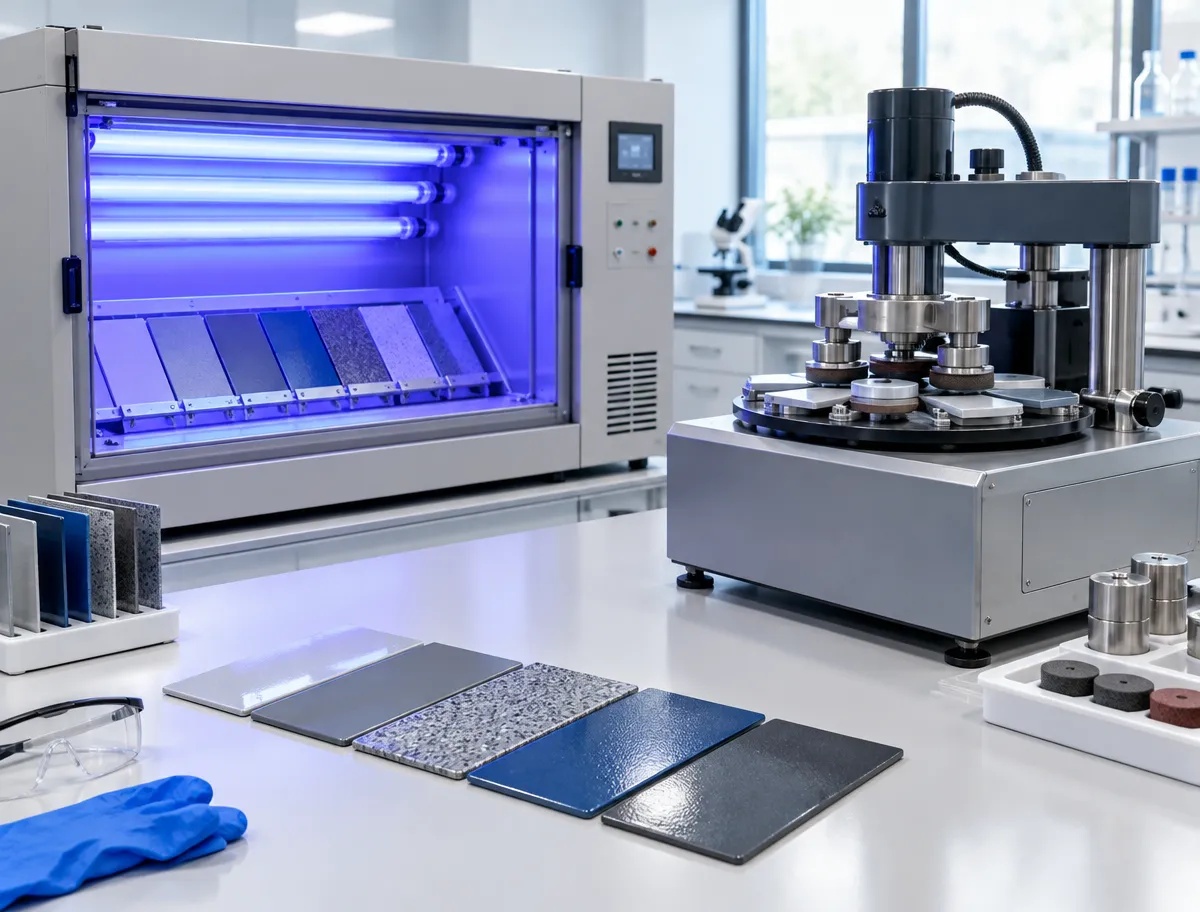
Polyaspartic systems generally outperform epoxy at comparable thickness due to faster cure chemistry and greater resistance to UV exposure and temperature swings. Both systems protect concrete floors from vehicle traffic, oil, and chemical exposure. The performance gap widens once facility managers factor in cure time, lifespan, and total cost at a given build thickness.
Industrial epoxy flooring consists of a multi-layer resinous system formed by combining epoxy resin with a hardener. This chemical bonding process affects how much build thickness a facility needs for proper adhesion to prepared concrete. Thicker epoxy builds generally require longer cure windows, which directly impacts how choosing industrial floor coating thickness interacts with production downtime.
Does Coating Thickness Affect Cure Time?
Thickness influences cure time differently depending on the chemistry involved. Epoxy systems often require 24 hours or more to cure regardless of the thickness specified, extending facility downtime. Polyaspartic coatings, by contrast, can be installed and returned to service within a single day. J&P Coatings’ Duralast® Polyaspartic Coating delivers 1-day installation, minimizing downtime no matter what thickness a facility specifies.
| Factor | Epoxy | Polyaspartic |
|---|---|---|
| Cure time | 24+ hours typical | Same-day return to service |
| UV resistance | Lower | Higher |
| Temperature tolerance | Narrower range | Broader range |
Which System Lasts Longer at the Same Thickness?
Lifespan depends heavily on chemistry, not just build depth. Epoxy and polyaspartic coatings differ significantly in durability, UV stability, and temperature performance even when applied at matching thicknesses. Facility managers weighing long-term flooring investments should evaluate these performance differences alongside thickness specifications. A thicker epoxy layer does not automatically match the resilience of a thinner polyaspartic application.
What Mistakes Cause Premature Coating Failure?
Under-specified thickness ranks among the top causes of coating breakdown in industrial facilities. Peeling, bubbling, and delamination rarely happen by accident. They trace back to a system that was never matched to the floor’s actual workload. Facility owners who invest in materials and labor expect a floor that lasts, not one that fails within a year and forces a second round of spending.
An industrial epoxy or polyaspartic system resists heavy traffic, chemical exposure, abrasion, and moisture only when installation and thickness are correct from the start. A coating applied too thin cracks under forklift loads or wears through in high-traffic aisles. One applied without accounting for chemical exposure or moisture intrusion can bubble or delaminate within months.
Why Does Floor Coating Peel Or Bubble After Installation?
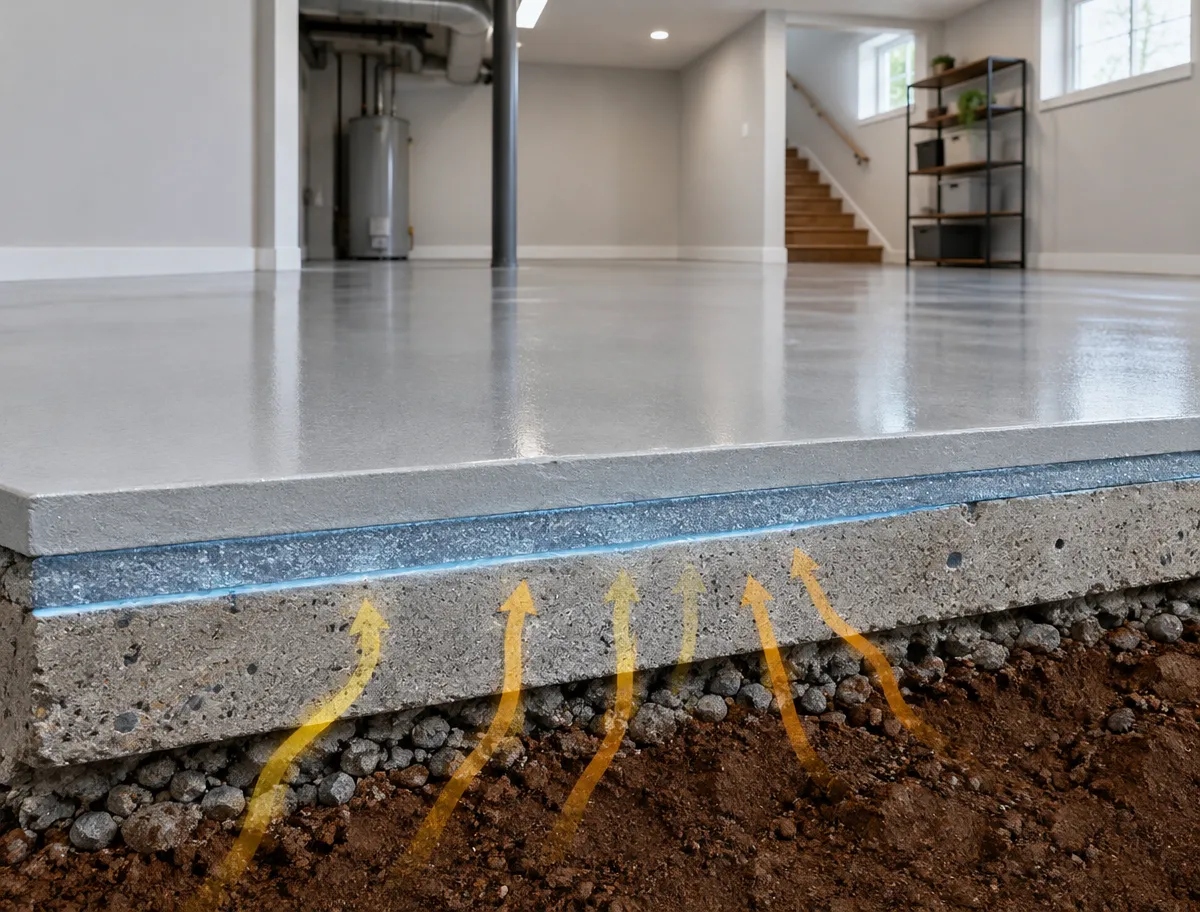
Peeling and bubbling usually point to a mismatch between the coating system and the facility’s actual operating conditions. Moisture trapped beneath the slab, inadequate surface preparation, or a film thickness too thin for the traffic load all accelerate failure.
Common mistakes include:
- Skipping a site assessment of forklift traffic, foot traffic, and chemical exposure before specifying a system
- Choosing a thickness based on budget alone instead of actual load demands
- Ignoring moisture conditions in the slab before application
- Selecting a coating with no accountability behind the installation
J&P Coatings backs every job with a limited transferable warranty, giving facility owners protection against defects tied to improper thickness or workmanship. That accountability matters, since a warranty only holds value when the installer has the experience to back it. J&P Coatings has served customers since 2018, building the technical judgment needed to match coating thickness to each facility’s real demands.
Frequently Asked Questions
What factors determine industrial floor coating thickness?
Chemical exposure, traffic load, facility type, and regional climate conditions determine proper coating specification. Facility managers who assess these factors together avoid premature coating failure and protect their flooring investment.
Why does facility type affect coating thickness?
Food production plants, manufacturing floors, and repair facilities combine moisture, chemical exposure, and equipment loads differently. Each environment carries distinct durability and safety requirements that dictate the coating thickness needed.
How does J&P Coatings account for regional climate in thickness decisions?
J&P Coatings draws on field assessments across Greater Cleveland, Northeast Ohio, and Western Pennsylvania, matching thickness specifications to real climate performance data instead of generic manufacturer guidelines. Freeze-thaw cycling and temperature swings factor into this process.
How many mils thick should an industrial floor coating be?
Light-duty areas often perform well at roughly 10 to 20 mils, forklift and heavy-traffic aisles typically need 20 to 40 mils or more, and areas with severe impact, harsh chemicals, or thermal shock may need slurry or mortar systems of 1/16 to 1/4 inch. A site assessment sets the final number.
Is polyaspartic or epoxy better for industrial floors?
Polyaspartic generally cures faster, handles UV and temperature swings better, and can return a floor to service in a single day, while epoxy often needs 24 hours or more to cure. The right choice depends on your loads, chemicals, and downtime limits.
TL;DR — Industrial Floor Coating Thickness at a Glance
- Traffic load, chemical exposure, facility type, and regional climate together determine the right coating thickness.
- Typical starting ranges: about 10 to 20 mils for light traffic, 20 to 40+ mils for forklift aisles, and 1/16 to 1/4 inch for heavy impact, chemical, or thermal-shock zones.
- Thicker is not automatically better; a stronger chemistry like polyaspartic can protect at a thinner build.
- Most premature failures trace back to under-specified thickness, poor surface prep, or ignored slab moisture.
- Next step: Request a free facility assessment from J&P Coatings to get a thickness spec matched to your floor.
Related Resources
- Commercial Floor Coatings
- Cuyahoga County Floor Coatings
- Polyaspartic vs. Epoxy Durability
- Why Garage Floor Coatings Peel
- One-Day Floor Coating in Cleveland
- Does Polyaspartic Flooring Yellow in Sunlight?
Get a Free Industrial Floor Coating Assessment
In closing, selecting the appropriate industrial floor coating thickness represents a critical investment in facility longevity and operational performance. By evaluating your specific traffic patterns, chemical exposure, and performance requirements through a structured assessment process, you establish the foundation for a coating system that delivers durability and protection. J&P Coatings brings years of hands-on expertise to this determination, ensuring your facility receives a solution engineered to withstand its unique demands while maintaining compliance with industry standards.
Contact J&P Coatings today for a free, no-obligation quote on an industrial floor coating system specified for your facility.
About J&P Coatings: J&P Coatings is a family-owned floor coating contractor serving Greater Cleveland, Northeast Ohio, and Western Pennsylvania since 2018. The team installs Duralast® Polyaspartic Coating systems for industrial, commercial, and residential floors, backed by a limited transferable warranty. Contact J&P Coatings for a free quote.