Quick Answer: A radon barrier basement floor coating in Ohio is not a radon mitigation system and should not be relied on to lower radon levels by itself. Sealing cracks, joints, and porous concrete can close off some of the paths soil gas uses to enter a basement, so a coating may be one part of a broader approach. The only way to know your home’s radon level is to test it. If results come back elevated, EPA and Ohio Department of Health guidance points homeowners to a licensed radon mitigation professional.
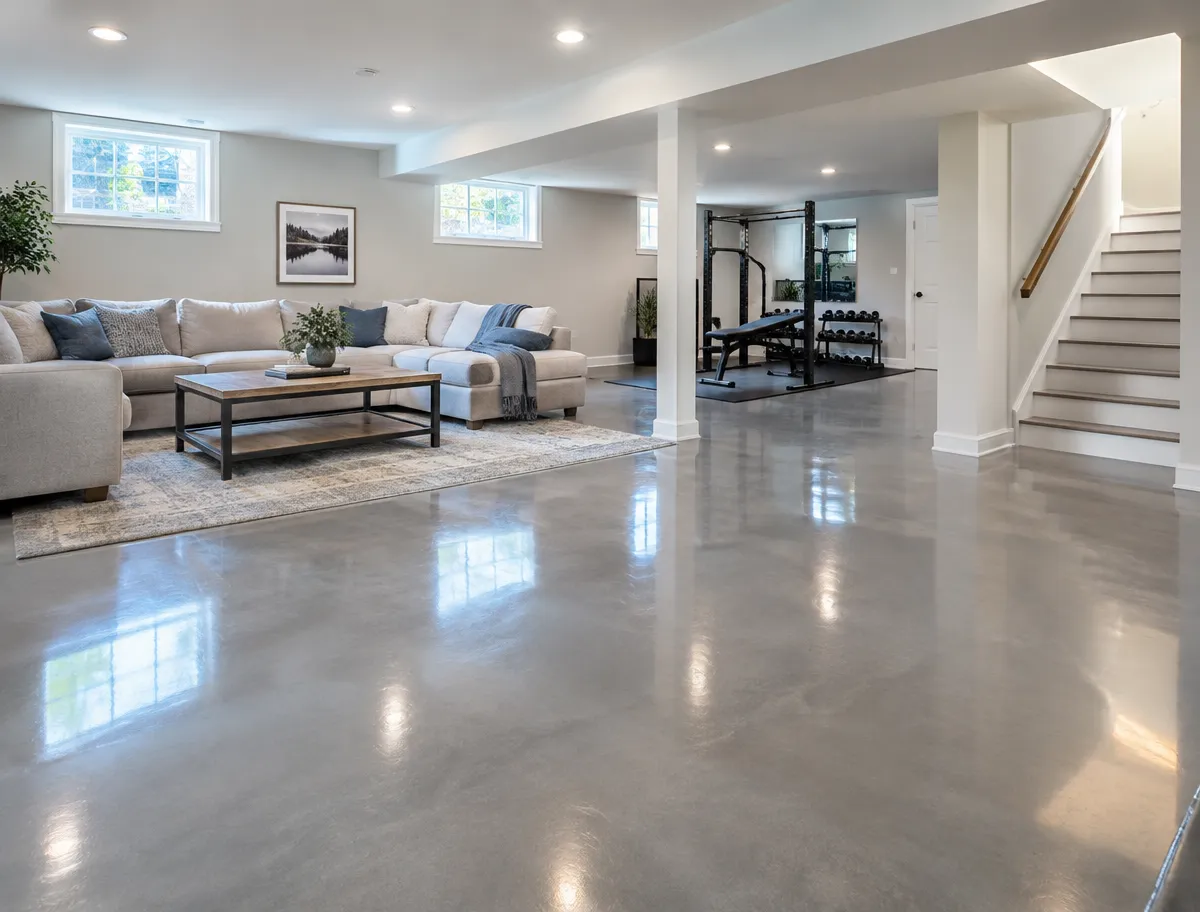
Basement floor coatings seal porous concrete, cracks, and joints, which are some of the places soil gas can enter Ohio homes. J&P Coatings installs its Polyaspartic Duralast Coating in one day, creating a durable, crack-resistant floor surface. That sealed surface may help limit one entry pathway for radon, but it does not replace radon testing or a professionally designed mitigation system.
What Are the Key Takeaways About Floor Coatings and Radon?
- Radon can enter through porous concrete, foundation cracks, and gaps around drains and pipes, which is why basements deserve attention in Ohio homes.
- A basement floor coating seals the slab surface and may help limit one radon entry pathway, but it is not a radon mitigation system.
- Public health agencies, including the U.S. EPA and the Ohio Department of Health, identify long-term exposure to elevated radon as a leading cause of lung cancer.
- Testing is the only way to know your home’s radon level; a licensed radon mitigation professional is the right call for elevated results.
- J&P Coatings’ basement floor coating services help Greater Cleveland, Northeast Ohio, and Western Pennsylvania homeowners create a sealed, durable basement floor.
What Is Radon and Why Does It Matter?
Radon forms when uranium in soil and rock breaks down over time. The gas has no color and no smell, so you can’t detect it without a test. Public health agencies identify long-term radon exposure as a leading cause of lung cancer, and radon can turn up in homes in both higher- and lower-risk areas. That makes testing a sensible step for any homeowner.
Ohio homeowners often focus on basements because below-grade spaces are in direct contact with the soil where radon forms. Radon can enter through cracks in foundations, through porous concrete, and through gaps in unsealed flooring, and in an enclosed basement it may build up rather than dissipate quickly.
Why Are Basements More at Risk Than Other Rooms?
Basement floors sit directly against soil and rock, the source material where radon originates. Concrete contains countless microscopic pores, and cracks from settling can widen the pathway. Upper floors sit farther from the soil and generally have less direct contact with it.
Sealing the basement floor addresses one of these entry points at the surface. When evaluating a basement, Ohio homeowners should consider these factors:
- Soil composition and regional radon risk
- Existing cracks or porous concrete
- Ventilation quality in below-grade spaces
- Frequency of basement use for living or storage
- Whether the home has been tested for radon recently
Treating the floor as a sealed surface, not just a decorative one, is a reasonable part of basement upkeep. It works alongside radon testing and, when needed, professional mitigation, not in place of them.
How Does Radon Enter an Ohio Basement?
Radon gas can enter an Ohio basement through foundation cracks, porous concrete, and unsealed flooring. These openings act as pathways for an odorless, radioactive gas that forms naturally underground as uranium decays. Radon is found in soil across much of Ohio, so a basement in direct contact with the ground is a common place for it to get in. For a closer look at the process, see this overview of what causes radon in basements and how it enters.
Once inside, radon may not simply dissipate. Concentrations can build in an enclosed basement with limited air exchange, and porous, untreated concrete offers an easy route for soil gas to move into the space.
Common entry points include:
- Hairline and structural cracks in the foundation wall or slab
- Microscopic pores within unsealed concrete
- Gaps around floor drains, sump pits, and utility penetrations
- Expansion joints between slab sections
Why Are Basement Floors a Common Entry Point?
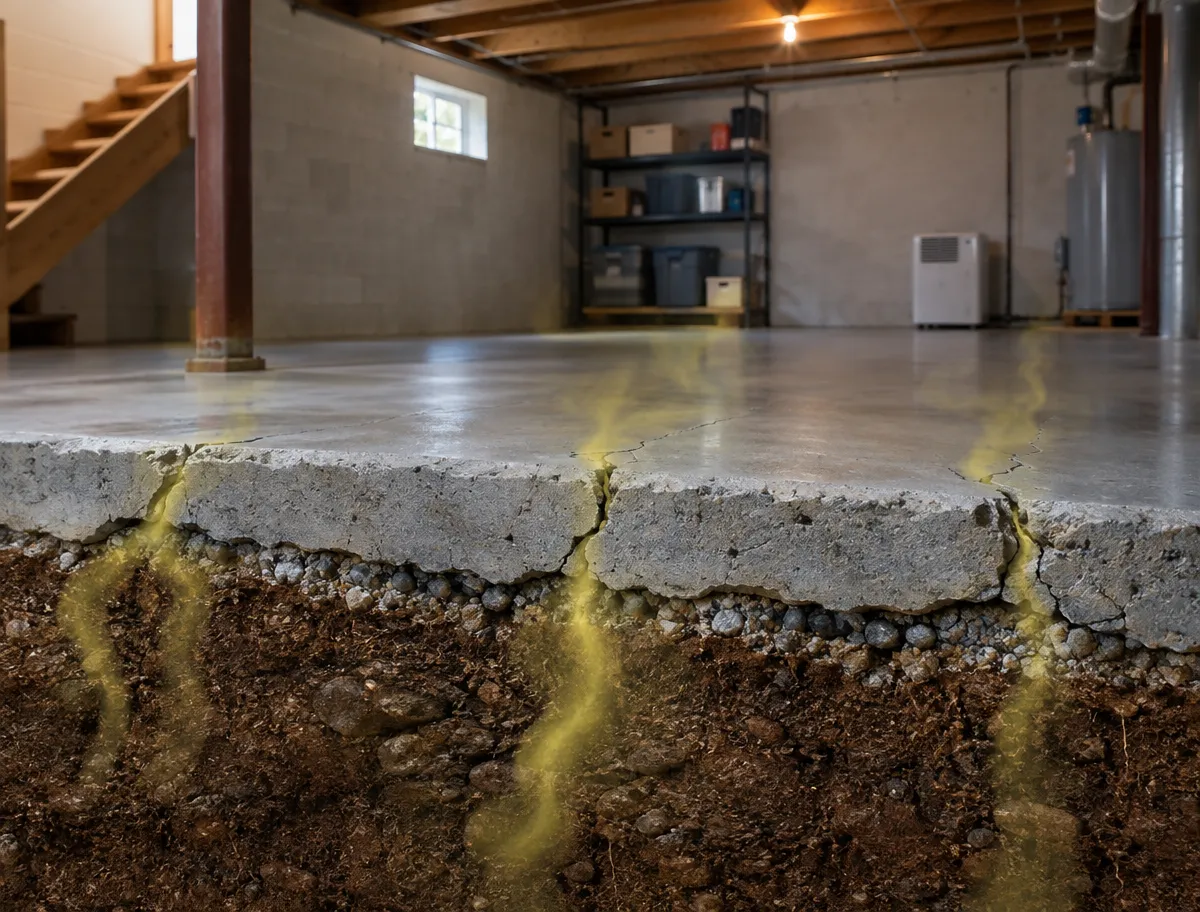
Basement floors sit closest to the soil layer where radon originates, making them a primary point of contact. Porous, untreated concrete offers little resistance to soil gas moving upward.
Can Sealants or Ventilation Alone Stop Radon?
Generally, no. Sealing cracks and openings is usually treated as a supporting step rather than a standalone fix, because sealing alone may not lower radon levels reliably, and new cracks can form as a house settles. A durable basement floor coating seals the slab surface more completely than many standard sealants, but it falls in the same category: a helpful supporting measure, not a substitute for testing and professional mitigation.
📞 Planning a Basement Floor Upgrade? J&P Coatings installs durable, one-day polyaspartic basement floor coatings across Greater Cleveland and Northeast Ohio. Contact J&P Coatings for a free, no-obligation quote, and if you haven’t tested your home for radon yet, consider doing that first.
Why Is Ohio Considered a Higher Radon-Risk State?
Radon is a recognized concern in many parts of Ohio. Uranium occurs naturally in the state’s soil and rock, and as it breaks down it releases radon into the ground beneath homes. Basements sit closest to that soil, which is why they are the usual focus for testing. The Ohio Department of Health radon booklet explains the health risks of long-term exposure and how Ohio homeowners can test their homes.
Does Living in a Lower-Risk Ohio Neighborhood Mean No Radon Risk?
No. Radon forms naturally and moves through soil regardless of a neighborhood’s reputation or regional risk category. Average levels vary from area to area, and neighboring homes can test very differently, so a regional average can’t tell you your own home’s level. Testing is the only way to know.
What Makes a Basement the Entry Point for Radon?
Concrete floors contain pores, hairline cracks, and seams around utility penetrations. These openings create pathways for soil gas to move upward into living space. Homeowners searching for a radon barrier basement floor coating in Ohio are usually looking to seal these surface openings. A coating can do that, but sealing the surface is not the same as lowering radon levels.
Key risk factors for Ohio basements include:
- Naturally occurring uranium in soil and rock across much of the state
- Porous, untreated concrete slabs
- Foundation cracks and unsealed joints
- Limited ventilation in finished or semi-finished basements
Because these factors vary from home to home, the right response starts with a radon test rather than assumptions about your area.
What Can a Basement Floor Coating Do About Radon, and What Can’t It Do?
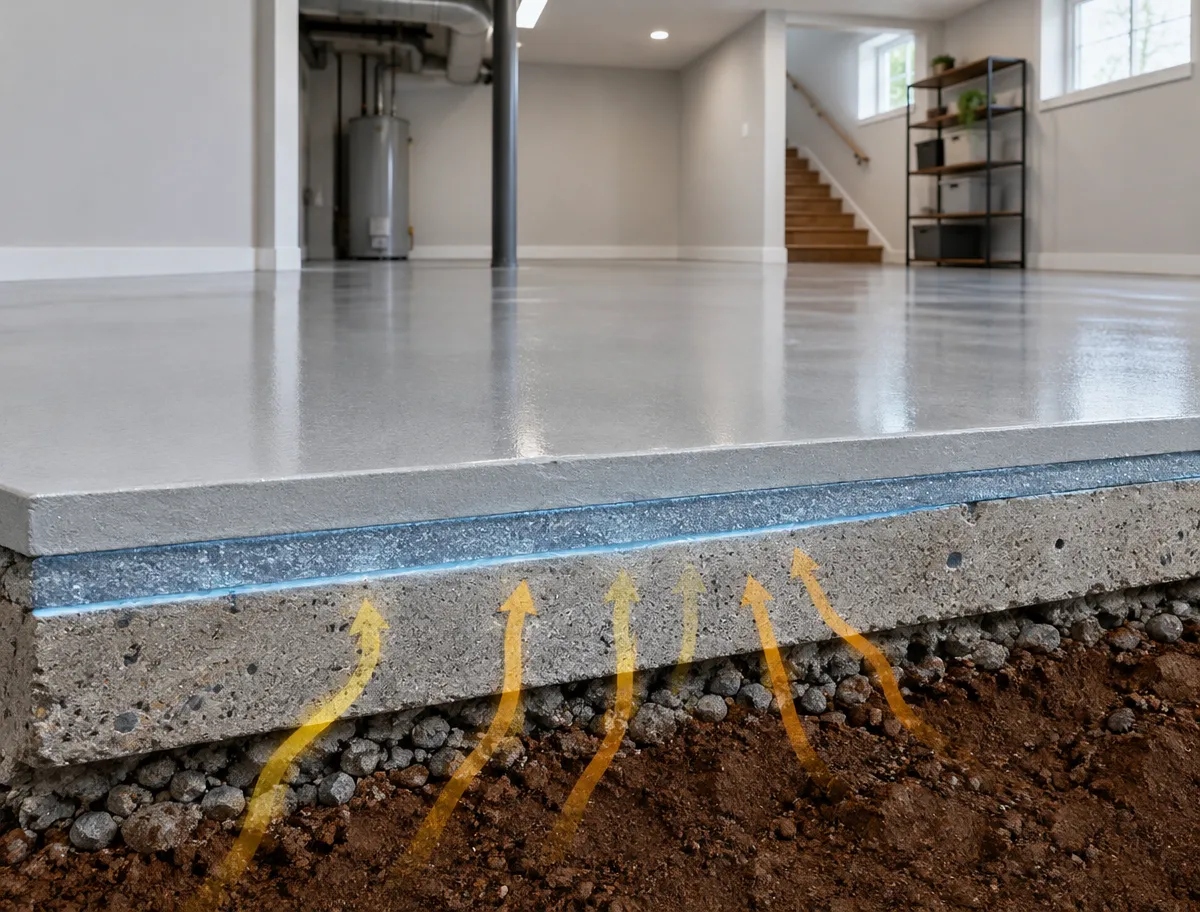
A floor coating seals the concrete surface where soil gas can enter a basement. Radon can move through tiny openings, hairline cracks, and the porous surface of untreated concrete. A properly applied coating forms a continuous layer across the slab, which can close off some of those surface pathways. That may be one part of a broader approach to radon, but a coating is not a radon mitigation system, and it should not be relied on to bring radon down to acceptable levels on its own.
This mirrors how the EPA approaches new homes: its radon-resistant construction techniques combine sealing and caulking foundation openings with other measures, such as a gas-permeable layer, plastic sheeting, and a vent pipe. Sealing is one piece of the system, not the whole system.
Does the Coating Material Matter?
Material strength affects how long the sealed surface holds up. J&P Coatings’ Polyaspartic Duralast Coating is engineered to be five times stronger than standard epoxy, according to the company, which helps the floor resist the stress and wear that can lead to new surface cracks. A more durable floor stays intact longer, though no coating can stop the foundation itself from shifting or cracking.
How Long Does Sealing a Basement Floor Take?
Duralast Polyaspartic Coating is typically installed in one day, so your basement is back in use quickly. If you’re also scheduling radon testing or mitigation, coordinate the timing with your radon professional so the work fits together.
What a basement floor coating can help with:
- Sealing hairline cracks at the surface before they widen
- Closing off porous concrete at the floor surface
- Creating a continuous, seamless floor with no open joints
- Resisting wear that leads to new surface cracks
What a basement floor coating can’t do:
- Measure or confirm your home’s radon level
- Replace a radon mitigation system designed and installed by a licensed professional
- Seal foundation walls, sump pits, or other openings outside the coated floor
Should a Coating Replace Sub-Slab Depressurization Systems?
No. Sub-slab depressurization is a common radon mitigation method that uses a vent pipe and fan to draw soil gas from beneath the foundation and vent it outside, and it is typically designed and installed by a radon mitigation professional. A coating and a mitigation system do different jobs: the coating seals the floor surface, while the mitigation system addresses the soil gas beneath the slab. The EPA’s citizen’s guide to vapor intrusion mitigation describes how sub-slab depressurization works and where sealing cracks and openings fits in as a supporting step.
Can a Floor Coating Work Without a Radon Mitigation System?
A coating can seal the floor surface whether or not a mitigation system is installed, but on its own it does not address radon beneath the foundation. If a test shows elevated radon, the next step is a licensed radon mitigation professional, not a floor coating. Proper surface preparation, including cleaning, grinding or etching, and drying the concrete, helps any radon barrier basement floor coating Ohio homeowners choose bond and perform well over time.
What Role Does Moisture Play?
Moisture affects coating performance. A damp slab resists proper preparation and can weaken adhesion over time, so moisture problems should be corrected before coating. If your basement also needs radon mitigation, coordinate moisture repairs, mitigation work, and the floor coating so each step happens in the right order.
J&P Coatings backs its basement floor installations with a limited transferable warranty; see the J&P Coatings floor coating warranty details for terms. The company serves homeowners and businesses across Greater Cleveland, Northeast Ohio, and Western Pennsylvania, including communities throughout Cuyahoga County, Ohio.
How Do Ohio Homeowners Test for Radon and Find a Qualified Professional?
Testing is the first step. Do-it-yourself test kits are widely available, and licensed radon testers can perform professional measurements. The EPA recognizes national radon standards of practice for testing and mitigation, and industry standards such as ANSI/AARST MS-PC for radon measurement devices set performance requirements for the instruments professionals use.
If results are elevated, contact a radon mitigation professional. The Ohio Department of Health licenses radon professionals in Ohio, so ask any tester or contractor for proof of a current license. A basement floor coating can then be planned around the mitigation work.
- Test your home’s radon level with a test kit or a licensed radon tester.
- If results are elevated, hire an Ohio-licensed radon mitigation professional.
- Retest after any mitigation work, as your radon professional recommends.
- Consider sealing and coating the basement floor as a supporting step and for long-term durability.
Frequently Asked Questions
Can a basement floor coating help reduce radon in an Ohio home?
A basement floor coating seals porous concrete, cracks, and joints, which are some of the paths soil gas uses to enter a basement, so it may be one part of a broader approach. It is not a radon mitigation system and should not be relied on to lower radon levels by itself. Test your home first, and contact a licensed radon mitigation professional if levels are elevated.
Why are Ohio basements especially vulnerable to radon?
Basement floors sit directly against the soil and rock where radon forms, and radon occurs naturally in soil across much of Ohio. Porous concrete and settling cracks give soil gas a path into the space. A radon test is the only way to know your home’s level.
How long does J&P Coatings’ basement floor coating take to install?
J&P Coatings’ Polyaspartic Duralast Coating is typically installed in one day. That makes it a convenient way for Greater Cleveland, Northeast Ohio, and Western Pennsylvania homeowners to seal and upgrade a basement floor.
Should I test for radon before coating my basement floor?
Testing first is a good idea. A radon test tells you whether your home may need professional mitigation, and if it does, you can coordinate the mitigation work and the floor coating so they fit together.
Who should install a radon mitigation system in Ohio?
Radon mitigation should be handled by a licensed radon mitigation professional. The Ohio Department of Health licenses radon professionals in Ohio, so ask any contractor for proof of a current license before work begins.
TL;DR — Basement Floor Coatings and Radon at a Glance
- Radon is an odorless gas that can enter basements through cracks, porous concrete, and gaps around drains and pipes.
- A basement floor coating seals the slab surface and may help limit one entry pathway, but it is not a radon mitigation system.
- Testing is the only way to know your home’s radon level.
- If levels are elevated, an Ohio-licensed radon mitigation professional is the right next step.
- Next step: Contact J&P Coatings for a free quote on a durable, one-day basement floor coating.
Related Resources
- Basement Epoxy Flooring
- Cleveland, OH Service Area
- Polyaspartic vs. Epoxy Durability
- One-Day Floor Coating in Cleveland
- Polyurea vs. Epoxy Floors in Ohio
- Why Floor Coatings Peel
Get a Free Basement Floor Coating Quote
A basement floor coating can seal a genuine entry pathway for soil gas in Ohio homes, but it works best as one piece of a broader plan that starts with radon testing and, when needed, a licensed radon mitigation professional. Sealing concrete with a durable polyaspartic coating, correcting moisture problems, and preparing the surface properly all help the floor last. Contact J&P Coatings today for a free, no-obligation quote.
About J&P Coatings: J&P Coatings installs durable concrete floor coatings for homes and businesses, including basement, garage, and commercial floors, using its one-day Polyaspartic Duralast Coating system. The company serves Greater Cleveland, Northeast Ohio, and Western Pennsylvania. J&P Coatings is a floor coating company, not a radon testing or mitigation provider. Contact us for a free, no-obligation quote.