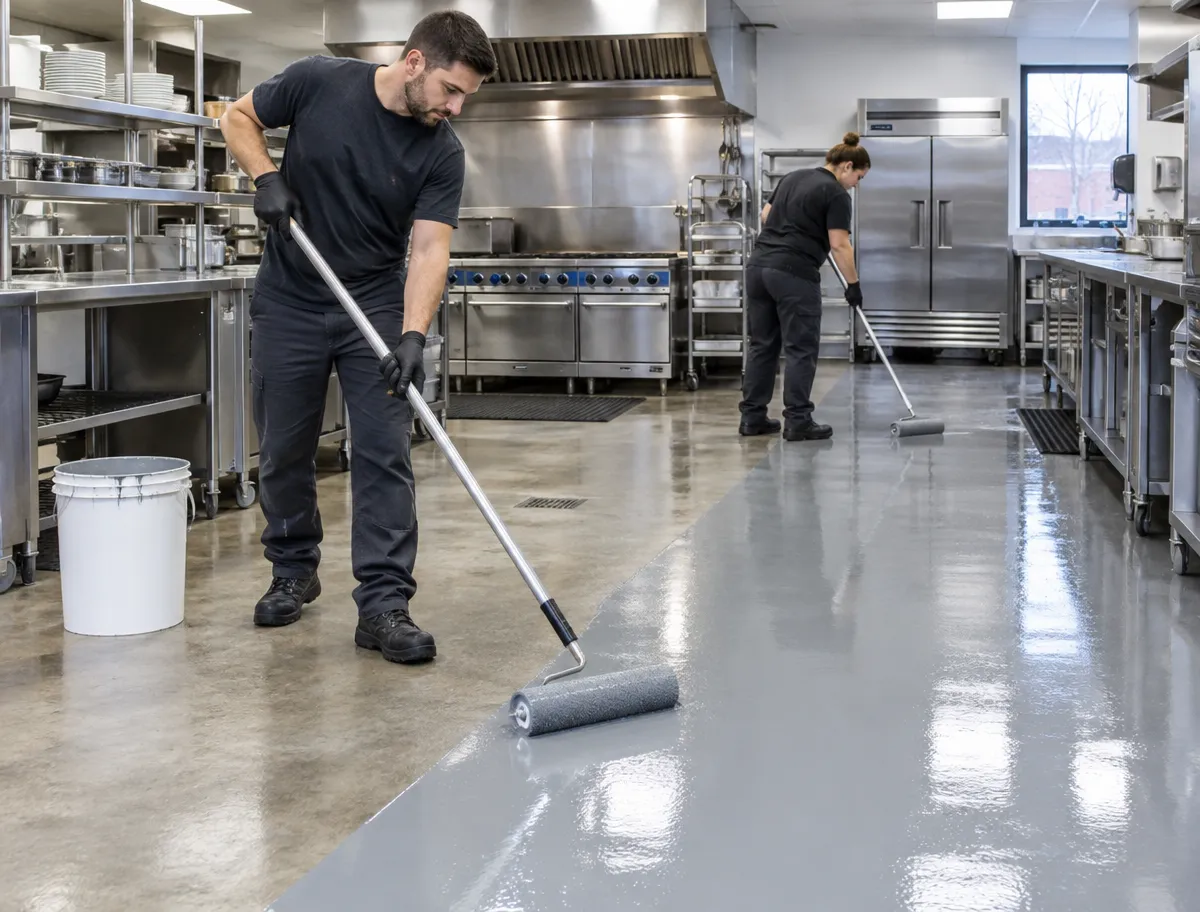
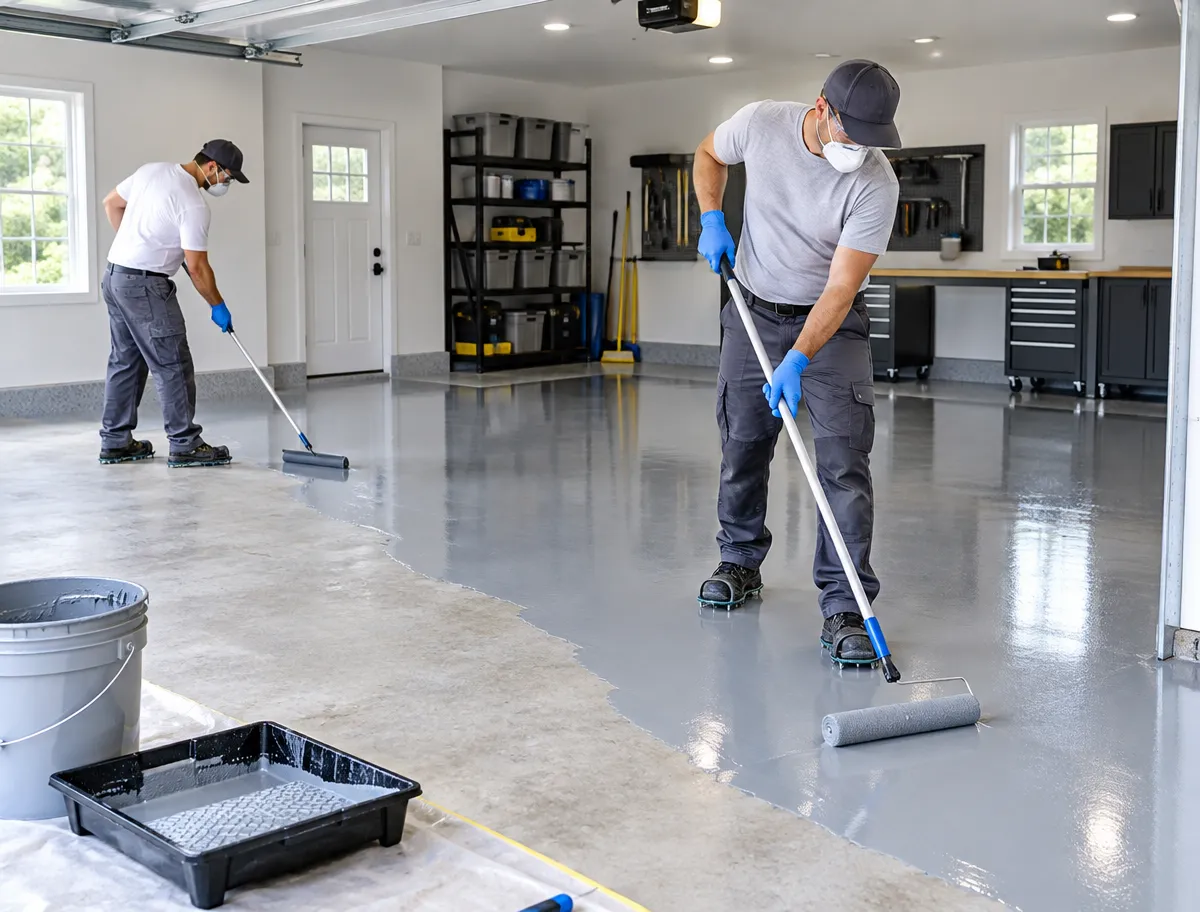
Quick Answer: Summer heat and UV exposure don’t have to make an Ohio garage floor coating fade or fail; the outcome depends on the coating’s chemistry and the surface prep beneath it. Epoxy tends to yellow and soften under sun and heat, while a polyaspartic system with a UV-stable topcoat holds its color and resists hot tire pickup, even when tires top 140°F. J&P Coatings’ Duralast Polyaspartic Coating cures in one day, resists peeling, and keeps its color through Northeast Ohio’s hottest months.
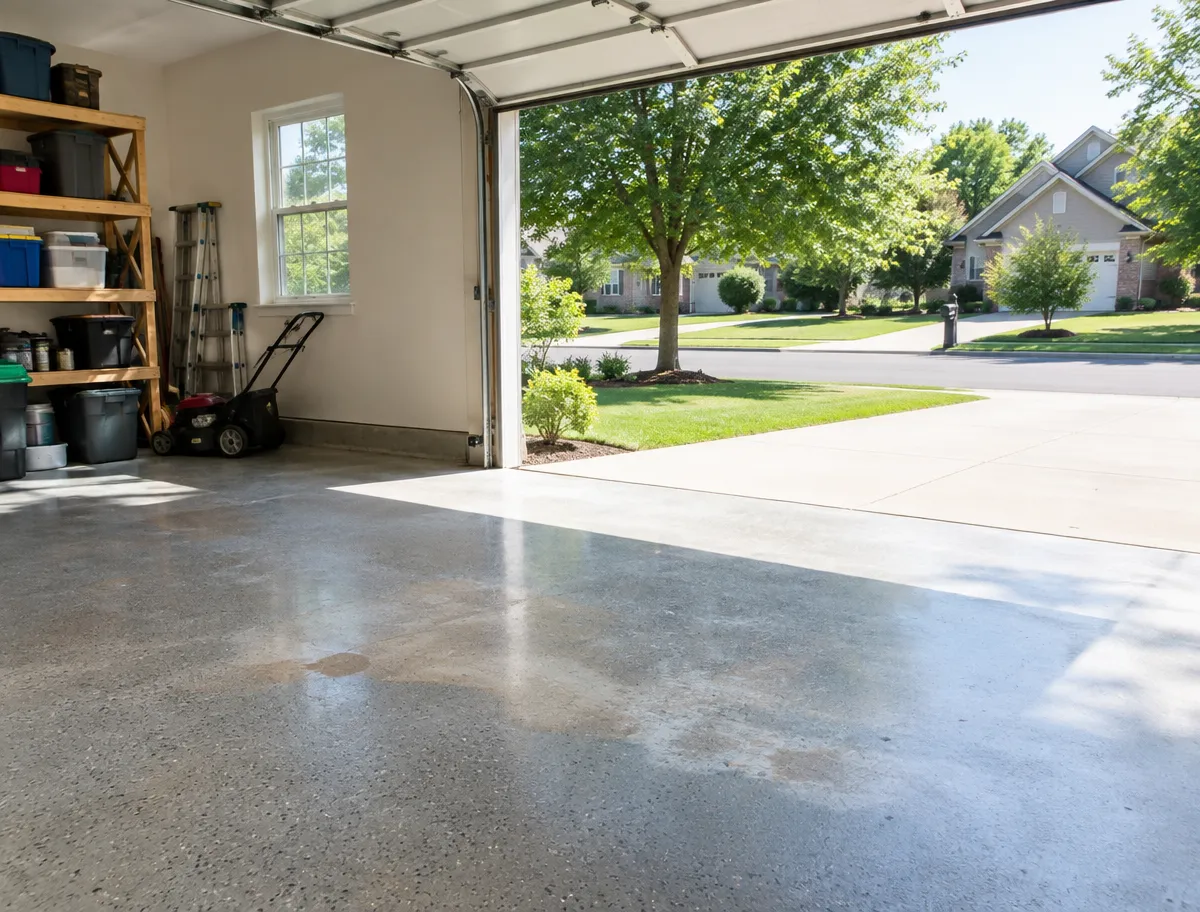
Most climate advice for Ohio garage floors focuses on winter road salt, but July and August bring their own threats: strong UV, hot tires, and big temperature swings. The EPA’s UV Index scale routinely reaches the moderate-to-high range on clear Ohio summer days, and that sunlight pours straight through open garage doors onto the slab. Here’s what actually causes a coating to fade or fail in the heat, and how to choose one that won’t.
What Are the Key Takeaways About Summer Heat and Garage Floor Coatings?
- Vehicle tires exceed 140°F in summer heat, softening low-quality coatings and causing adhesion failure.
- Ohio’s temperature swings cause concrete expansion and contraction, creating stress on garage floor coatings.
- UV exposure combined with summer heat accelerates yellowing, peeling, and fading in unprotected garage floors.
- Quality coatings backed by warranty protection prevent heat-related damage that compromises concrete durability year-round.
Why Does Ohio’s Summer Heat Threaten Garage Floors?
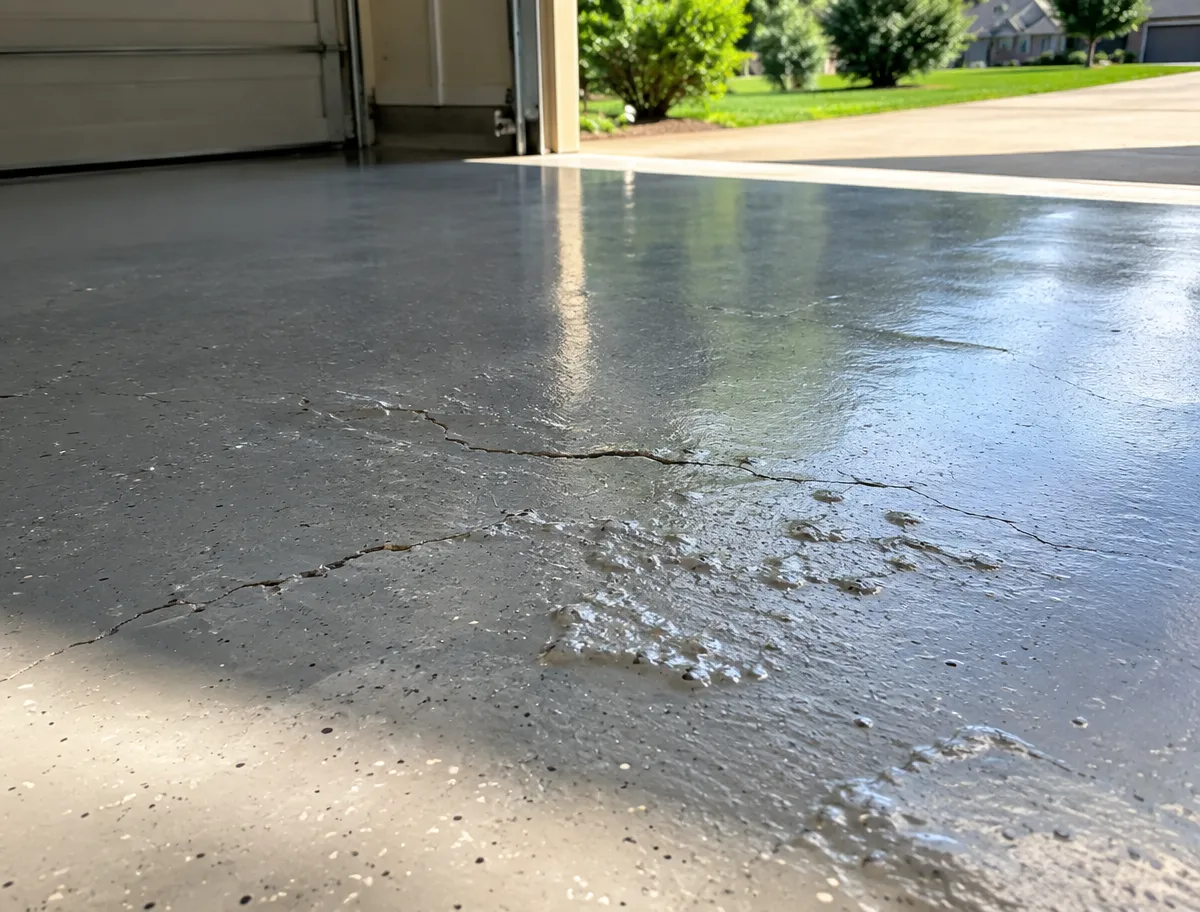
Ohio garages absorb a brutal combination of stress every summer: temperature swings, vehicle traffic, standing moisture, and direct UV exposure. Each factor works on concrete separately, and together they accelerate damage far faster than most homeowners expect. Unprotected floors bear the full weight of that combination with no buffer to absorb the impact.
Heat itself changes the physical structure of a garage floor. Concrete expands when temperatures climb. Ohio garages often trap that heat further when sunlight pours through open doors or unshaded windows. The slab heats unevenly, straining the surface from the inside out.
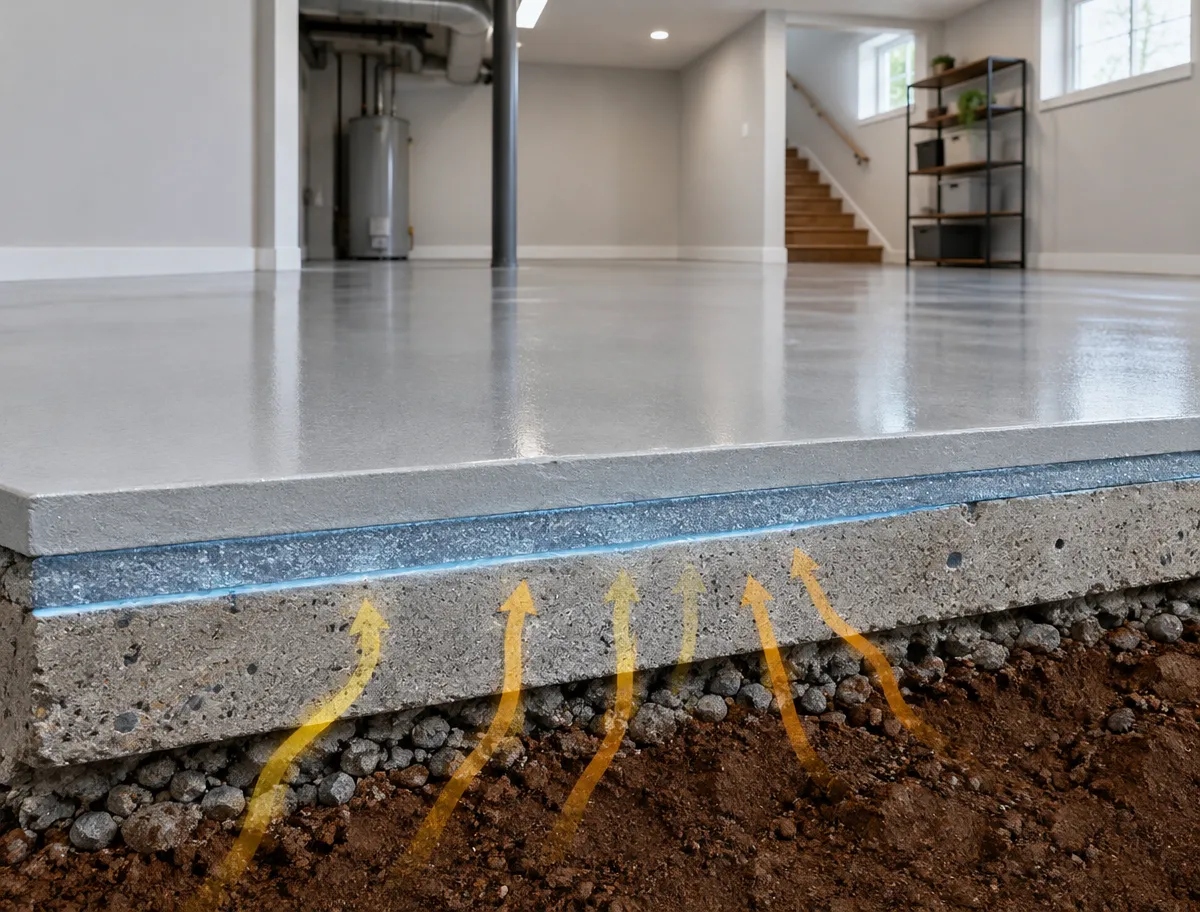
The deeper problem is what concrete is made of. Despite its reputation for toughness, concrete is a porous material. It expands, contracts, and draws in moisture continuously, cycling through stress that most homeowners never see happening beneath their tires. A slab without a sealed, protective layer has nowhere to release that pressure evenly. The American Concrete Institute’s guide to concrete floor and slab construction notes that owners should expect some cracking and curling on every slab as a normal result of these volume changes.
What Damage Does Unprotected Concrete Suffer in Summer Heat?
Cracking is the most visible outcome, but staining and surface deterioration typically arrive first. High temperatures speed up all three processes at once. A driveway or garage slab that looked stable in spring can show hairline fractures and discoloration by late August. Left alone, that damage compounds, as our study on the cost of garage floor neglect shows.
Does a Garage Floor Coating Actually Prevent This Damage?
A properly installed garage floor coating creates a barrier between Ohio’s punishing summer conditions and the porous concrete underneath. Sealing the surface limits moisture absorption and reduces the expansion-contraction cycle that drives cracking. That protection is precisely why summer ranks among the most practical seasons to invest in a coating system.
Concrete left exposed year after year doesn’t fail overnight. It erodes gradually until repair costs exceed what protection would have cost. J&P Coatings serves homeowners throughout Ohio with polyaspartic floor systems built to withstand these seasonal extremes.
Will Your Garage Floor Coating Yellow or Fade?
Garage floors in Ohio fail for three predictable reasons: yellowing, peeling, and fading. Homeowners across the state report the same set of fears. Each one traces back to a distinct, correctable cause rather than bad luck.
Yellowing stems from ultraviolet exposure breaking down the coating’s chemical structure over time. Peer-reviewed research on how UV light affects the chemical and mechanical properties of epoxy found that unprotected epoxy lost roughly 30% of its tensile strength under UV, versus about 11% with a UV absorber added. A UV-stable topcoat resolves this issue by blocking the degradation before it starts. For a deeper look at sunlight and color stability, see our guide on whether polyaspartic floors yellow in sunlight.
Peeling, by contrast, has nothing to do with sunlight. It results from poor surface preparation, and diamond grinding the concrete beforehand eliminates the weak bond that causes lifting. We break down the full list of causes in why garage floor coatings peel. Fading falls into a third category entirely: a materials problem tied to low-quality flake and topcoat products.
What Causes Each Type of Damage?
Three separate mechanisms drive garage floor deterioration, and confusing them leads to the wrong fix.
| Problem | Root Cause | Solution |
|---|---|---|
| Yellowing | UV exposure | UV-stable topcoat |
| Peeling | Inadequate surface prep | Diamond grinding |
| Fading | Low-grade materials | Quality flake and topcoat |
Correcting all three factors keeps a floor looking new for years, not months.
Does Duralast Coating Address These Failure Points?
Duralast Polyaspartic Coating is engineered specifically to resist chipping and peeling, tackling one of the three core fears head-on. Since peeling ranks among the most common complaints Ohio homeowners raise about failed coatings, eliminating that risk at the product level matters as much as proper installation technique.
A garage floor built to resist all three failure modes doesn’t happen by accident. It requires the right chemistry, the right prep work, and materials chosen for long-term performance rather than upfront cost alone.
☀️ Worried About Summer Sun on Your Garage Floor? J&P Coatings installs UV-stable Duralast Polyaspartic Coating across Greater Cleveland, Northeast Ohio, and Western Pennsylvania, usually in a single day. Request your free garage floor coating estimate and get a floor built for Ohio summers.
Can Hot Tires Really Peel a Coating?
Yes, hot tires peel a coating when the underlying system is weak. Ohio summers push sidewalk and garage-floor temperatures high enough that vehicle tires can exceed 140°F, a threshold that softens low-quality coatings and lets them stick directly to rubber. Once a coating softens, tires literally lift it from the concrete during a turn or a hard stop, tearing away material that should have stayed bonded.
Not every coating fails this way, though. Failure traces back to specific weaknesses in the installation, not simply to summer heat itself.
Why Do Some Garage Coatings Fail While Others Hold Up?
The difference comes down to adhesion and cure. Coatings with weak bonding strength, incomplete curing, or moisture trapped beneath the surface are the ones most vulnerable to hot-tire lifting. A coating that never fully cured before a vehicle parked on it carries risk long after installation day.
Surface preparation plays an equally large role. Shot blasting the concrete to a consistent surface profile gives the coating material a stable, mechanical grip, which matters most in a state where garage floors face wide seasonal temperature swings.
How Does Duralast Polyaspartic Coating Address This Risk?
Duralast Polyaspartic Coating shortens the vulnerability window by curing within a single day of installation. That fast cure limits the period during which a still-hardening floor could bond to a hot tire.
The coating also resists salt and oil exposure, both common in Ohio garages and driveways. Homeowners evaluating summer heat UV garage floor coating Ohio options should weigh:
- Cure speed relative to vehicle return-to-use timing
- Surface prep method used before coating application
- Resistance to salt, oil, and repeated seasonal temperature swings
Each factor determines whether a floor survives the next heat wave intact.
What Do UV and Wear Tests Actually Show?
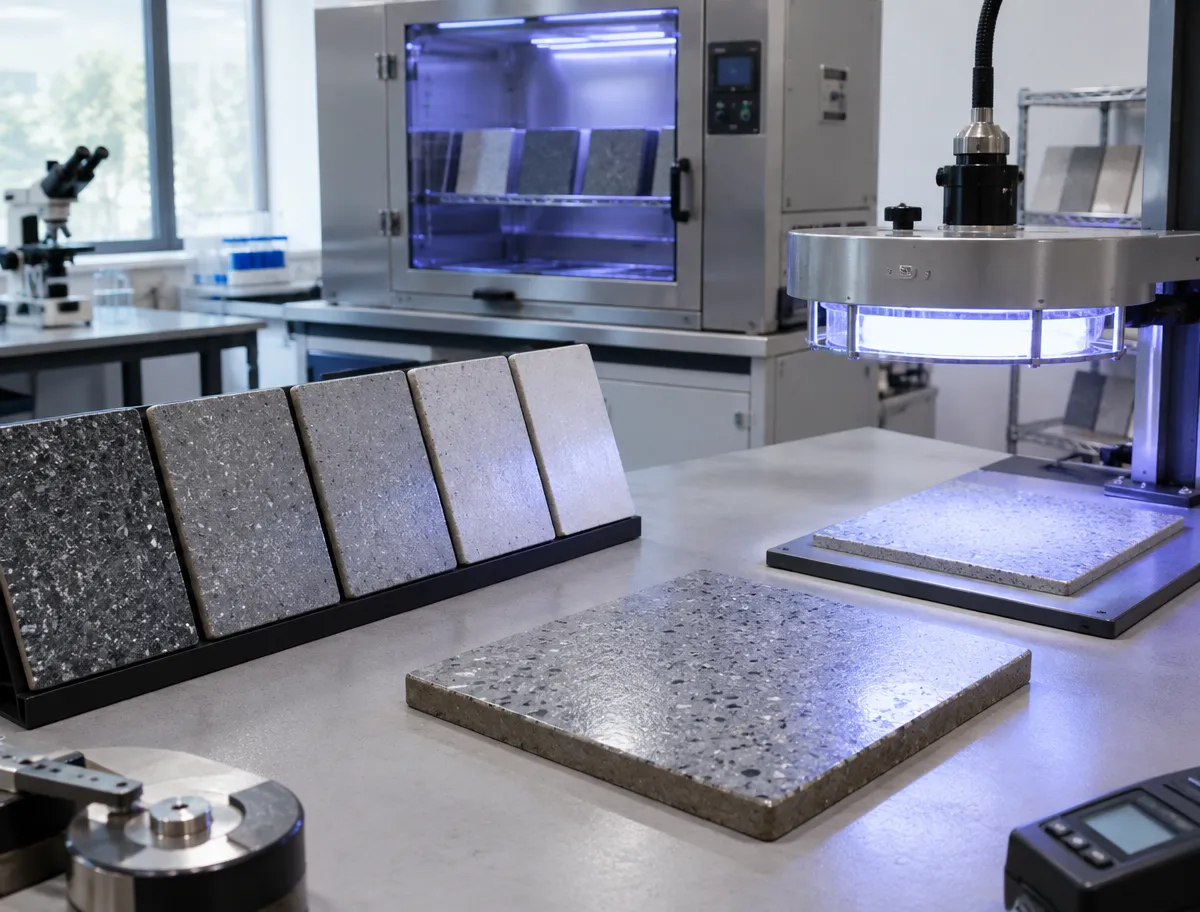
Laboratory data settles the argument between coating types better than any sales pitch. For Ohio garages exposed to direct sun and daily vehicle traffic, coating type determines long-term performance far more than marketing claims suggest. According to Garage Floor Coating Studies: UV and Wear Results, epoxy systems tend to yellow faster and wear out sooner under these conditions. Polyaspartic and aliphatic polyurea formulations hold their color longer and lose less surface material during abrasion testing. Our polyaspartic vs. epoxy durability comparison covers the long-term differences in more detail.
The numbers make the gap concrete. In one UV exposure test, gray epoxy reached a color shift of ΔE 8.83 after 500 hours, a change visible to the naked eye. Gray polyaspartic, tested under the same conditions, measured only 0.89, a fraction of the shift epoxy showed. Tests like this typically follow ASTM G154 fluorescent UV lamp exposure practice, and NIST’s accelerated weathering of polymers research explains why lab UV hours are used to predict real-world service life.
How Much Does Color Shift Actually Matter for a Garage Floor?
A higher ΔE value signals more visible fading, yellowing, or dulling over time. For garages with south-facing doors or windows, common across Ohio homes, that shift shows up within a few seasons of direct sun exposure.
Does Slower Fading Also Mean Slower Wear?
Test data suggests yes. Polyaspartic and aliphatic polyurea topcoats typically register 5 to 25 mg of mass loss in abrasion testing, a range associated with slower material breakdown under friction. Abrasion results like these are usually measured with the ASTM D4060 Taber abrasion test for organic coatings.
| Coating Type | UV Color Shift (ΔE, 500 hrs) | Abrasion Mass Loss |
|---|---|---|
| Gray Epoxy | 8.83 | Higher than polyaspartic range |
| Gray Polyaspartic | 0.89 | 5-25 mg |
Homeowners weighing options for a summer heat UV garage floor coating Ohio installation gain a clearer picture from these figures than from any product label alone.
How Does J&P Coatings Protect Ohio Garages?
J&P Coatings protects Ohio garages through a polyaspartic floor coating system engineered to withstand heat, abrasion, and constant vehicle traffic. Ohio summers bring intense sun exposure and hot sidewalk conditions that weaken lesser coating systems over time. Garages across the state face this stress season after season. Floor protection has to hold up under repeated cycles of heat and use.
The core product, Duralast Polyaspartic Coating, forms the foundation of that protection. It measures five times stronger than standard epoxy, a difference that matters most when garage floors face summer heat UV garage floor coating Ohio conditions and daily abrasion from tires and foot traffic. Standard epoxy systems soften and degrade faster under these repeated stress cycles, while the polyaspartic formulation resists that breakdown.
Does J&P Coatings Offer a Warranty on Ohio Installations?
Every installation carries a limited transferable warranty. That coverage gives homeowners assurance against premature failure and adds resale value. The warranty transfers if the home changes hands.
Where in Ohio Does J&P Coatings Work?
Coverage extends across Greater Cleveland, Northeast Ohio, and Western Pennsylvania. Garages throughout these regions face comparable heat and climate stress. The same coating system applies statewide rather than in one isolated area.
J&P Coatings brings more than product strength to the table. Consider what backs each installation:
- Proven durability: Duralast Polyaspartic Coating outperforms epoxy by a factor of five under abrasion and heat stress.
- Warranty protection: Limited transferable coverage on every job, reducing long-term risk for homeowners.
- Regional experience: Service across Greater Cleveland, Northeast Ohio, and Western Pennsylvania since 2018.
That combination, established performance materials paired with sustained regional experience, gives Ohio homeowners a floor coating built for the state’s demanding summer conditions.
Frequently Asked Questions
Does garage floor coating fade in Ohio’s summer heat?
J&P Coatings’ Duralast polyaspartic coating features a UV-stable topcoat that prevents yellowing under intense summer sun, keeping color intact through Ohio’s harshest seasons.
Does hot tire pickup damage garage floor coatings?
Vehicle tires reaching 140°F soften weaker coatings and cause adhesion failure. Duralast withstands hot tire pickup and resists peeling even under that heat.
Why does unprotected concrete fail during Ohio summers?
Concrete is porous and expands, contracts, and absorbs moisture continuously. Without a sealed protective layer, this cycling causes cracking, staining, and surface deterioration.
Is polyaspartic or epoxy better for a sunny Ohio garage?
Polyaspartic holds up better in sun-exposed garages. In UV exposure testing, gray epoxy shifted color by ΔE 8.83 after 500 hours, while gray polyaspartic shifted only 0.89, and polyaspartic topcoats also lose less material in abrasion testing.
Is summer a good time to install a garage floor coating in Ohio?
Yes. Summer ranks among the most practical seasons to coat a garage floor, because sealing the concrete before the next heat cycle limits moisture absorption and cracking, and a one-day polyaspartic cure gets your garage back in use quickly.
TL;DR — Summer Heat, UV, and Garage Floor Coatings at a Glance
- Summer tire temperatures above 140°F soften weak coatings and cause hot tire pickup.
- Yellowing comes from UV, peeling from poor prep, and fading from low-grade flake and topcoat.
- In UV testing, gray epoxy shifted ΔE 8.83 after 500 hours versus just 0.89 for gray polyaspartic.
- Duralast Polyaspartic Coating cures in one day, resists peeling, and carries a limited transferable warranty.
- Next step: Contact J&P Coatings for a free quote on a UV-stable garage floor before next summer’s heat.
Related Resources
- Garage Floor Coatings
- Garage Floor Coating in Cleveland, OH
- Polyurea vs. Epoxy Garage Floors in Ohio
- One-Day Floor Coating in Cleveland
- Garage Floor Coating Cost in Cleveland, Ohio
- Polyaspartic Floor Coating Cost in Ohio
Get a Free Garage Floor Coating Quote
Ohio’s intense summer conditions demand a garage floor coating engineered for durability and UV stability. J&P Coatings’ polyaspartic Duralast Coating withstands the region’s heat and sun exposure without fading or failure, delivering the lasting protection your garage requires. With our limited warranty backing every installation, you invest in a floor system designed to perform through countless Ohio summers ahead. Contact J&P Coatings today for a free, no-obligation quote.
About J&P Coatings: J&P Coatings has installed concrete floor coatings across Greater Cleveland, Northeast Ohio, and Western Pennsylvania since 2018. Its Duralast Polyaspartic Coating system is built for Ohio’s seasonal extremes, cures in one day, resists chipping, peeling, salt, and oil, and is backed by a limited transferable warranty.