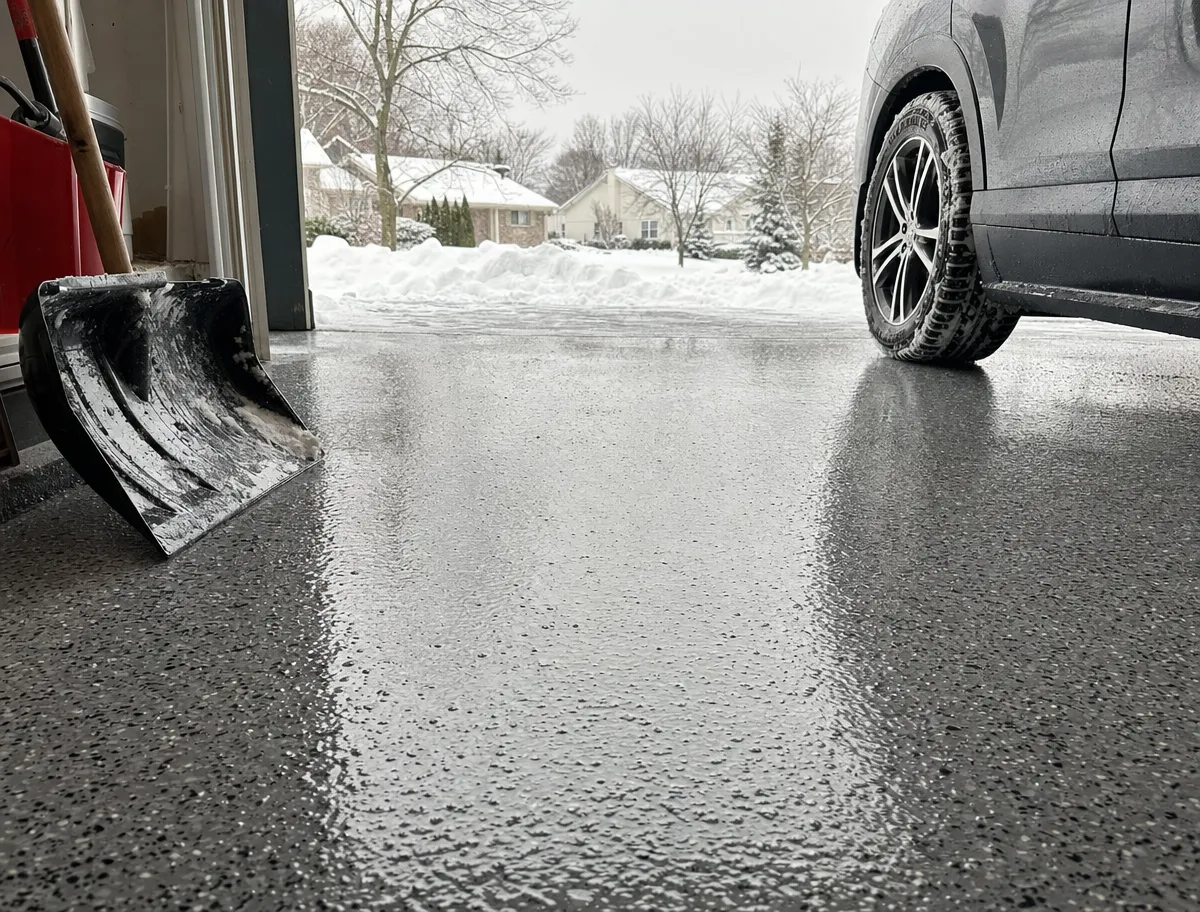
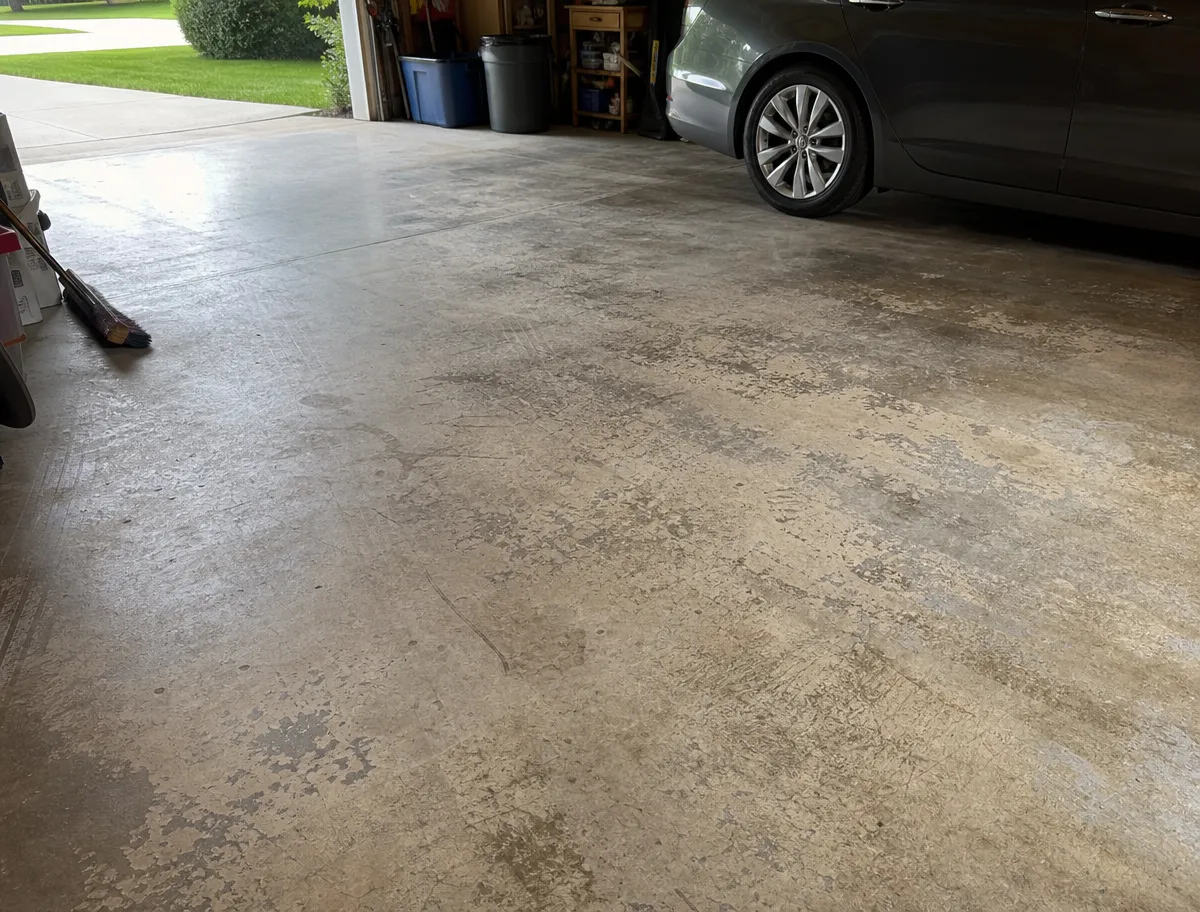
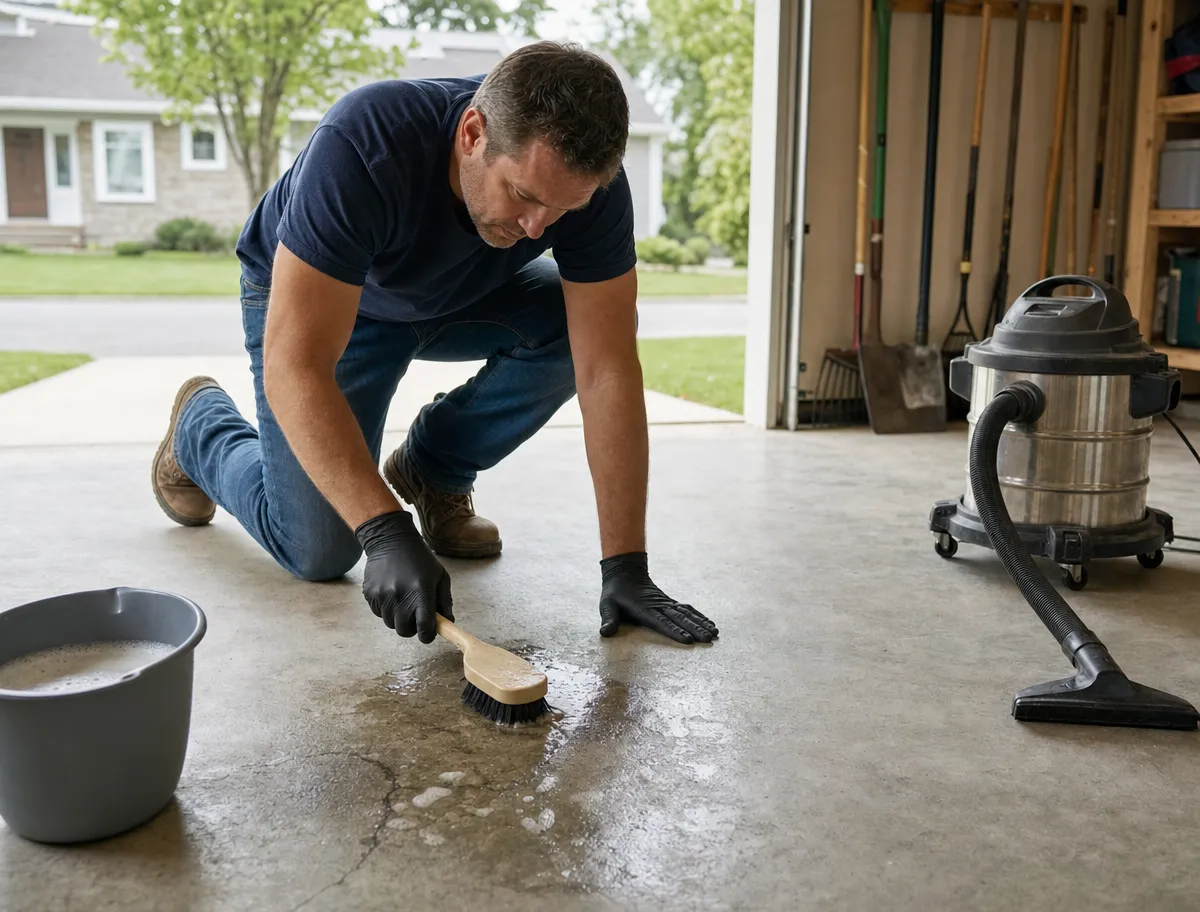
For Cleveland restaurant owners, choosing the right commercial kitchen floor coating affects safety, sanitary compliance, and asset longevity. Flooring must withstand heavy use while meeting health and safety rules for cleanability and slip resistance. This guide outlines the main coating types, their operational benefits, typical installation steps, and practical maintenance guidance for Northeast Ohio foodservice operations.
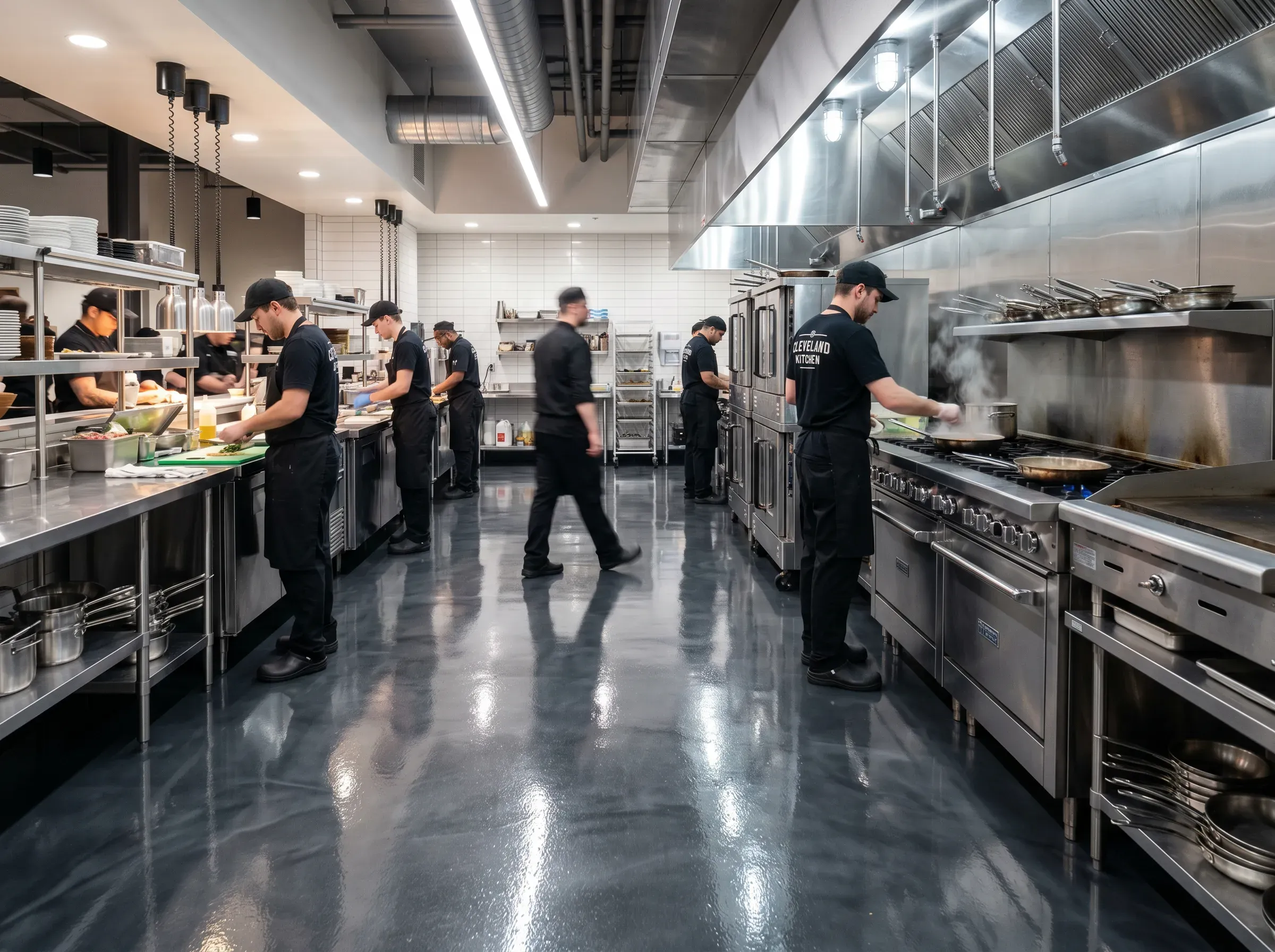
The guide focuses on four coating families commonly used in commercial kitchens: epoxy, polyaspartic, urethane, and polished concrete, summarizing benefits, installation basics, and maintenance expectations.
Key Takeaways
- Coatings must meet safety, durability, and health-regulation requirements for restaurant environments.
- Epoxy delivers durable, chemical-resistant, seamless surfaces that simplify sanitation.
- Polyaspartic cures quickly, resists UV yellowing, and reduces downtime during installation.
- Urethane concrete systems withstand thermal stress and heavy mechanical abuse.
- Polished concrete offers a low-porosity, easy-to-clean finish with good longevity.
- Slip resistance, chemical resistance, and easy maintenance are primary benefits.
- Proper installation requires substrate preparation, multi-layer application, and curing.
- Regular cleaning, prompt spill control, and inspections extend coating life.
- Consult qualified contractors to select a compliant, durable system; JandP Coatings is listed as a local provider.
Commercial Kitchen Floor Coating in Cleveland: A Comprehensive Guide for Restaurant Owners
Choose coatings that meet municipal standards while optimizing longevity and minimizing maintenance. Material properties determine operational resilience and workplace safety; match products to kitchen use and cleaning regimes.
Epoxy Coatings
Epoxy produces a robust, often high-gloss, seamless surface with strong chemical and abrasion resistance, limiting microbial harborage and easing sanitation when maintained correctly.
Polyaspartic Coatings
Polyaspartic formulations cure rapidly, offer UV stability to reduce yellowing, and enable quicker re-entry to service—useful when turnaround time is critical. Explore J&P Coatings’ polyaspartic floor coating options for fast-cure commercial installations.
Urethane Concrete Systems
Designed for high-heat, high-impact areas, urethane concrete systems resist gouging, abrasion, and many chemicals, making them suitable for rugged food-prep zones.
Polished Concrete and Sealers
Polished concrete yields an aesthetic, low-porosity finish that supports straightforward cleaning and good moisture resistance when sealed appropriately.
Benefits of Commercial Kitchen Floor Coatings
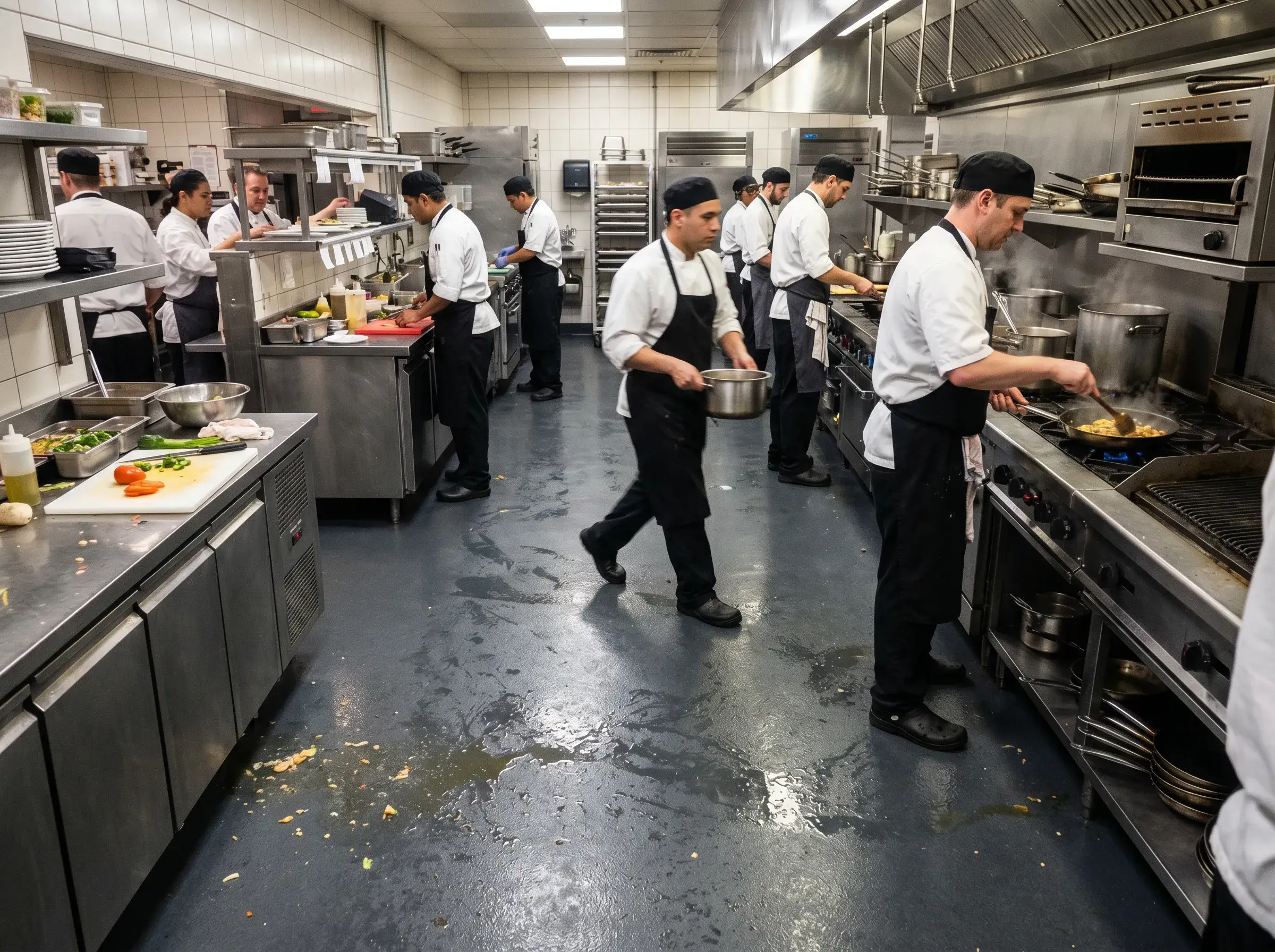
Appropriate coatings improve safety and uptime: engineered slip resistance reduces accidents, durable materials limit wear, and seamless surfaces simplify sanitation and reduce labor.
- Slip Resistance: Reduces slip-and-fall incidents in busy areas, supporting compliance with OSHA walking-working surface standards for safe, hazard-free floors.
- Durability: Withstands heavy foot traffic and equipment use.
- Chemical Resistance: Protects the substrate from cleaning agents and food spills.
- Easy Maintenance: Seamless systems are quicker to clean and sanitize.
Consult qualified contractors for written estimates and site-specific recommendations; local providers such as J&P Coatings’ commercial kitchen floor coating services offer customised systems for regional codes.
Installation Process
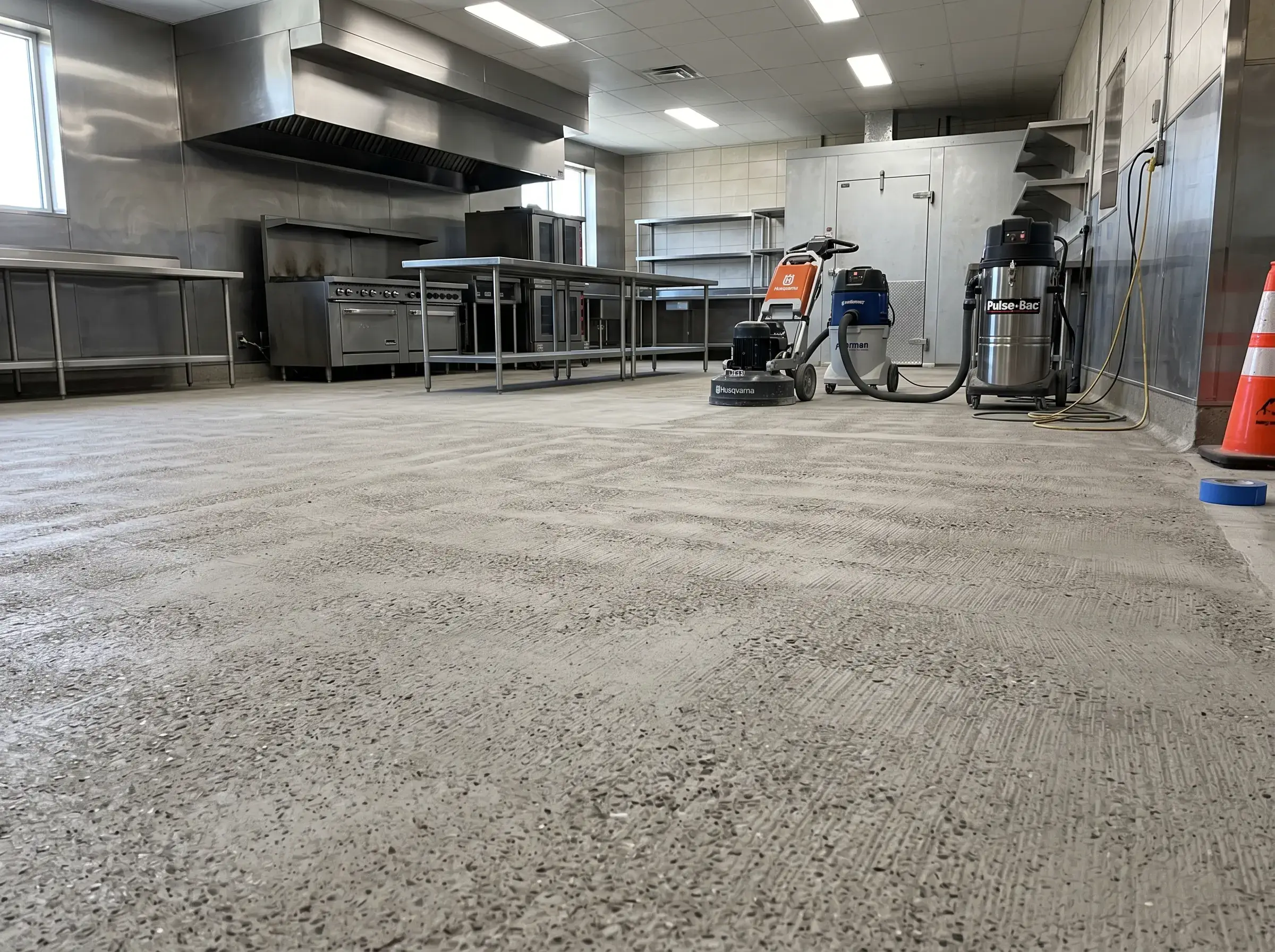
Installation planning should account for downtime, substrate condition, and product cure times. Typical stages are surface cleaning and removal of old coverings, mechanical grinding to prepare the substrate, primer and multi-layer coating application, and a defined curing interval before reoccupation. Schedule and timelines vary by product.
- Preparation: Thorough cleaning and removal of old flooring to ensure adhesion.
- Surface Grinding: Profiles concrete for mechanical bond.
- Application: Primer and successive coating layers applied per product instructions.
- Curing: Allow specified cure time before full use to achieve performance.
Professional contractors provide oversight of preparation, material selection, and curing procedures, reducing installation risk and downtime.
Maintenance Considerations
A formal maintenance plan preserves performance and safety. Specify approved cleaners, cleaning frequency, spill procedures, and protective measures to meet hygienic standards and prolong service life.
- Regular Cleaning: Use manufacturer-recommended, non-abrasive cleaners and appropriate tools.
- Immediate Spill Management: Clean spills promptly to avoid staining and slipping hazards.
- Periodic Inspections: Check for wear or damage and repair promptly.
Routine maintenance and timely repairs help Cleveland restaurant owners minimise unplanned downtime and defer replacement costs.
What Are the Best Commercial Kitchen Floor Coatings for Durability and Safety?
Epoxy and polyurethane (including polyaspartic variants) are common where chemical resistance and moisture control are priorities; choose based on site conditions and required performance.
How Do Epoxy and Polyurethane Coatings Compare for Commercial Kitchens?
Epoxy offers long-term chemical resistance; polyurethane and polyaspartic systems can provide faster installation and better UV stability. Both can be specified with slip-resistant textures. See J&P Coatings’ epoxy vs polyaspartic flooring comparison guide for a side-by-side breakdown.
What Are the Advantages of Durable, Slip-Resistant Coatings in Food Service Environments?
They reduce incidents, support occupational and public-health compliance, protect staff and patrons, and stabilise maintenance budgets.
Which Commercial Kitchen Flooring Regulations Apply in Cleveland and Northeast Ohio?
Cleveland standards require non-porous, readily cleanable, and stain-resistant floor finishes in commercial kitchens, as detailed in Ohio Administrative Code 3717-1-06.1 governing physical facilities. Selecting compliant materials and documenting maintenance supports inspections.
How Can Cleveland Restaurant Owners Maintain and Prolong Their Kitchen Floor Coatings?
Implement routine cleaning, promptly repair damage, and schedule professional inspections. A written maintenance plan aids early detection and regulatory compliance.
What Are Recommended Maintenance Practices for Epoxy and Polyurethane Floors?
Use manufacturer-approved non-abrasive cleaners, address surface defects quickly, and follow recommended sealing or resealing schedules to preserve performance.
How Does Proper Maintenance Reduce Long-Term Repair and Replacement Costs?
Preventive maintenance limits progressive damage, reduces repair scope, and extends replacement intervals, lowering lifetime costs.
What Should You Expect from the Installation Process and Associated Costs?
Costs depend on coating type, substrate preparation, and project scale; obtain a detailed, itemized estimate from a qualified contractor before work begins.
How Are Installation Costs Determined and What Is the Return on Investment?
Costs reflect materials, preparation extent, and labor. Durable systems generally yield savings via reduced maintenance and longer service life.
Frequently Asked Questions
1. What Should I Consider When Choosing a Kitchen Floor Coating?
Evaluate slip resistance, durability, chemical resistance, compliance with health regulations, installation time, and total cost of ownership.
2. How Often Should I Inspect My Kitchen Floor Coatings?
Inspect at least monthly to detect wear or damage early and schedule repairs as needed.
3. Can I Apply Floor Coatings Myself, or Should I Hire a Professional?
Professional installation is recommended to ensure correct substrate prep and specification compliance; DIY may increase failure risk.
4. What Maintenance Supplies Are Best for My Commercial Kitchen Floors?
Use non-abrasive, manufacturer-approved cleaners, microfiber tools, and absorbent mats in spill-prone zones.
5. How Do Environmental Factors Affect Floor Coating Choices?
Humidity, temperature variation, and chemical exposure influence material selection; perform an environmental assessment before specifying a system.
6. Are There Any Special Requirements for Kitchen Floor Coating Compliance in Cleveland?
Yes—floors must be non-porous, readily cleanable, and stain-resistant; document materials and maintenance to support inspections.
7. What Is the Lifespan of Different Commercial Floor Coatings?
Service life varies: epoxy commonly lasts several years, polyaspartic and urethane often last longer with proper maintenance; polished concrete can be serviceable for many years if maintained.
Conclusion
Selecting the right commercial kitchen floor coating is key to safety, hygiene, and operational efficiency in Cleveland restaurants. Epoxy, polyaspartic/urethane, and polished concrete each offer specific benefits; engage qualified professionals to specify a compliant, durable solution tailored to your facility. J&P Coatings serves Cleveland, OH and surrounding Cuyahoga County communities with expert floor coating installations.
Ready to Enhance Your Kitchen Flooring in Cleveland?
We are your trusted partner for top-quality commercial kitchen floor coating solutions in Cleveland and Northeast Ohio. Our experienced team ensures compliance, durability, and safety tailored to your restaurant’s needs. Contact us today to schedule a consultation and elevate your kitchen’s flooring performance.