

Automotive Floors
Automotive Floor Coatings for Shops, Dealerships & Garages in NE Ohio
An automotive floor takes punishment that ordinary concrete was never designed to handle. Motor oil, brake fluid, coolant, and road salt soak into bare concrete and stain it permanently. Floor jacks, lifts, and the constant weight of vehicles grind the surface down, while dropped tools chip and pit it a little more every week. And if customers ever walk through your space — a dealership showroom, a detailing studio, a service write-up area — a stained, dusty concrete floor quietly undermines everything else you do to look professional.
J&P Coatings installs automotive floor coatings built specifically for this environment. Our Duralast® Polyaspartic floor coating system is 5X stronger than epoxy, resistant to oil and automotive chemicals, and installed in as little as one day — so your shop isn't losing revenue while the floor cures. We're a family-owned contractor based in Middlefield, Ohio, the #2 Duralast® installer in the nation for 2024, and we serve auto shops, dealerships, and garages across Greater Cleveland and Northeast Ohio.
Why Duralast® Polyaspartic Is Built for Automotive Use
- Oil & grease resistant — the non-porous surface won’t absorb motor oil, transmission fluid, or brake cleaner. Spills wipe up instead of soaking in.
- Chemical resistant — stands up to solvents, degreasers, road salt, and battery acid exposure common in service bays.
- No hot tire pick-up — unlike cheap epoxy kits, Duralast® won’t peel up when hot tires park on it after a drive.
- Slip-additive options — optional Shark Bite Grip texture adds traction in wet wash bays and service areas.
- Easy to clean — seamless surface means dust control and fast cleanup — squeegee, mop, done.
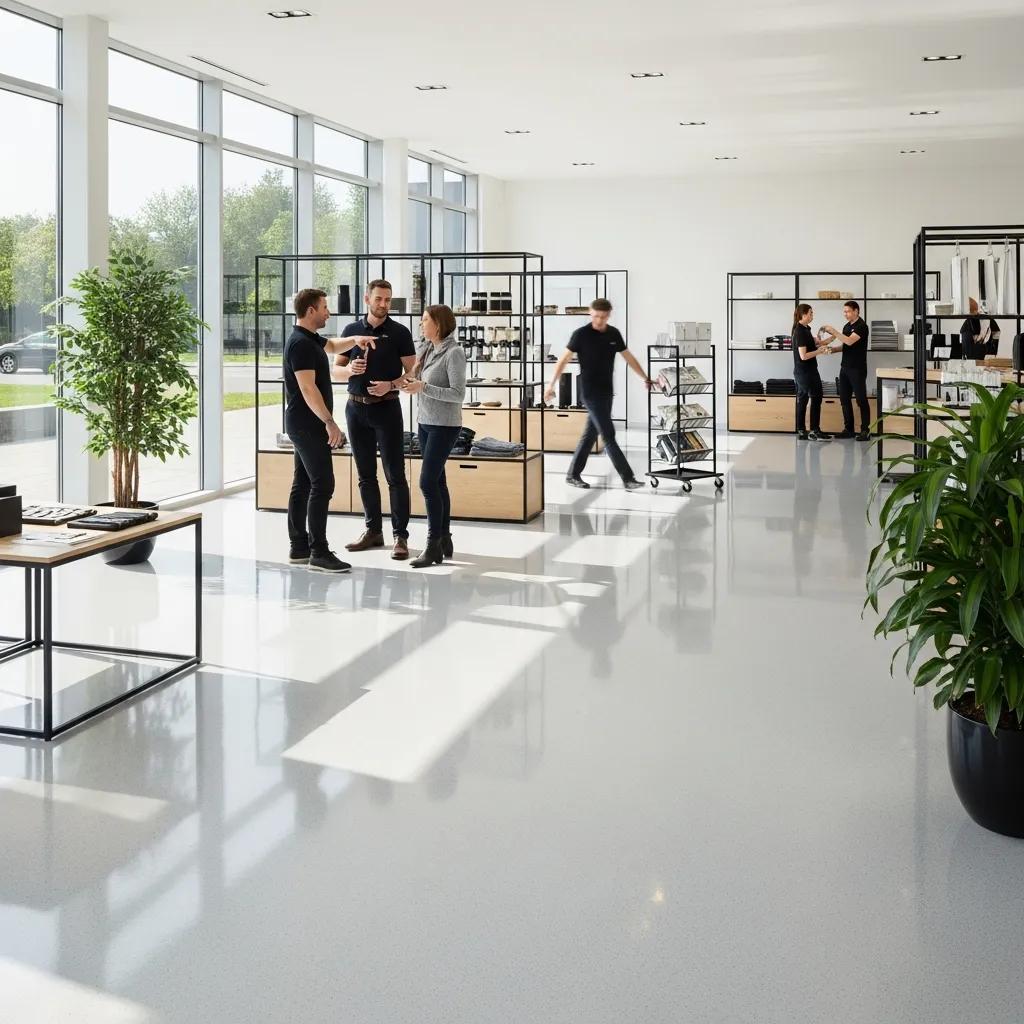
- Professional appearance — a high-gloss, showroom-quality finish for customer-facing areas, with a wide range of chip colors to match your branding.
- Won’t chip or peel — backed by our limited transferable warranty.
Who We Coat Automotive Floors For
- Auto repair shops & service bays — floors that survive jacks, lifts, and daily chemical exposure.
- Car dealerships — service departments and customer drop-off lanes that match the polish of the showroom. (Coating the showroom itself? See our showroom floor coatings.)
- Detailing studios — bright, reflective floors that make finished vehicles look their best.
- Private multi-car garages — collectors and enthusiasts who want a shop-grade floor at home.
What to Expect: Our Installation Process
Most automotive floors are coated in a single day. Here’s how it works:
- Surface preparation — we diamond-grind the concrete with vacuum-attached grinders to remove oil residue, old coatings, and contamination, opening the surface for a true mechanical bond.
- Repair — pits and cracks are filled with Duralast® crack filler and ground smooth.
- Coating application — self-priming 100% solids polyurea basecoat, full chip broadcast in your chosen color, then a UV-stable polyaspartic topcoat.
- Fast return to service — the coating cures quickly, so your bays are back in operation the next morning instead of being shut down for a week.
Common Automotive Floor Materials
Anti-Slip Systems
Bare Concrete
Industrial Epoxy Coatings
Metallic/Decorative Coatings
Polyaspartic/Polyurea
Why Protect Your Automotive Floor?
Withstands Industry Demands
Enhances Safety & Cleanliness
Projects Professionalism
Long-Term Cost Savings
Serving Greater Cleveland, Northeast OH, & Northwestern PA
Related Commercial Services
J&P Coatings installs Duralast® Polyaspartic systems across every type of commercial space in Northeast Ohio. Explore our other commercial floor coating services:
Frequently Asked Questions
Is polyaspartic coating resistant to motor oil and chemicals?
Yes. Duralast® Polyaspartic cures into a dense, non-porous surface that motor oil, transmission fluid, gasoline, brake cleaner, and road salt cannot penetrate. Spills sit on top of the coating until they're wiped away, instead of soaking in and staining the way they do on bare or epoxy-coated concrete. That chemical resistance is one of the main reasons automotive shops choose polyaspartic over standard epoxy.
How do you handle oil stains before coating?
The floor is ready for foot traffic in about 24 hours, and we recommend waiting 72 hours before returning full vehicle loads to the surface. Because polyaspartic cures far faster than epoxy, most shops schedule the install so downtime lands on a weekend or a single closed day.
How thick should coatings be for vehicle lifts?
Yes — this is one of the most common conditions we see in working shops. Our prep process diamond-grinds the surface to remove contaminated concrete, degrades and extracts oil saturation, and fills any pitting before the basecoat goes down. Proper preparation is the difference between a coating that bonds for decades and one that fails in a year, which is why we never skip it — even on heavily stained floors.
Will tire marks show on coated floors?
Not with our hot-tire-resistant topcoats. We also avoid glossy finishes in service lanes where marks are common.
Get a Free Quote for Your Auto Shop or Dealership Floor
Ready for a floor that works as hard as your shop does? Call J&P Coatings at (440) 557-3141 or request a free quote online. We'll measure your space, walk through color options, and schedule an install that keeps your downtime to a single day.