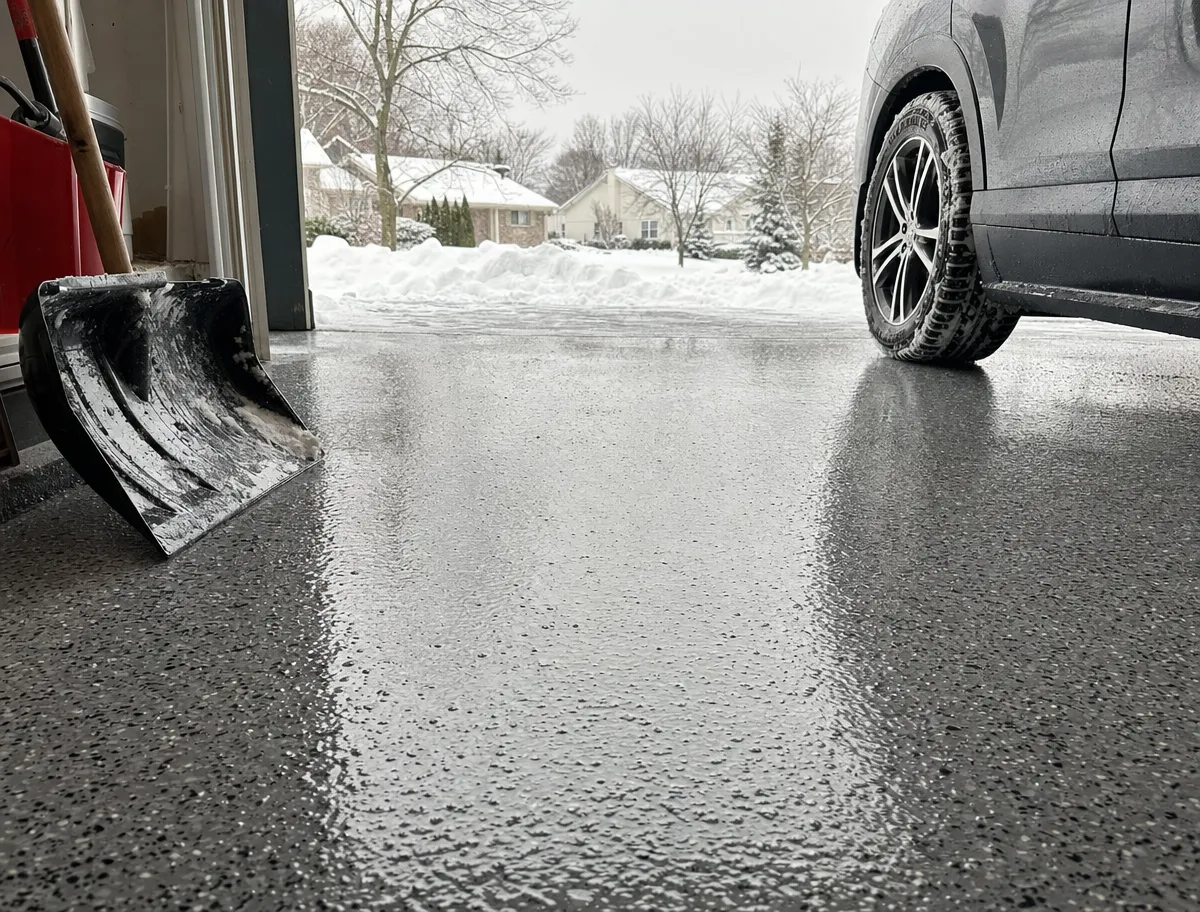
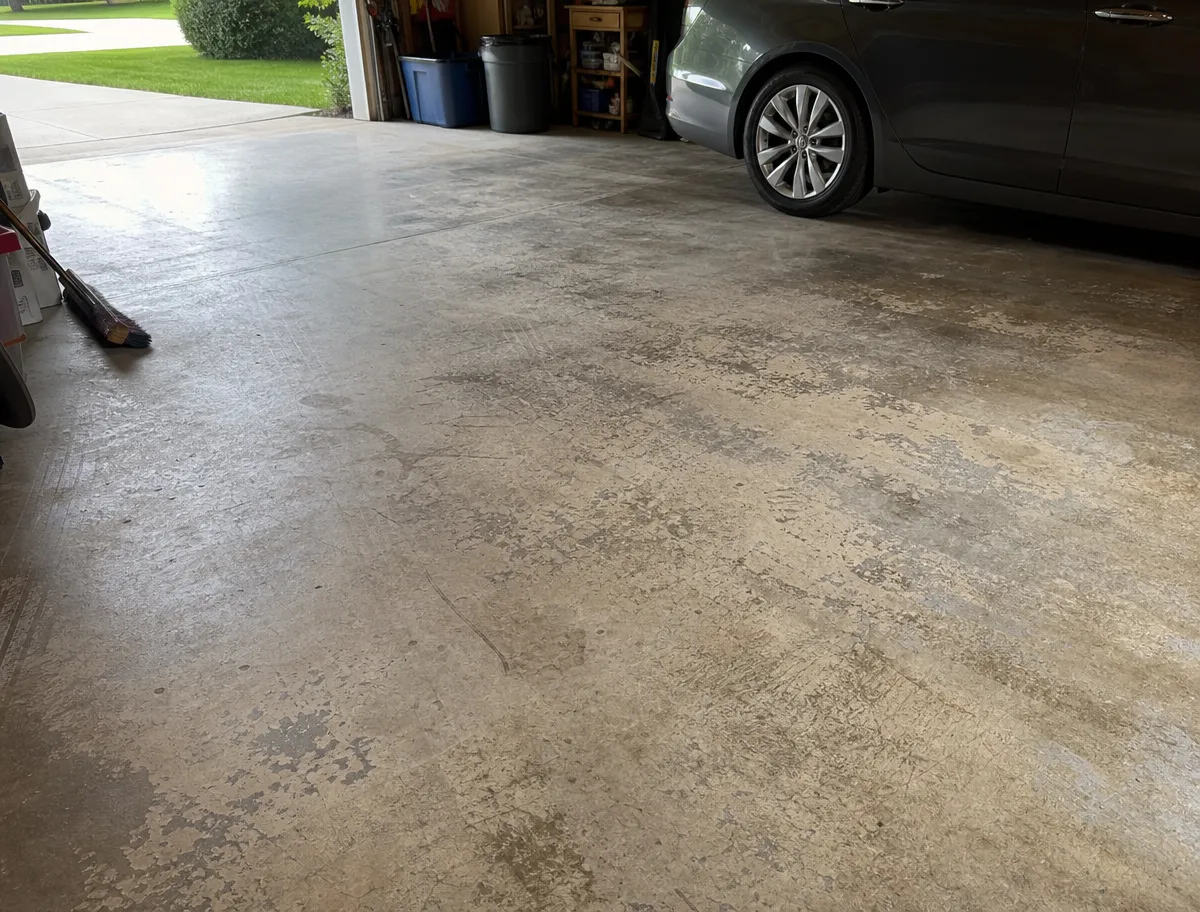
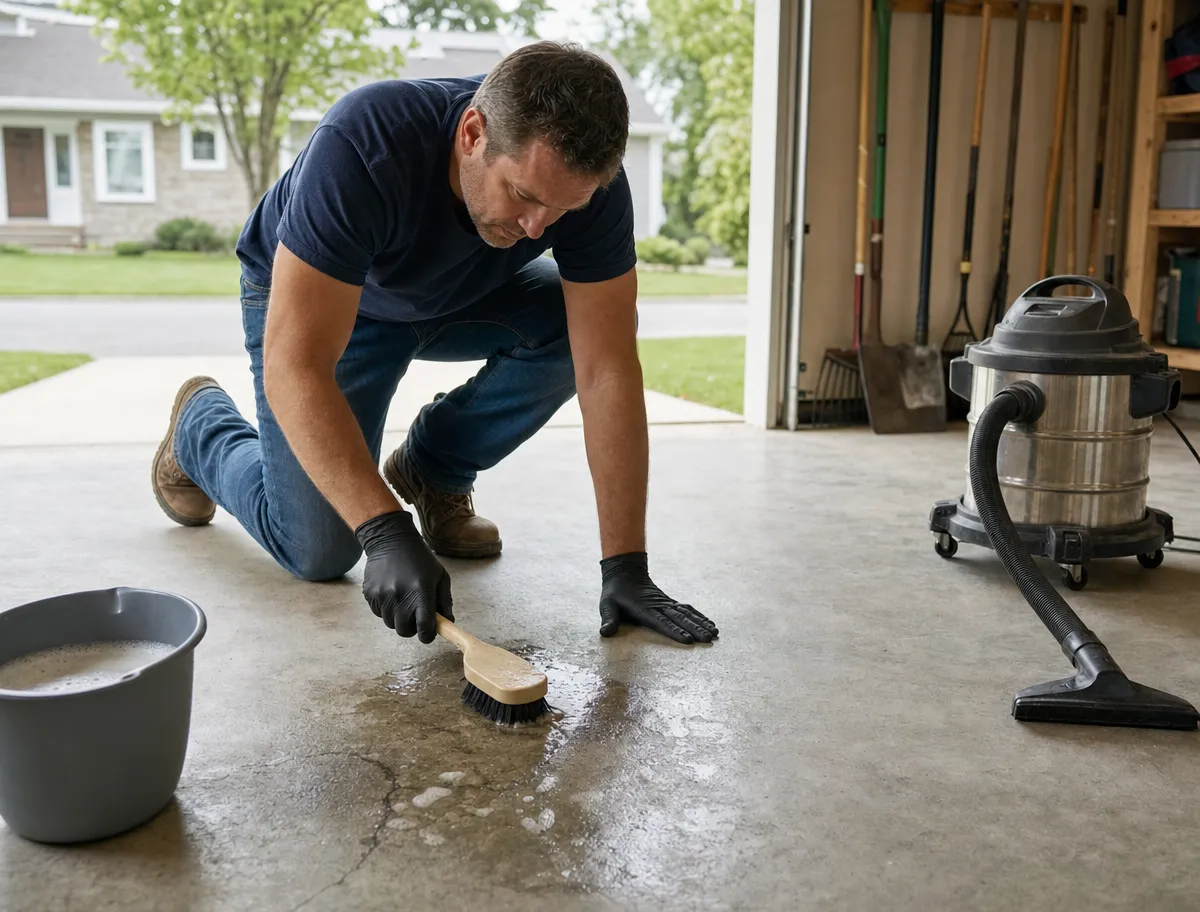
Quick Answer: Cleveland garage floors fail from road salt and freeze-thaw cycles because road salt tracked in from de-iced streets penetrates porous, unsealed concrete, then trapped moisture expands by a notable share each time it refreezes. That repeated expansion fractures the slab from within, producing the cracking, spalling, and pitting typical of Northeast Ohio winters. A polyaspartic coating seals the surface before salt or moisture can get in, stopping the freeze-thaw damage cycle before it starts.
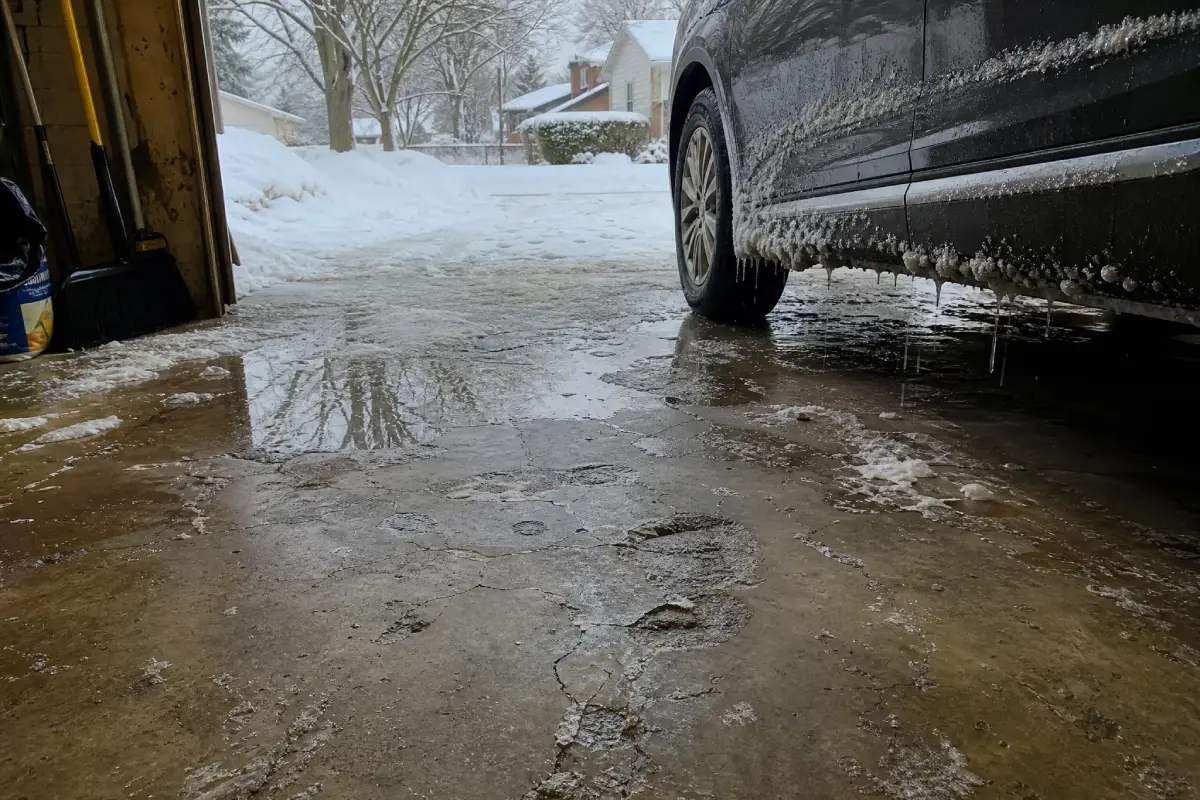
Cleveland garage floors fail because road salt carried in on vehicles penetrates porous concrete, then water trapped within expands during freeze-thaw cycles, fracturing the surface from within. Repeated seasonal exposure accelerates spalling and cracking. Professional-grade coatings, such as polyaspartic systems rated 5x stronger than epoxy, form a sealed barrier that blocks salt infiltration entirely.
What Are the Key Takeaways for Cleveland Garage Floor Failure?
- Road salt penetrates concrete pores, causing expansion cycles that crack garage floors during freeze-thaw periods.
- J&P Coatings serves Greater Cleveland with epoxy coatings that seal concrete against moisture and salt damage.
- Unprotected concrete absorbs deicers, expanding up to a notable share when frozen and contracting when thawed repeatedly.
- Professional garage floor coatings prevent oil stains, hot tire wear, and winter salt deterioration for homeowners.
Why Does Cleveland’s Climate Destroy Garage Floors?
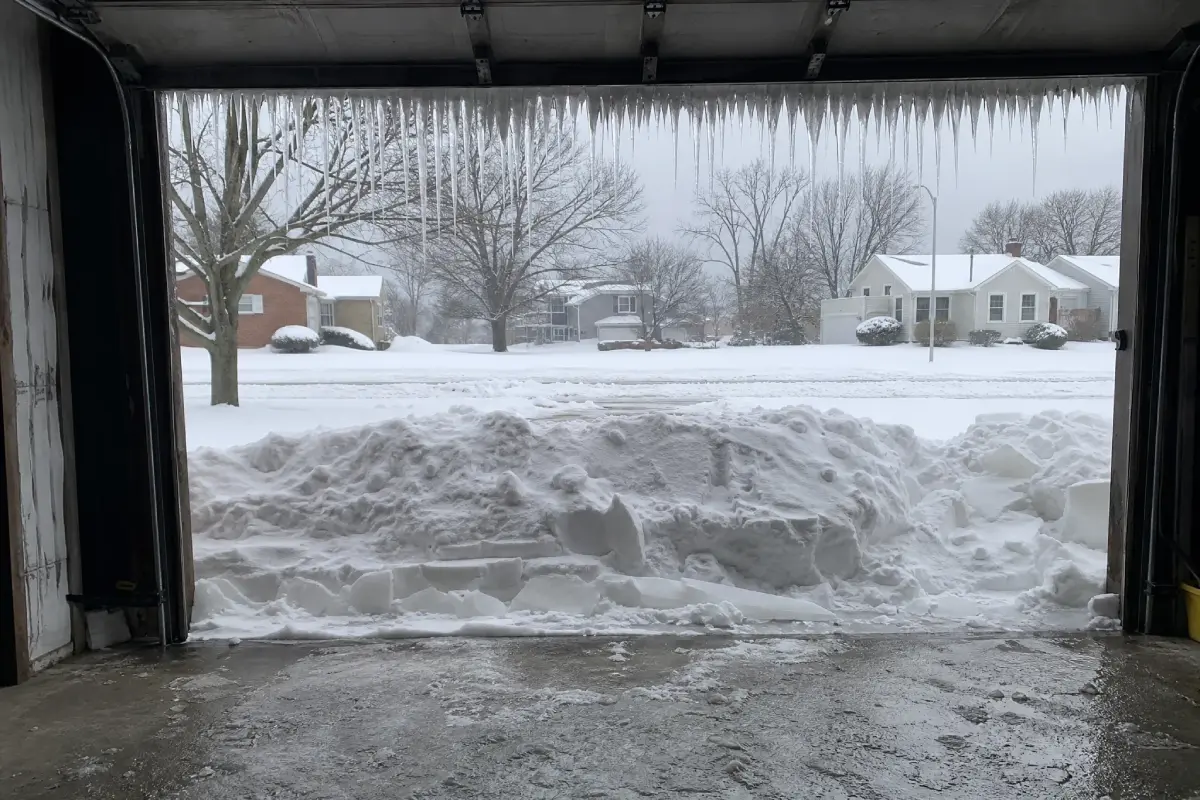
Cleveland garage floors fail at an accelerated rate because road salt, freeze-thaw cycles, and moisture intrusion work together as a compounding destructive force. Unprotected concrete cannot withstand this combination, and the damage compounds silently until repairs become unavoidable.
Cleveland winters create a relentless cycle of temperature swings. Moisture seeps into unsealed concrete, then expands as temperatures drop below freezing. That expansion fractures the concrete from within, producing small cracks that gradually widen into visible chips and pitting. By the time homeowners notice the surface deteriorating, structural damage is already underway.
The three primary threats to Cleveland garage floors:
- Freeze-thaw cycles — repeated expansion and contraction fracture concrete at the microscopic level
- Road salt and de-icing chemicals — tracked in from Cleveland streets, these compounds chemically attack uncoated surfaces
- Moisture intrusion — water penetrates porous concrete and accelerates every other failure mechanism
How Does Road Salt Damage a Garage Floor?
Road salt and de-icers applied to Cleveland streets do not stay on the roadway. Vehicles track these chemicals directly onto garage floors, where they break down unprotected concrete surfaces over successive winters. The damage is cumulative and largely invisible until the surface begins to spall.
Why Do Freeze-Thaw Cycles Cause Cracking?
Water expands approximately a notable share in volume when it freezes. Inside concrete pores, that expansion generates internal pressure the material cannot absorb, a mechanism documented in federal research on freeze-thaw resistant concrete. Each freeze-thaw event widens existing micro-cracks, eventually producing the chipping and pitting that characterize a failing Cleveland garage floor.
How Does Road Salt Accelerate Concrete Failure?
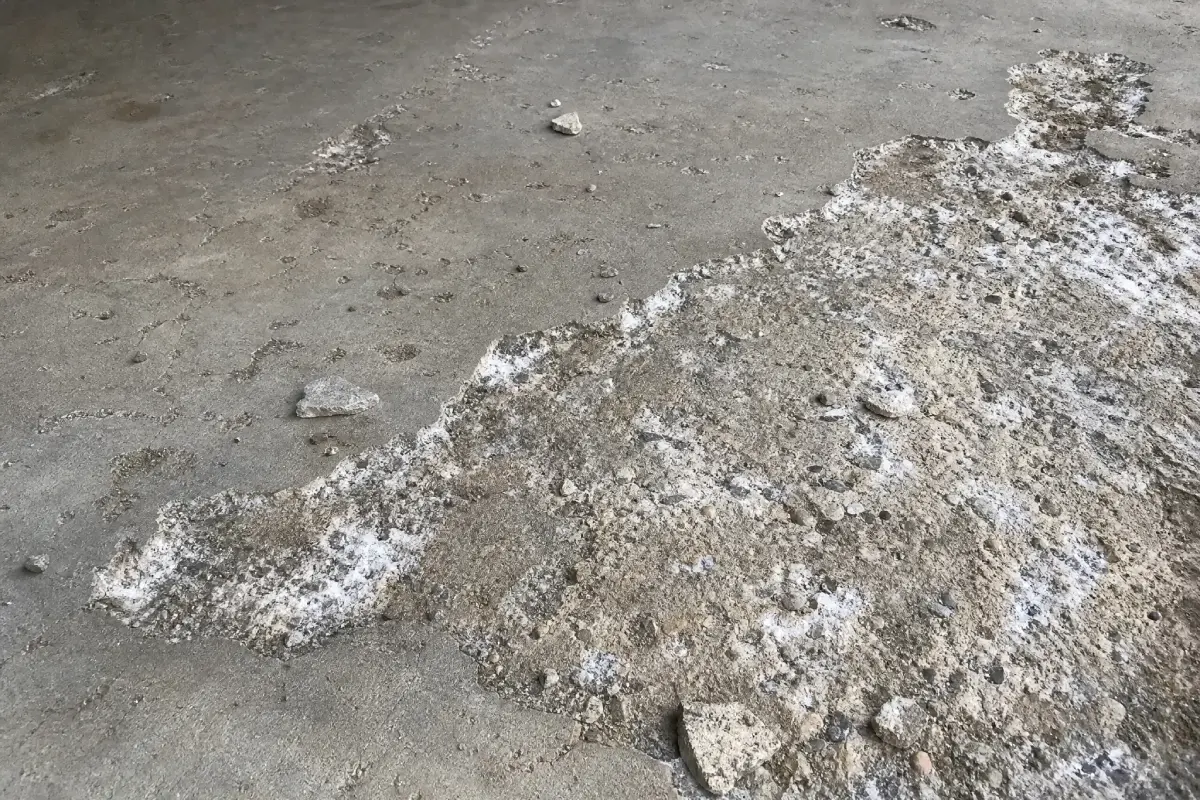
Road salt accelerates concrete failure by penetrating the surface and compounding the destructive effects of freeze-thaw cycling. De-icing chemicals carried in by vehicles lower the freezing point of water, driving moisture deeper into the concrete’s porous structure before temperatures drop again — a process detailed in research on deicer scaling resistance.
Why Do Freeze-Thaw Cycles Cause So Much Damage?
When trapped moisture refreezes, it expands inside the concrete matrix. That expansion fractures the material from within. Repeated cycles — common throughout Cleveland winters — widen those fractures into visible cracks, spalling, and surface pitting that worsen with every season.
Is Road Salt the Only Threat Cleveland Garage Floors Face?
Road salt is the primary accelerant, but Cleveland garage floors face compounding stressors beyond de-icing chemicals alone. The full threat profile includes:
- Road salt and de-icing chemical penetration
- Moisture intrusion from snow melt tracked in by vehicles
- Hot tire pickup, which bonds to and strips unprotected surfaces
- Oil stains that degrade concrete over time
- Daily mechanical wear from foot and vehicle traffic
Ohio’s harsh winters take a toll on virtually every exterior surface, yet protecting a garage floor remains a worthwhile investment. A properly coated floor resists chemical penetration, maintains a cleaner appearance, and protects stored items from contamination. J&P Coatings, a Middlefield, OH-based studio serving Cleveland homeowners, applies polyaspartic coatings engineered to address each of these failure points.
📞 Ready to Get Started? Road salt and freeze-thaw damage only gets worse with each Cleveland winter. Contact J&P Coatings today for a free, no-obligation quote on polyaspartic garage floor coatings.
Can a Coating Protect Cleveland Garage Floors Long-Term?
A high-performance polyaspartic coating provides durable, long-term protection for Cleveland garage floors against the road salt, freeze-thaw cycles, and chemical exposure that cause Cleveland garage floors to fail each winter. The right coating system forms a chemical barrier that resists the specific threats Northeast Ohio winters deliver year after year.
What Makes Polyaspartic Coatings Different From Standard Epoxy?
Duralast® Polyaspartic Coating is 5 times stronger than epoxy and resists both salt and oil — two of the primary agents that degrade unprotected concrete in Cleveland driveways and garages. Unlike epoxy systems that chip and peel under thermal stress, Duralast® Polyaspartic Coating will not chip or peel, maintaining a continuous protective surface through repeated freeze-thaw cycles.
Key protective properties at a glance:
- Salt and oil resistance — withstands road salt and chemical runoff tracked in from Cleveland streets
- No chipping or peeling — preserves the coating’s integrity across seasonal temperature swings
- 5x stronger than epoxy — resists impact and abrasion from daily garage use
How Quickly Can Cleveland Homeowners Get Protection Installed?
J&P Coatings offers one-day installation with Duralast® Polyaspartic Coating, meaning most Cleveland homeowners lose minimal time before returning the garage to full use. J&P Coatings, a family-owned contractor based in Middlefield, OH, serves Greater Cleveland and backs every installation with a limited transferable warranty, providing documented, long-term assurance for residential and commercial clients alike.
TL;DR — Why Cleveland Garage Floors Fail at a Glance
- Road salt tracked in from Cleveland streets penetrates porous, unsealed concrete.
- Trapped moisture expands during freeze-thaw cycles, fracturing concrete from within.
- Hot tire pickup, oil stains, and daily wear compound the damage each winter.
- Polyaspartic coatings are 5x stronger than epoxy and resist chipping, peeling, salt, and oil.
- J&P Coatings installs Duralast® Polyaspartic Coating in one day with a limited transferable warranty.
- Next step: Contact J&P Coatings for a free garage floor coating quote in Greater Cleveland.
Frequently Asked Questions
Why do Cleveland garage floors crack during winter?
Water trapped inside concrete expands by a notable share when it freezes, generating internal pressure that fractures the material. Repeated freeze-thaw cycles widen those micro-cracks into visible spalling and pitting.
How does road salt get onto garage floors?
Vehicles track road salt and de-icing chemicals from Cleveland streets directly onto garage floors. Those compounds penetrate porous concrete and accelerate freeze-thaw damage with every successive winter.
What stops road salt and freeze-thaw damage on a garage floor?
Professional-grade polyaspartic coatings, rated 5x stronger than epoxy, form a sealed barrier that blocks salt infiltration entirely. J&P Coatings installs these systems for homeowners across Greater Cleveland and Northeast Ohio.
How long does a polyaspartic garage floor coating last in Cleveland winters?
A properly installed Duralast® Polyaspartic Coating resists chipping and peeling through repeated freeze-thaw cycles and is backed by a limited transferable warranty from J&P Coatings. Most Cleveland homeowners get years of reliable protection with proper care.
Can a polyaspartic coating go over a garage floor that’s already cracked?
In most cases, yes. J&P Coatings preps and repairs existing cracks and spalling before applying the coating, so surface damage from prior freeze-thaw cycles doesn’t compromise the new seal.
Related Resources
- Garage Floor Coatings
- Cleveland, OH Service Area
- Polyaspartic vs. Epoxy Durability
- Why Garage Floor Coating Peels
- One-Day Floor Coating in Cleveland
Get a Free Garage Floor Coating Quote in Cleveland
Road salt and freeze-thaw cycles will keep attacking an unprotected Cleveland garage floor every winter until it’s sealed. J&P Coatings installs Duralast® Polyaspartic Coating in as little as one day, backed by a limited transferable warranty for Greater Cleveland homeowners. Contact J&P Coatings today for a free, no-obligation quote.
About J&P Coatings: J&P Coatings is a family-owned concrete coating contractor based in Middlefield, OH, specializing in polyaspartic and epoxy floor coatings for garages, basements, and commercial spaces across Greater Cleveland and Northeast Ohio. Contact us for a free, no-obligation quote.