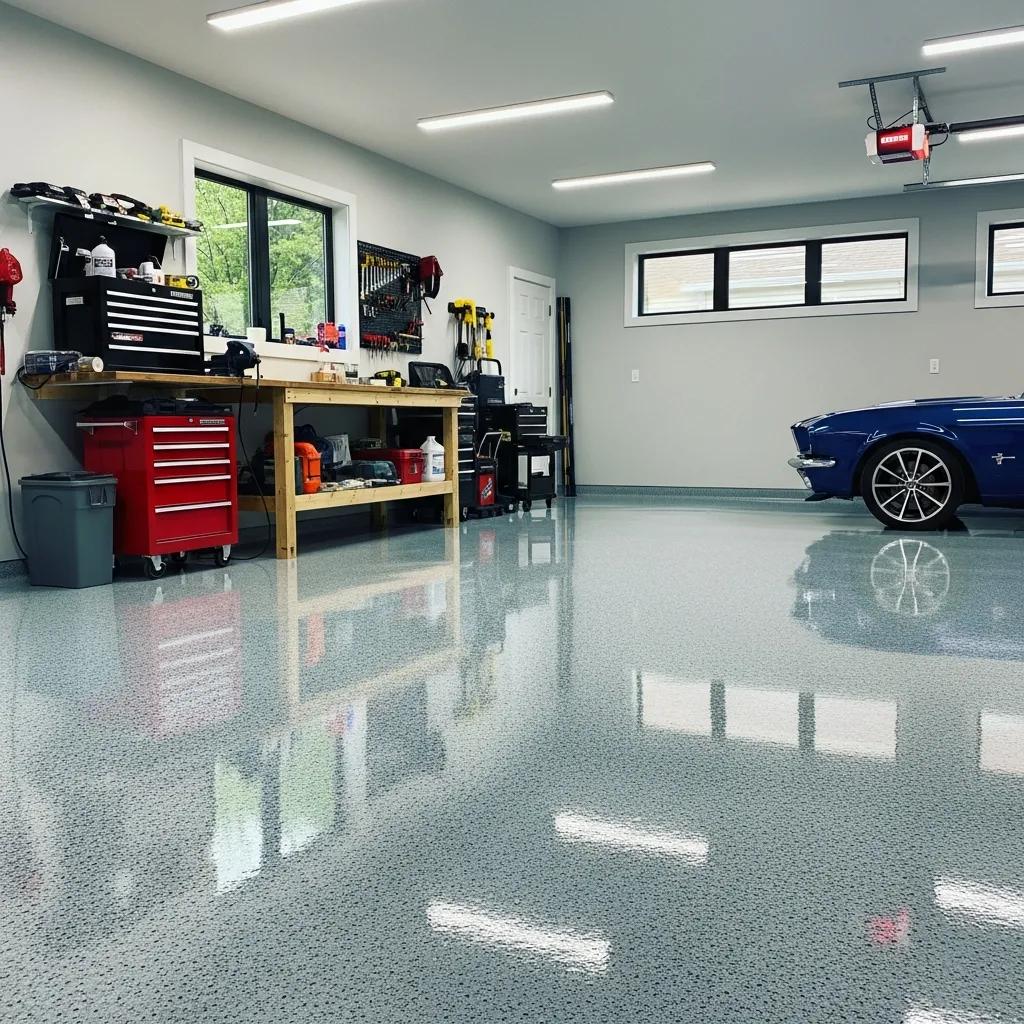
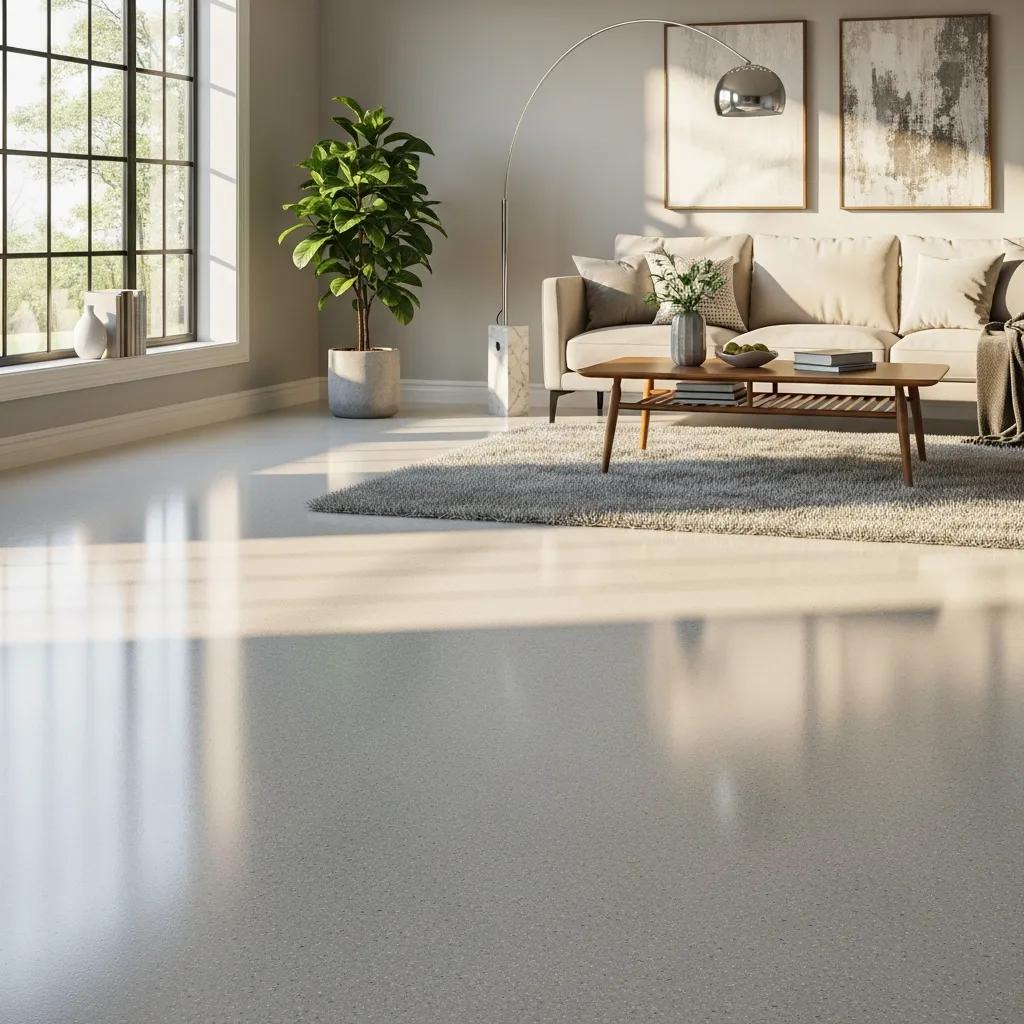
Preparing a concrete floor for epoxy coating is a crucial step that can significantly impact the durability and appearance of the finished surface. Understanding the key indicators that signal your concrete is ready for this process can save you time and money while ensuring a successful application. In this article, J&P Coatings will explore five essential indicators, including moisture levels, surface contaminants, cracks, surface profile, and pH levels.
By assessing these factors, you can determine the best course of action for your concrete floor, ensuring it is primed for a long-lasting epoxy finish. We will also discuss how to test for moisture, the types of cracks that can affect adhesion, and the importance of surface preparation.
How Can You Test Concrete Moisture to Ensure Epoxy Readiness?
Moisture testing is a critical step in determining whether your concrete floor is suitable for professional epoxy coating. Excess moisture can lead to adhesion failure, resulting in peeling or bubbling of the epoxy.
What Are the Most Reliable Concrete Moisture Tests for Epoxy?

Several reliable methods exist for testing concrete moisture levels, including:
- Calcium Chloride Test: This test involves placing a calcium chloride dish on the concrete surface and sealing it with a plastic cover. After 60 to 72 hours, the amount of moisture absorbed by the dish is measured to determine the moisture vapor emission rate (MVER).
- Relative Humidity Probe Test: This method uses a probe inserted into a hole drilled into the concrete to measure the relative humidity within the slab. This test provides a direct measurement of moisture levels in the concrete.
- Plastic Sheet Test: A simple method where a plastic sheet is taped to the concrete surface for 24 to 48 hours. If condensation forms under the sheet, it indicates high moisture levels.
These tests help ensure that the concrete is adequately dried and ready for epoxy application.
What Are Acceptable Moisture Levels for Epoxy Floor Coating?
Acceptable moisture levels for epoxy floor coating typically include:
- Moisture Vapor Emission Rate (MVER): Should not exceed 3 pounds per 1,000 square feet in 24 hours.
- Relative Humidity: Should be below 75% for optimal adhesion.
| Test Method | Acceptable Level | Measurement |
|---|---|---|
| Calcium Chloride Test | ≤ 3 lbs/1,000 sq ft/24 hrs | MVER |
| Relative Humidity Probe | ≤ 75% | Relative Humidity |
Ensuring that your concrete meets these moisture criteria is vital for a successful epoxy coating application.
Further research delves into the microscopic mechanisms by which moisture can compromise the bond between epoxy and cement. For basement floor coatings, moisture management is especially crucial due to below-grade hydrostatic pressure that can drive water vapor through concrete slabs."
Epoxy-Cement Adhesion: Impact of Moisture on Bond
The strength of this bond is generally affected by the presence of moisture at the interface. In this paper, a nanoscale adhesion mechanism of the epoxy-cement interface under moisture variations
A nanoscale adhesion mechanism of cement-epoxy interface under varying moisture conditions:A molecular dynamics study, AA Bahraq, 2022
Research further emphasizes the critical interplay between concrete's moisture content and surface roughness in achieving optimal epoxy adhesion and performance.
Concrete Surface Roughness & Moisture Impact on Epoxy Performance
This paper presents an experimental study on the influence of the roughness and the moisture content of concrete substrates in the performance of impregnation products used for superficial protection. For that purpose, two impregnations products based on epoxy resins were applied on concrete specimens with two different water/cement ratios (0.40 and 0.70). The concrete specimens were prepared according to different procedures, which created (i) three different surface roughnesses (no preparation, use of a 160 bar water jet and use of needle scalers) and (ii) three different moisture contents (3, 4.5 and 6 %). Both surface roughness and moisture content proved to have a significant effect on the performance of the epoxy impregnations.
How Do Cracks and Damage Affect Concrete's Suitability for Epoxy?
Cracks and surface damage can significantly impact the adhesion of epoxy coatings. Understanding the types of cracks and how to address them is essential for preparing your concrete floor.
What Types of Concrete Cracks Impact Epoxy Adhesion?
Several types of cracks can affect the suitability of concrete for epoxy coating:
- Hairline Cracks: These small cracks may not significantly impact adhesion but can allow moisture infiltration.
- Structural Cracks: Larger cracks that indicate underlying issues can severely compromise the integrity of the epoxy bond.
- Shrinkage Cracks: These occur as the concrete cures and can lead to adhesion problems if not addressed.
These crack types are especially critical to address before applying garage floor coatings, where vehicle weight and thermal cycling can exacerbate adhesion problems.
How Can You Repair Cracks to Prepare Concrete for Epoxy?
- Clean the Area: Remove any debris or loose material from the crack.
- Fill the Crack: Use a suitable concrete repair compound to fill the crack, ensuring it is level with the surrounding surface.
- Surface Preparation: After the repair compound has cured, grind or sand the area to create a smooth surface for epoxy application.
J&P Coatings specializes in high-quality crack repair services, ensuring your concrete is ready for a flawless epoxy finish.
The effectiveness of epoxy in repairing concrete cracks has been extensively studied, highlighting its role in restoring structural integrity and preparing surfaces for coating.
Epoxy Methods for Concrete Crack Repair
Cracking of concrete is a random process, highly variable and influenced by many factors. One of the most effective crack repair methods is the use of epoxy either by injection or by gravity filling in order to bond the crack
Experimental study of epoxy repairing of cracks in concrete, CA Issa, 2007
What Surface Contaminants Must Be Removed Before Applying Epoxy?
Surface contaminants can prevent proper adhesion of epoxy coatings. Identifying and removing these contaminants is essential for a successful application.
Which Contaminants Prevent Proper Epoxy Adhesion?
- Oil Stains: These can create a barrier between the concrete and the epoxy.
- Dust and Dirt: A dirty surface can prevent proper bonding.
- Chemical Spills: Any residues from chemicals can interfere with adhesion.
What Are the Best Methods to Clean Concrete Surfaces?

- Degreasing Agents: Use a degreaser to remove oil and grease stains.
- Pressure Washing: A high-pressure washer can effectively remove dirt and debris from the surface.
- Acid Etching: For stubborn stains, acid etching can help prepare the surface by creating a rough texture for better adhesion.
Proper surface preparation is crucial for ensuring that the epoxy adheres effectively to the concrete.
Why Is Concrete Surface Profile Critical for Epoxy Coating Success?
The surface profile of concrete plays a vital role in the adhesion of epoxy coatings. A properly prepared surface profile enhances the bond between the concrete and the epoxy.
How Do Diamond Grinding and Shot Blasting Create Optimal Surface Profiles?
- Diamond Grinding: This method uses diamond blades to grind the surface, creating a smooth yet textured profile that enhances adhesion.
- Shot Blasting: This technique involves propelling small steel balls at the surface to remove contaminants and create a rough texture, improving the bond.
Both methods are effective in preparing the concrete surface for epoxy application.
What Are Concrete Surface Profile Standards for Epoxy Floors?
Concrete surface profile (CSP) standards are essential for ensuring proper adhesion. The International Concrete Repair Institute (ICRI) provides guidelines for CSP levels, which range from 1 to 9, with levels 3 to 5 being ideal for epoxy coatings.
| CSP Level | Description | Recommended Use |
|---|---|---|
| 1 | Very smooth | Not suitable for epoxy |
| 3 | Slightly rough | Good for most coatings |
| 5 | Rough | Ideal for epoxy applications |
Adhering to these standards ensures optimal adhesion and longevity of the epoxy coating.
These standards are further elaborated by leading industry organizations, providing comprehensive guidance for concrete surface preparation and coating selection.
Concrete Surface Preparation & Epoxy Coating Standards
The International Concrete Repair Institute (ICRI) has more specific guidelines on the types of product to apply. The sealers and coating recommenders are classified as high molecular weight methacrylic sealing compounds, low viscosity epoxy sealing compounds, silane and siloxane sealing compounds, and coating compounds for concrete. The causes of damage to concrete are explained. The American Concrete Institute has a number of committees addressing surface finishing. The ACI 546.3R-14 Guide to materials selection for concrete repair has tables for sealers and anti-carbonatation coating selection based on durability factors.
Further emphasizing the importance of industry benchmarks, additional resources detail the specific guidelines from organizations like ICRI and ACI for concrete surface preparation and coating selection.
How Does Concrete pH and Alkalinity Influence Epoxy Floor Readiness?
The pH level of concrete can significantly influence the adhesion of epoxy coatings. Understanding how to test and manage pH levels is crucial for successful application.
How Do You Test and Interpret Concrete pH Levels?
Testing concrete pH levels can be done using pH test strips or meters. The ideal pH range for epoxy adhesion is between 7 and 10. Levels outside this range can lead to adhesion failure.
What Are Effective Ways to Neutralize Alkaline Concrete Surfaces?
- Acid Wash: Using a diluted acid solution can help lower the pH of the concrete.
- Neutralizing Agents: Products specifically designed to neutralize alkaline surfaces can be applied.
- Water Rinsing: Thoroughly rinsing the surface with water after acid washing can help balance the pH.
Maintaining the correct pH level is essential for ensuring that the epoxy adheres properly to the concrete surface. Once your concrete passes these pH tests, explore our guide to flooring options comparison to see why polyaspartic coatings offer superior performance over traditional epoxy.