Yes, you can coat a wet concrete basement floor, but it requires careful moisture control and the right materials. Moisture testing is essential to ensure adhesion and durability. Use moisture-tolerant epoxies and waterproof sealants when some dampness remains. Proper surface preparation—cleaning, etching, and drying—improves results. For best outcomes, consider professional services to address moisture issues and guarantee long-lasting coatings. This guide compares epoxy and related coatings, outlines practical application steps, and highlights moisture‑management measures for Northeast Ohio homeowners. Explore our full range of basement floor coating services in Northeast Ohio.
Key Takeaways
- Moisture testing and control are essential to ensure epoxy adhesion and durability.
- Epoxy, polyaspartic, and concrete floor paint each suit different needs and budgets. Review our complete flooring options comparison to choose the right fit for your basement.
- Surface preparation—cleaning, etching, and drying—improves adhesion on damp slabs.
- Tests such as the plastic‑sheet, calcium chloride, and moisture meters assess readiness.
- Use moisture‑tolerant epoxies and waterproof sealants where residual dampness exists.
- Concrete moisture barriers reduce water intrusion and support coating longevity.
- Professionals offer targeted moisture mitigation, warranties, and faster completion.
- Address Northeast Ohio’s common moisture sources for reliable coating performance.
Epoxy Coating Options
Homeowners can choose among several coating classes; each has tradeoffs in durability, cure time, and cost.
- Epoxy Coatings: Durable and moisture‑resistant—a common basement choice.
- Polyaspartic Coatings: Fast curing and UV‑stable; useful where quick return to service matters. See how our polyaspartic floor coatings compare for basement applications.
- Concrete Floor Paint: Lower cost and easier to apply but less durable than epoxy.
Match product properties to site conditions and performance expectations.
Application Techniques
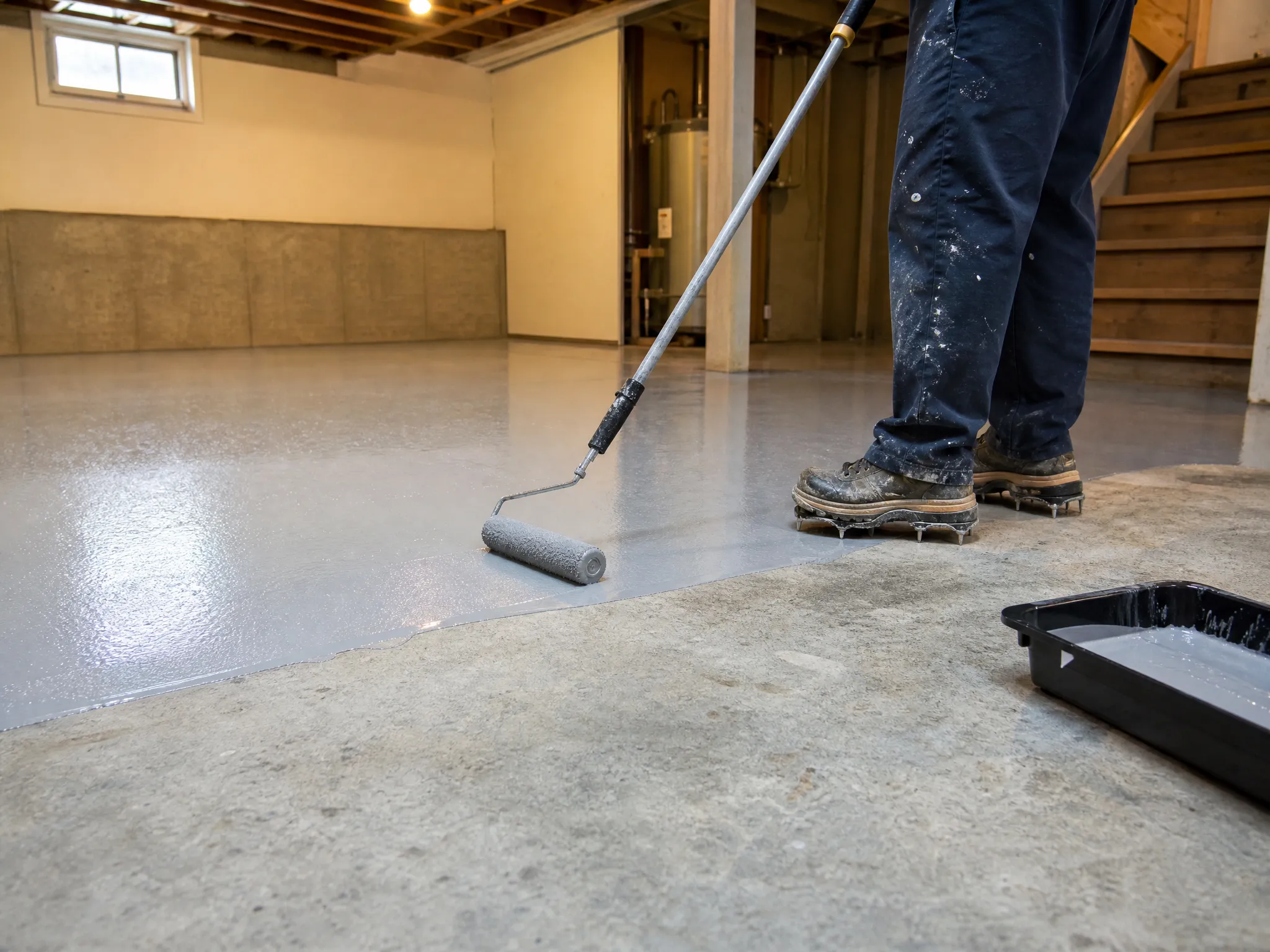
Successful coating depends on methodical preparation and correct application tools.
- Surface Preparation: Clean thoroughly and profile the slab by etching or light grinding to promote adhesion.
- Curing Times: Follow manufacturer cure windows; environmental conditions alter times significantly.
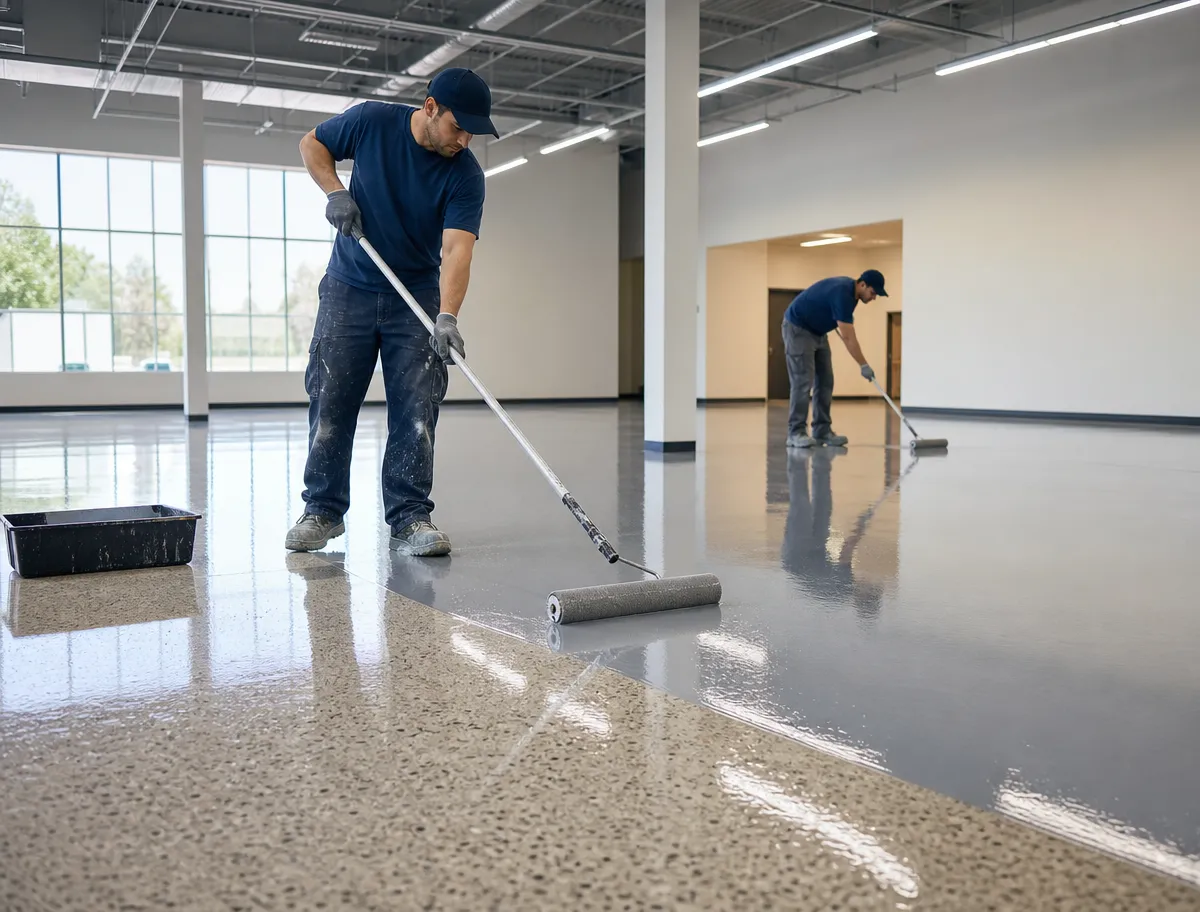
- Application Methods: Use rollers, squeegees, or sprayers as recommended for the product to ensure an even finish.
Careful execution improves appearance and service life.
Moisture Management Considerations
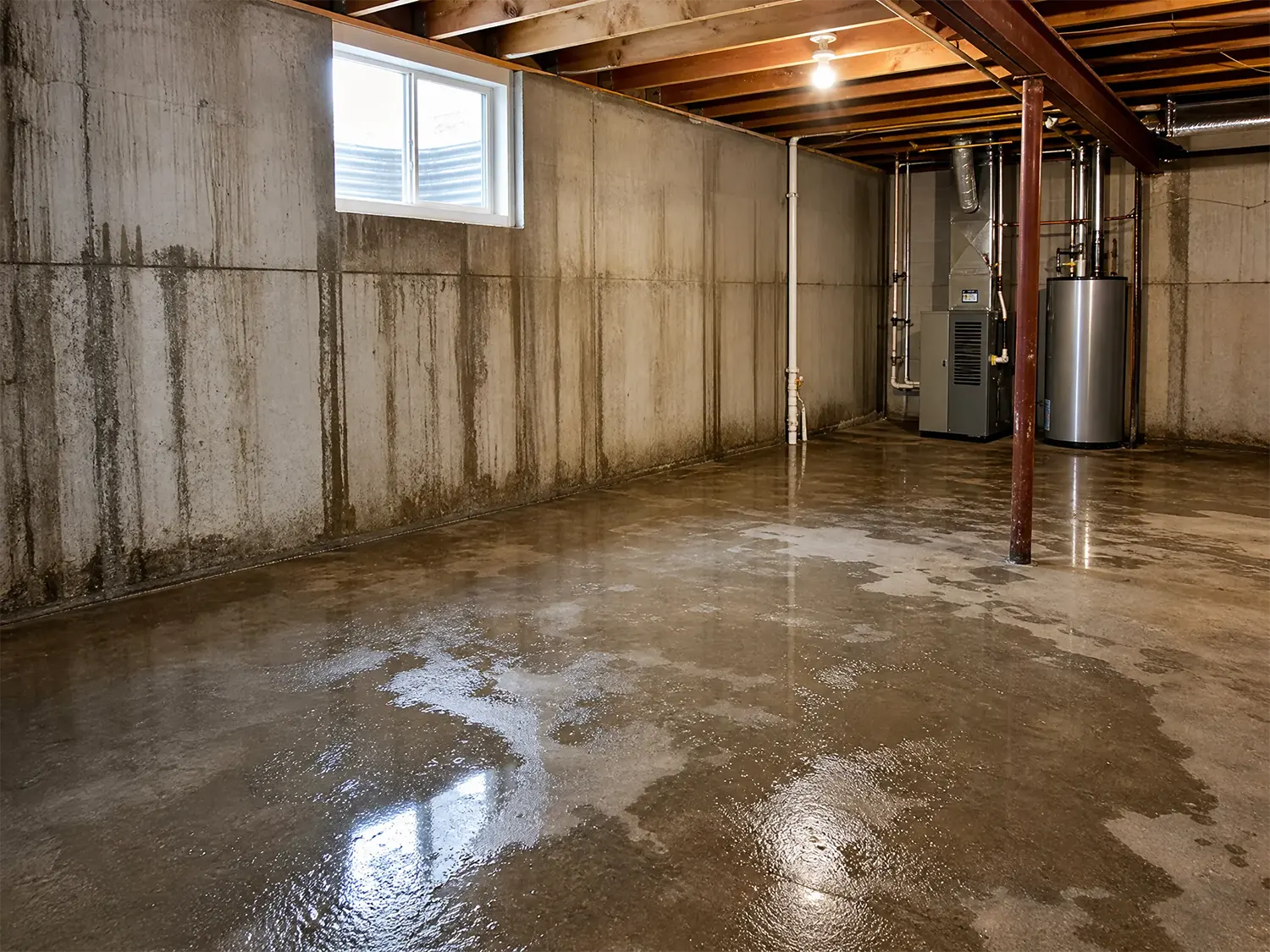
Moisture is the principal risk for basement coatings. High humidity or water ingress can cause adhesion loss and coating failure. Key considerations include:
- Moisture Testing: Confirm slab moisture with objective tests before coating.
- Regional Challenges: Northeast Ohio properties frequently face groundwater seepage and condensation.
- Mitigation: Use barriers, sealants, dehumidification, and drainage improvements as needed.
Addressing these elements before coating reduces the chance of premature failure.
What Are the Moisture Challenges in Northeast Ohio Basement Concrete Floors?
Northeast Ohio experiences heavy precipitation and temperature swings that raise ambient humidity and encourage ground and surface water intrusion. Proactive interior and exterior drainage and vapor management help protect coatings.
Published studies corroborate that moisture ingress and water leakage are common basement problems in the region.
How Does Basement Moisture Affect Concrete Floor Coating Adhesion?
Excess moisture prevents a proper bond, producing peeling, blistering, or delamination. Always verify measured moisture values meet the coating manufacturer’s limits before coating.
How Can Homeowners Test and Prepare Wet Concrete Basement Floors for Coating?
A plastic‑sheet test is a quick check: tape a sheet to the slab and inspect after 24 hours for condensation. If moisture is present, allow more drying, use dehumidifiers, or install an appropriate moisture barrier before coating.
Which Moisture Testing Methods Are Recommended for Concrete Basement Floors?
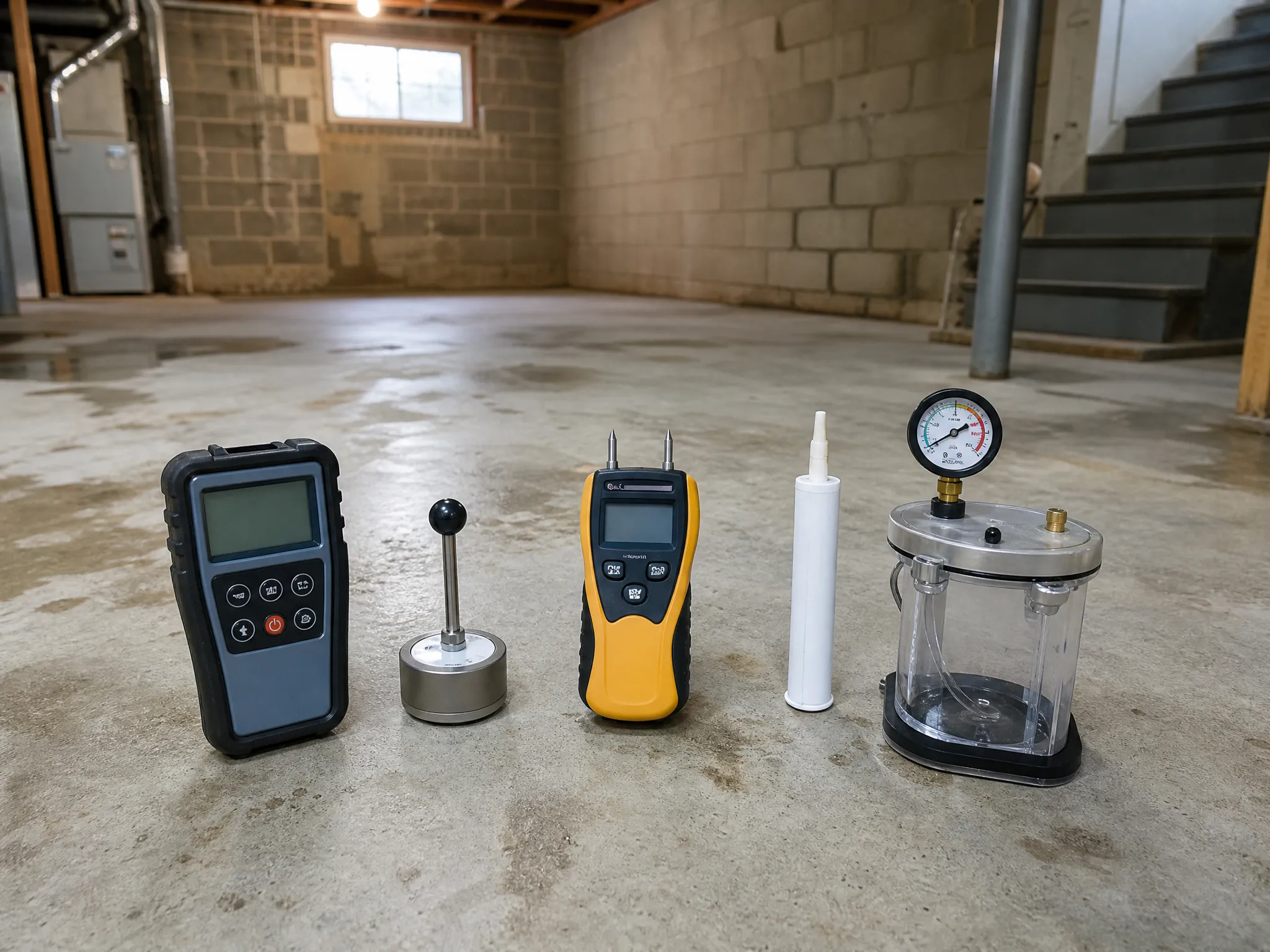
Common, reliable tests include:
- Calcium Chloride Test: Measures moisture vapor emission from the slab per ASTM F1869 Moisture Vapor Emission Rate standards.
- Moisture Meters: Fast, on‑the‑spot readings to identify problem areas.
- Relative Humidity Testing: Measures internal slab humidity for a definitive assessment, in accordance with ASTM F2170 in situ relative humidity probe standards.
Use objective results to select products and timing for application.
What Surface Preparation Steps Ensure Effective Epoxy Coating on Damp Concrete?
Key preparation steps are:
- Cleaning: Remove dirt, oil, grease, and old coatings.
- Etching: Chemically or mechanically profile the surface for mechanical adhesion.
- Drying: Where practical, reduce surface and slab moisture before coating.
Following these steps increases the likelihood of long‑term performance.
What Are the Best Epoxy and Waterproof Coating Options for Wet Concrete Basement Floors?
Choose products designed for moisture resistance:
- High‑Performance Epoxy Coatings: Strong adhesion and durability in damp environments.
- Moisture‑Tolerant Epoxy Coatings: Formulated to bond with some residual moisture.
- Waterproof Sealants: Supplement coatings and reduce vapor transmission.
Correct product selection extends service life and reduces repair risk.
Which Moisture-Tolerant Epoxy Coatings Are Suitable for Damp Basement Floors?
Moisture‑tolerant epoxies include additives to improve bond on damp substrates and are appropriate when full drying is impractical; always follow manufacturer guidance for limits and priming. Learn more about our basement floor coating options and installation process.
How Do Concrete Moisture Barrier Solutions Enhance Basement Floor Waterproofing?
Moisture barrier systems—membranes or chemical treatments—limit vapor entry and help coatings perform as intended. Proper specification and installation are critical to their effectiveness.
What Are the Benefits of Expert Moisture Mitigation and Surface Preparation?
Specialist remediation identifies hidden leaks, corrects drainage or vapor issues, and installs barriers or treatments so coatings have the best chance of long service life.
How Do Professional Services Ensure Long-Term Durability of Basement Floor Coatings?
Contractors follow validated procedures, use specified materials, and address moisture sources up front—steps that materially increase coating longevity.
Conclusion
Coating a damp basement slab is feasible with measured moisture testing, proper surface preparation, and the right moisture‑tolerant products. Where uncertainty or persistent moisture exists, professional evaluation and remediation improve outcomes and protect your investment. Take measured steps—test, prepare, and specify—to achieve a resilient, long‑lasting basement floor coating. When moisture or uncertainty is in play, it’s worth getting a professional basement floor coating in Cleveland that includes slab moisture testing before any coating goes down.
Ready to Protect Your Basement Floor?
Get a professional quote from J&P Coatings today to ensure your basement floor coating is done right the first time. Our experts specialize in moisture management and durable basement epoxy floor coatings tailored for Northeast Ohio homes. Contact us to schedule your free estimate.
Frequently Asked Questions
What should I do if my basement floor is still damp after testing?
Delay coating, run dehumidifiers and ventilation, and correct drainage or leaks. If moisture stays high, install a moisture barrier or consult a professional before proceeding.
How long does it typically take for epoxy coatings to cure?
Curing depends on product and conditions. Some epoxies allow light use in 24–48 hours, but full cure can take a week or more; follow the manufacturer’s schedule.
Can I apply epoxy coatings in cold weather?
Most products have minimum application temperatures (commonly around 50°F/10°C). Provide supplemental heat and follow temperature guidelines if working in cooler conditions.
What are the signs that my basement floor coating is failing?
Look for peeling, bubbling, discoloration, or chalking—often signs of poor adhesion or moisture problems. Inspect regularly and correct moisture sources before reapplying.
How can I maintain my epoxy-coated basement floor?
Clean with mild detergent and water, avoid harsh chemicals, inspect periodically for damage, and repair early to extend life and appearance.
Are there eco-friendly options for basement floor coatings?
Yes—many manufacturers offer low‑VOC or water‑based epoxy systems that reduce emissions while delivering comparable durability; check labels and certifications.