Quick answer: In NE Ohio, basement epoxy floor peeling is primarily caused by moisture intrusion due to the region’s high humidity, seasonal freeze/thaw cycles, and groundwater conditions, combined with improper surface preparation during installation. To fix peeling, it is essential to identify and address moisture sources, properly prepare the concrete surface by cleaning and mechanical profiling, and use moisture-tolerant epoxy products. Regular maintenance and professional assessment tailored to NE Ohio’s climate and soil conditions help prevent recurrence.
This article summarizes the main causes: chiefly moisture intrusion and inadequate substrate preparation—and gives concise diagnostic, repair, and prevention steps to restore and prolong floor performance.
Key Takeaways
- Moisture intrusion and poor surface prep are the leading causes of basement epoxy peeling in NE Ohio.
- Moisture creates adhesion barriers, causes blistering, and can support mold growth beneath coatings.
- Proper prep—cleaning, moisture testing, and mechanical profiling—is required for a durable bond.
- Signs of failure: flaking, discoloration, blisters, and rough or lifting areas.
- NE Ohio’s seasonal temperature swings and humidity increase the risk of adhesion problems.
- Repair workflow: assess, remove failed coating, correct moisture issues, profile concrete, and recoat.
What Are the Primary Causes of Epoxy Floor Peeling in NE Ohio Basements?
Peeling typically stems from environmental exposure (moisture and thermal cycling), installation errors (insufficient cleaning or profiling, low-quality materials), and poor maintenance. Identifying which category applies guides effective corrective action.
- Environmental Factors: Local humidity and freeze/thaw cycles can drive moisture into the slab and stress the coating.
- Installation Issues: Without proper cleaning, priming, and mechanical profile, epoxy cannot form a lasting bond.
- Maintenance Practices: Ignoring early signs or ongoing moisture problems lets small defects escalate into widespread delamination.
How Does Moisture Intrusion Lead to Epoxy Floor Adhesion Failure?
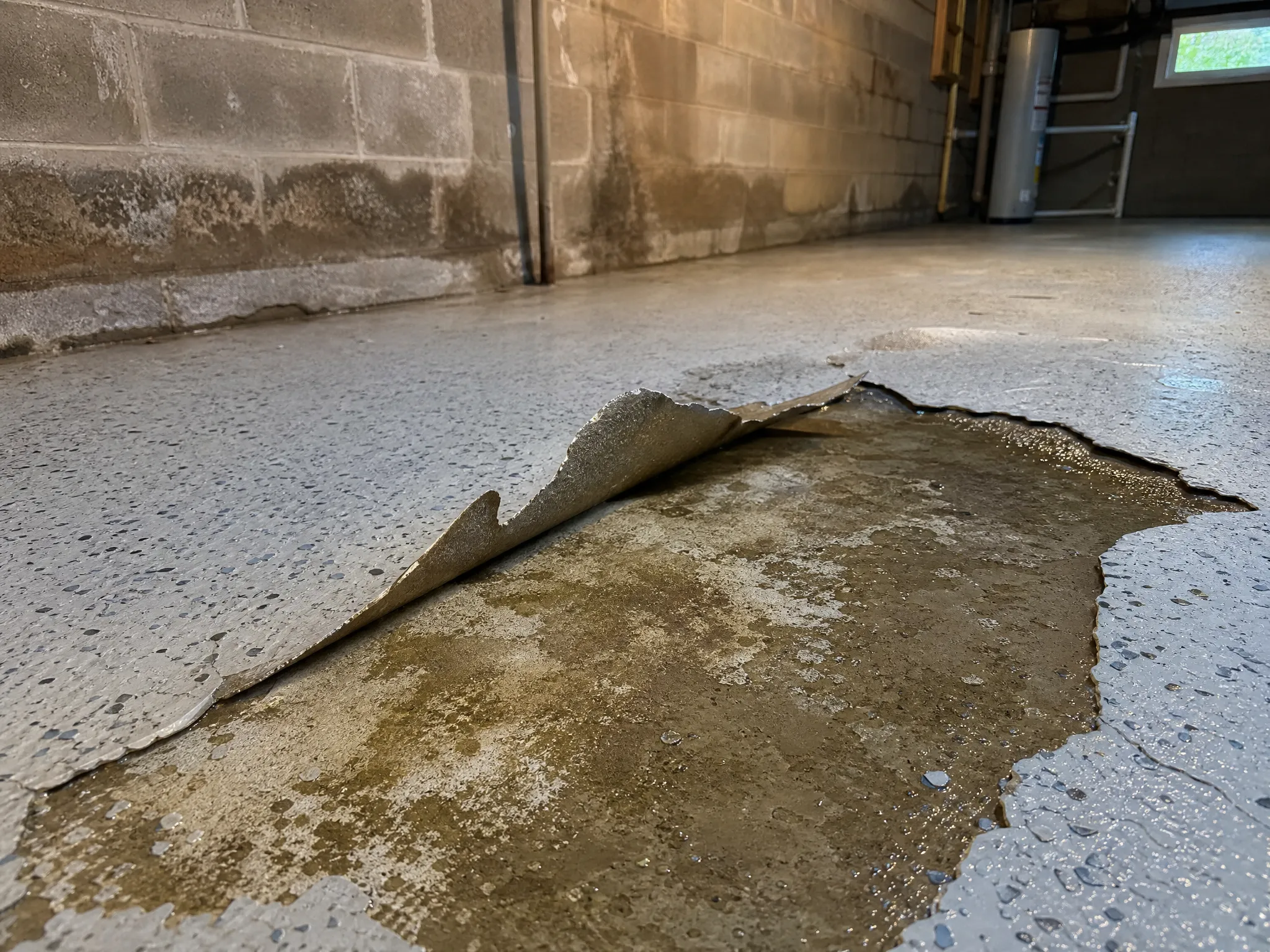
Water migrating through or sitting on concrete creates a physical and chemical barrier at the epoxy/concrete interface, preventing proper adhesion. Common sources include high ground water, plumbing leaks, and persistent humid air.
- Adhesion breakdown: Moisture reduces contact and bonding strength, allowing the coating to lift.
- Blistering: Trapped water vapor can form blisters that burst and cause peeling.
- Mold growth: Moist conditions under coatings support mold and can further degrade the system.
Address moisture before recoating; otherwise, failures will recur. Mitigation requires basement epoxy coatings with vapor-barriers, verified exterior drainage, and active dehumidification when needed to lower slab moisture before applying coatings. Industry research on floor blistering and osmotic pressure caused by slab moisture confirms why moisture correction must precede any coating application.
What Role Does Improper Concrete Surface Preparation Play in Peeling?
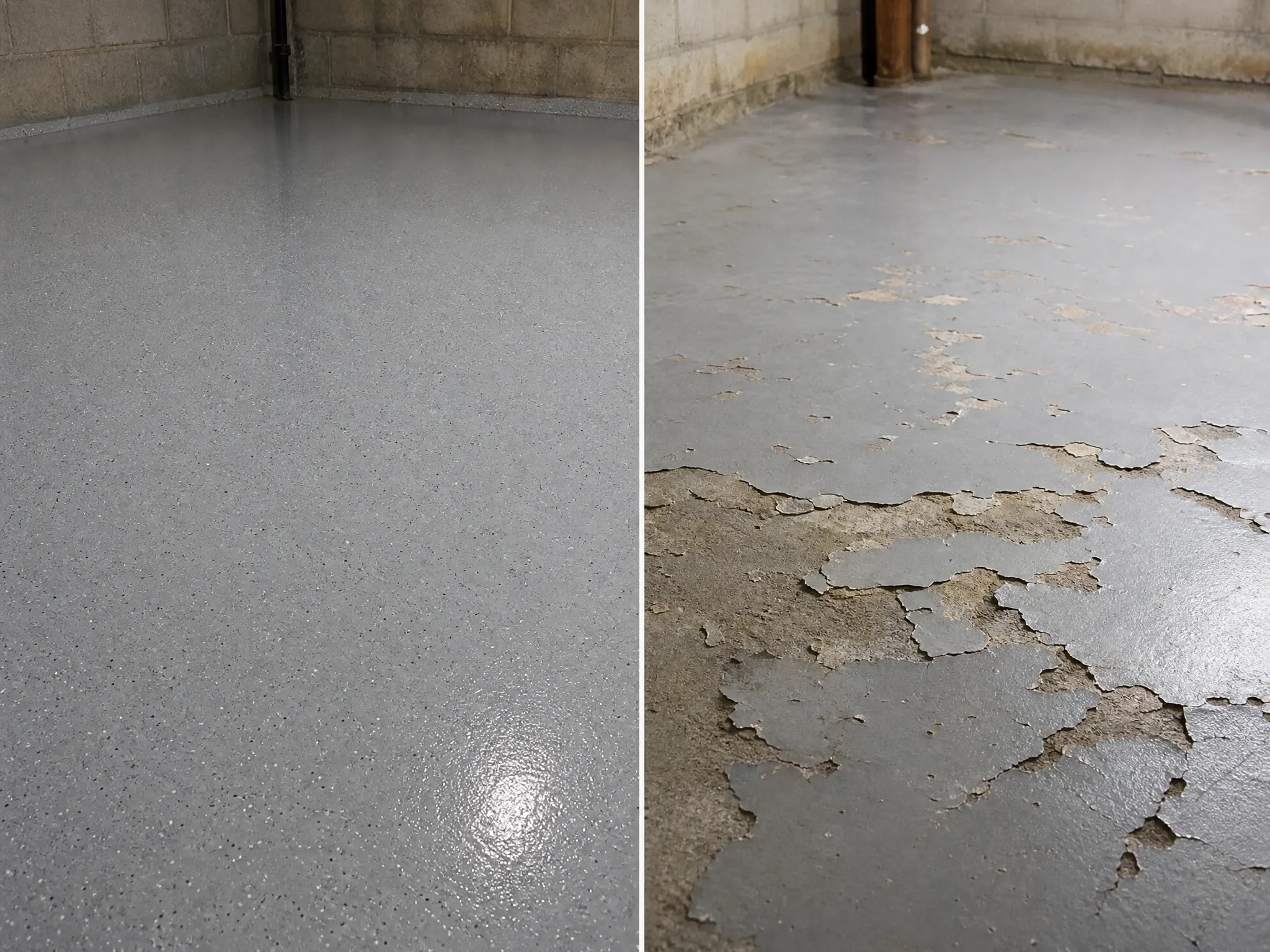
Epoxy adhesion depends on a clean, dry, and adequately profiled concrete surface. Skipping any prep step substantially increases failure risk.
Key preparation steps:
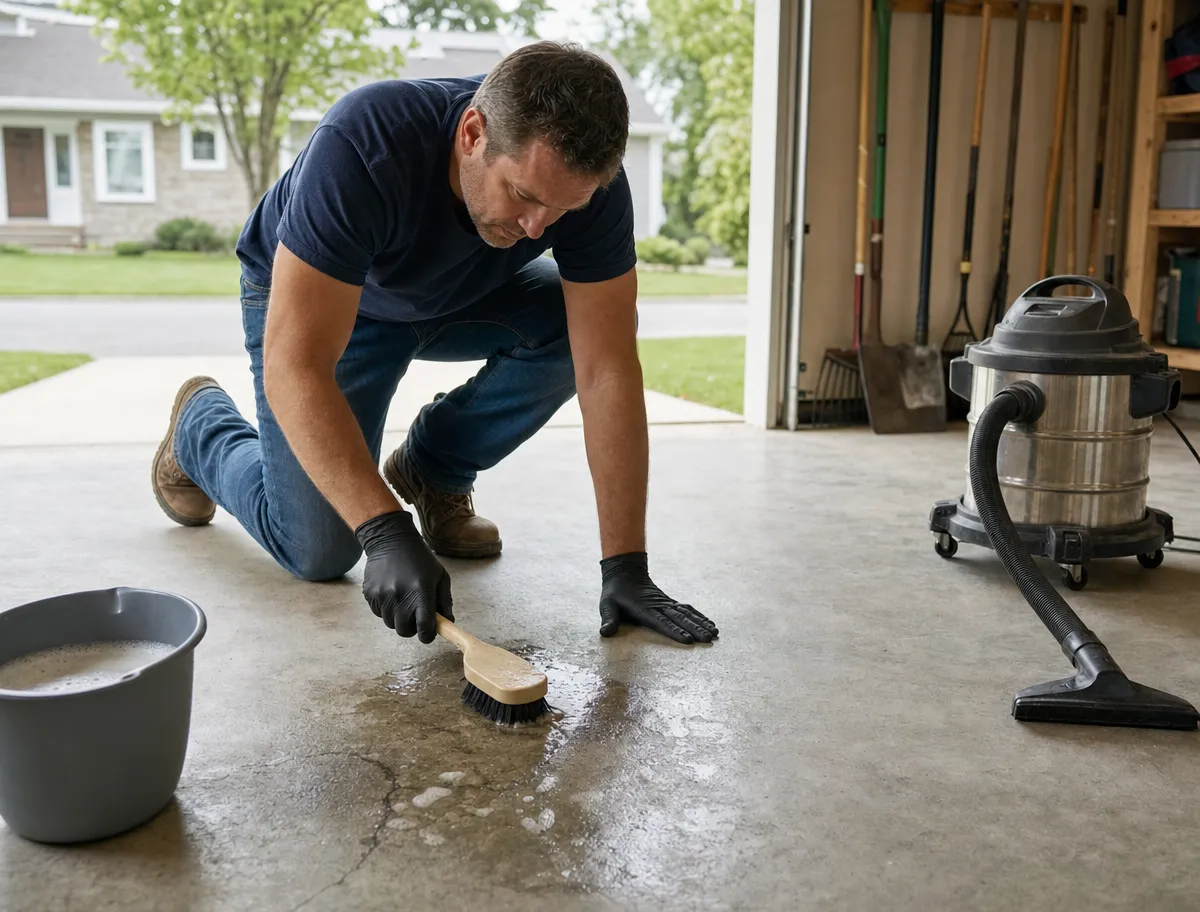
- Cleaning: Remove dirt, grease, and previous coatings so epoxy contacts concrete directly.
- Moisture testing: Measure slab moisture and only proceed when readings meet product limits. Fast-cure amine epoxy technologies for managing high-humidity slab conditions provide guidance on selecting vapor-barrier formulations for below-grade applications.
- Mechanical profiling: Diamond grinding or shot blasting creates the necessary texture for bonding.
Following established protocols reduces delamination likelihood.
How Can Basement Floor Coating Problems Be Diagnosed Effectively?
Use systematic inspection: note visible failure modes, test for moisture, and sample the coating to determine adhesion and substrate condition.
Which Signs Indicate Concrete Floor Epoxy Failure?
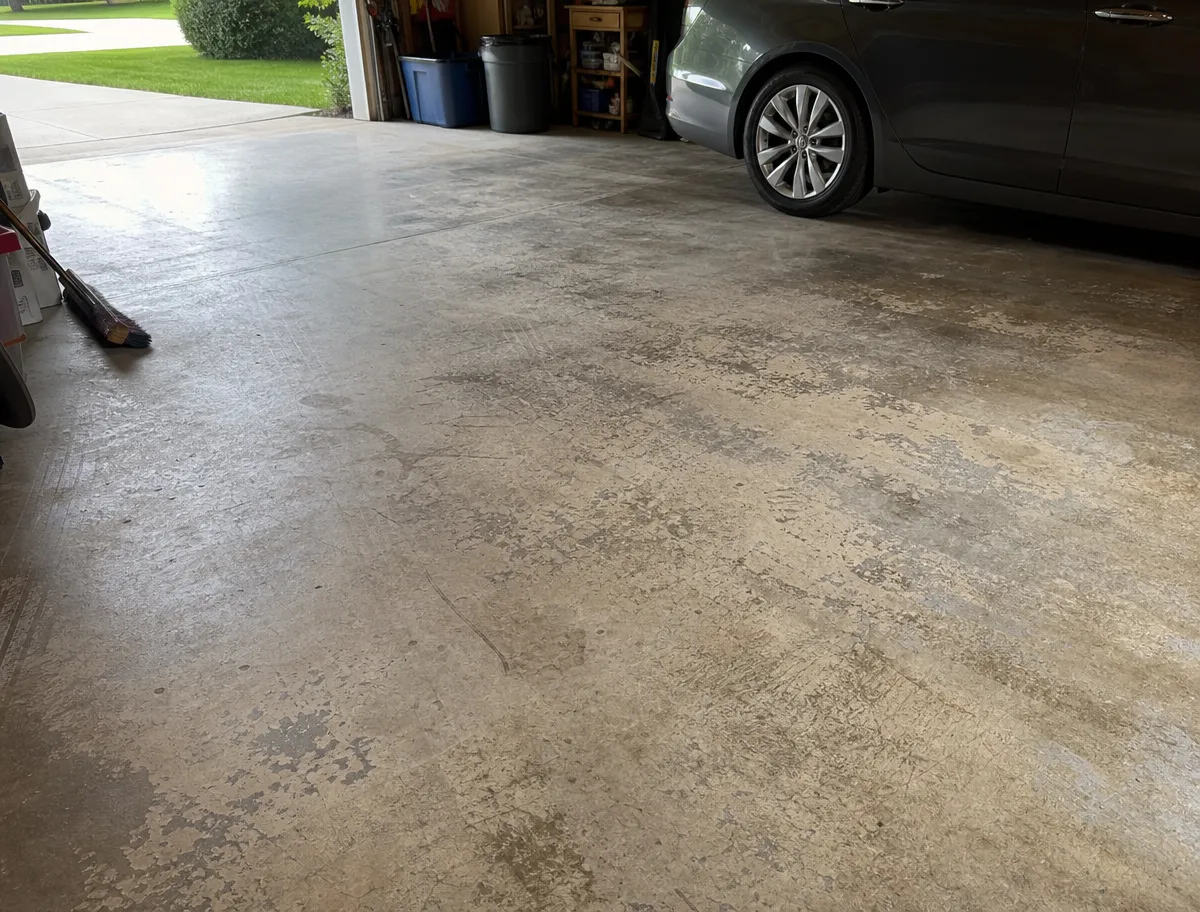
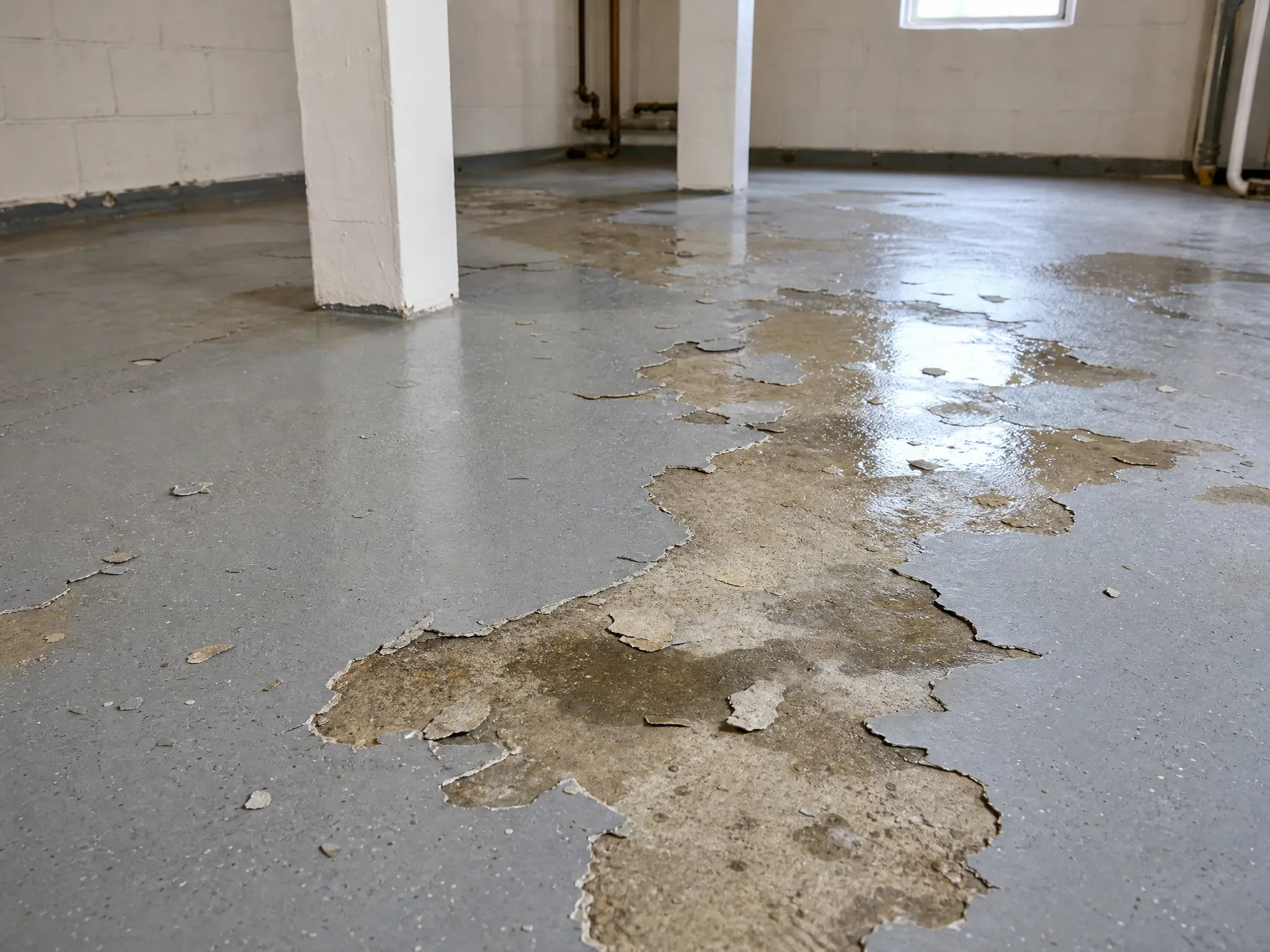
- Visible flaking or large chips.
- Discoloration and bubbling or soft spots.
- Rough or lifting surface where the epoxy no longer bonds.
How Does NE Ohio’s Climate Affect Basement Epoxy Durability?
Seasonal temperature swings and high humidity raise the risk of moisture intrusion and thermal strain. Apply coatings during recommended temperature and humidity ranges and select basement floor coatings with appropriate flexibility and moisture tolerance for NE Ohio conditions.
What Are the Recommended Methods to Repair Peeling Epoxy Floors?
Repairs follow a clear sequence: diagnose the cause, remove failed coating, correct moisture or drainage problems, prepare the concrete, and recoat with a compatible system. For best results, trust professional epoxy flooring installation to ensure each step meets industry standards.
- Assessment: Determine delamination extent and root cause (moisture, prep, or product).
- Surface preparation: Remove loose material and mechanically profile to sound concrete.
- Recoat: Use products rated for slab conditions; follow manufacturer cure and application instructions.
The most reliable fix for peeling is a professionally installed basement floor coating that starts with diamond-grinding the slab.
What Step-by-Step Procedures Ensure Proper Epoxy Floor Repair?
A reliable protocol includes:
- Remove peeling areas and discard loose coating.
- Clean the surface and vacuum dust after profiling.
- Apply a moisture barrier or primer when tests indicate risk.
- Reapply epoxy under controlled temperature and humidity.
Which Moisture Barrier and Adhesion Techniques Prevent Recurrence?
- Regular inspections to spot moisture or lifting zones early.
- Quality materials specified for basement use (moisture-tolerant formulations). Consider polyaspartic floor coatings as a high-performance, moisture-tolerant alternative for below-grade installations.
- Professional installation for reliable surface profiling and system selection.
How Can Homeowners Prevent Future Epoxy Floor Peeling in Basements?
Prevention combines routine maintenance, moisture control, and correct product choice.
- Regular maintenance: Inspect and clean the floor, and fix small issues promptly.
- Moisture control: Use dehumidifiers, ensure good exterior drainage, and install vapor barriers where appropriate.
- Material selection: Choose epoxy systems rated for basements and local climate stresses.
What Preventative Maintenance Practices Enhance Epoxy Floor Longevity?
- Routine inspections for wear and moisture.
- Cleaning with pH-neutral cleaners and regular sweeping/mopping.
- Prompt repairs to small chips or lifted edges to stop spread.
Documenting maintenance schedules helps preserve coating life.
How Do Professional Services Tailor Solutions for NE Ohio Basement Conditions?
Local contractors assess slab moisture, drainage, and structural issues, then recommend tailored mitigation (interior or exterior drainage, sump systems, vapor barriers) and appropriate coating systems. Similar coating adhesion issues occur above grade—see our guide on why garage floor coatings peel for a comparison of causes across different floor types.
- Local expertise: Knowledge of regional humidity and freeze/thaw impacts informs choices.
- Customized solutions: Site-specific repairs and product selection deliver longer service life.
- Moisture mitigation: Contractors can install or recommend drainage, sump pumps, and vapor barriers.
Frequently Asked Questions
What are the best practices for maintaining epoxy floors in basements?
Keep a written maintenance plan with periodic inspections, regular sweeping and damp mopping with neutral cleaners, and quick repair of minor defects. Use dehumidification where moisture is present and verify exterior grading and drainage.
How can I tell if my epoxy floor needs to be replaced rather than repaired?
Replacement is likely when peeling is extensive, substrate damage is significant, or moisture problems cannot be resolved. For borderline cases, obtain a professional assessment from J&P Coatings.
Are there specific types of epoxy that are better suited for basements?
Yes. Choose moisture-resistant or flexible epoxy formulations designed for below-grade use; review technical data sheets and consult an installer for compatibility with your slab conditions.
What should I do if I notice mold growth under my epoxy floor?
Remove the coating in affected areas, perform mold remediation per approved protocols, ensure the substrate is dry, then recoat with a suitable system and correct the moisture source.
How does the application temperature affect epoxy floor installation?
Temperature and substrate conditions influence cure rate and adhesion. Follow manufacturer ranges (commonly ~60°F–90°F) and avoid application in extremes of temperature or humidity.
Can I apply epoxy over an existing epoxy floor?
Yes, if the existing coating is sound. Clean and abrade to create a mechanical profile, repair delaminated areas, and follow the manufacturer’s overcoating guidance.
Conclusion
Basement epoxy peeling is usually rooted in moisture and inadequate surface preparation. Diagnose the root cause, correct moisture and substrate issues, and follow industry preparation and application standards. For persistent or complex problems, retain a qualified professional to specify materials and mitigation measures suited to NE Ohio basement floors.
Choose J&P Coatings to Restore Your NE Ohio Basement Epoxy Floor
Trust our experienced team at J&P Coatings to diagnose, repair, and protect your basement floor with solutions tailored to NE Ohio’s unique climate and soil conditions. Serving homeowners in Cleveland, OH and surrounding communities. Contact us today for a consultation and ensure a durable, beautiful epoxy floor that lasts.