Cleveland-area basement and garage slabs fail floor coatings at a higher rate than the national average for one specific reason: moisture vapor transmission — water vapor migrating up through the concrete from clay-heavy, high-water-table soil below, made worse by roughly six months a year of freeze-thaw cycling. A coating applied without testing for this first doesn’t fail because the product is bad; it fails because nothing was done to confirm the slab could actually accept it. Here’s why NE Ohio slabs specifically carry more of this risk, and what proper prep actually looks like.
Why NE Ohio Slabs Are Genuinely Different
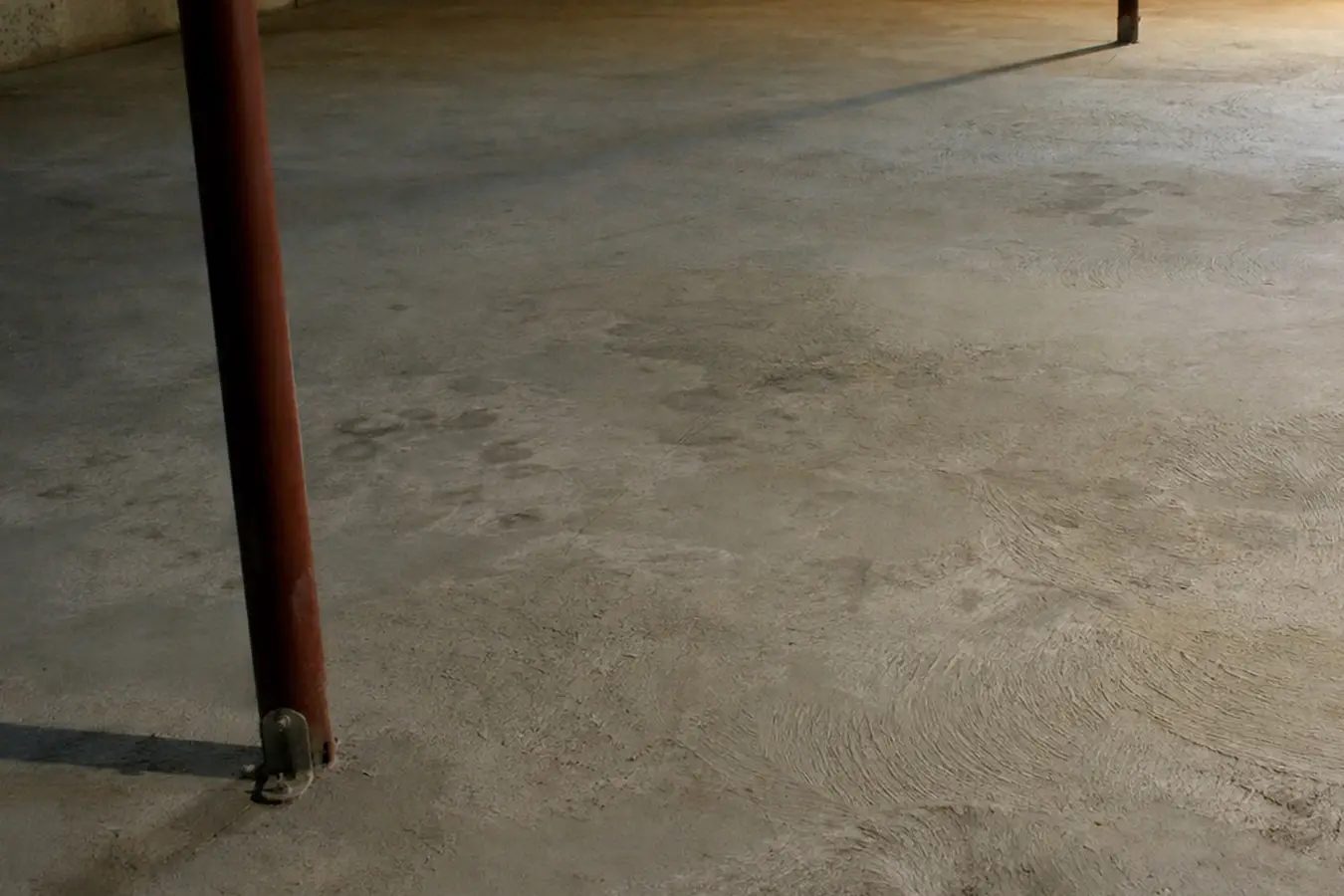
Greater Cleveland sits on glacial till and lake-plain clay soils that hold water far longer than the sandy or well-drained soils common in much of the Sun Belt, where a lot of national coating guidance is written. Add a water table that rises seasonally and a freeze season running roughly from late October through late April — per NOAA’s National Weather Service Cleveland office, the area averages its first freeze around October 28 and last freeze around April 23 — and you get a slab under near-constant moisture pressure from below for nearly half the year. National average coating guidance, written for drier climates, routinely underestimates what a Cleveland-area basement slab is actually dealing with.
Two Different Moisture Problems, Not One
Hydrostatic pressure and moisture vapor transmission are often lumped together, but they’re distinct problems with different fixes. Hydrostatic pressure is liquid water actively pushing through cracks or porous concrete when the water table rises — a structural water-intrusion issue that needs waterproofing or drainage work, not a coating. Moisture vapor transmission is the slower, constant process of water vapor migrating upward through even sound, uncracked concrete, driven by the moisture differential between damp soil below and drier air above. A coating can be engineered to handle vapor transmission within limits; it cannot solve active hydrostatic water intrusion on its own.
The honest distinction that matters: a floor coating seals the slab against vapor transmission and general dampness. It is not a substitute for foundation waterproofing if you have active water pushing through walls or a failing foundation — that has to be addressed separately, before or alongside any coating work.
How Moisture Testing Actually Works
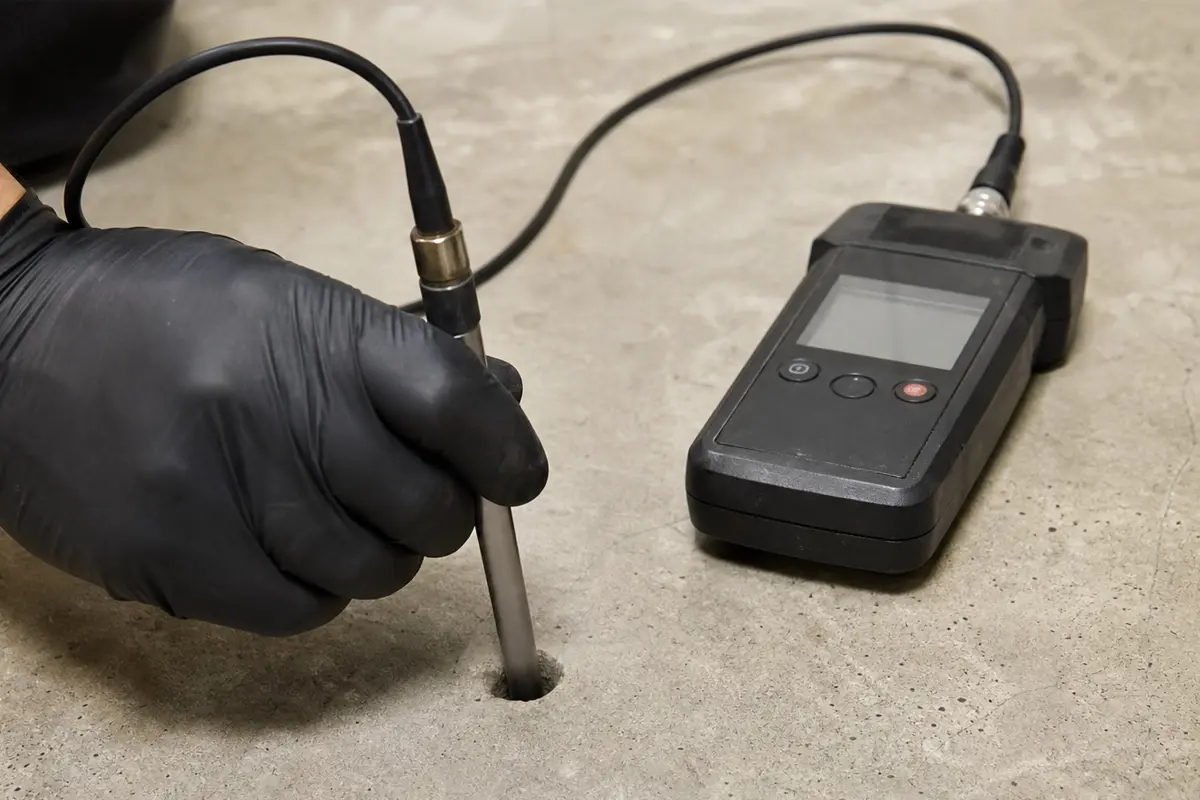
Two standardized test methods exist for a reason: guessing at slab moisture from how a basement “feels” is unreliable. The ASTM F2170 in-situ relative humidity test involves drilling a hole to roughly 40% of the slab’s depth, inserting a sealed probe, and measuring the equilibrium relative humidity after the hole stabilizes — the industry’s most accurate method for gauging what’s actually happening inside the slab, not just at its surface. The older calcium chloride test (ASTM F1869) measures moisture vapor emission rate from the surface and is faster, but less precise for a slab as consistently damp as many Cleveland-area basements. Either way, per ASTM’s own documentation, excessive slab moisture is a documented cause of coating debonding, peeling, and microbial growth when floor coverings or coatings go down without it being addressed first.
What Happens When You Skip Testing
Skipping moisture testing doesn’t mean a coating might fail eventually — it means the failure mode is largely predictable, and it’s usually one of a few specific patterns.
| Failure Mode | Cause | What It Looks Like |
| Bubbling / blistering | Vapor pressure pushing up under a sealed coating | Small domes or bubbles appearing across the surface, often within months |
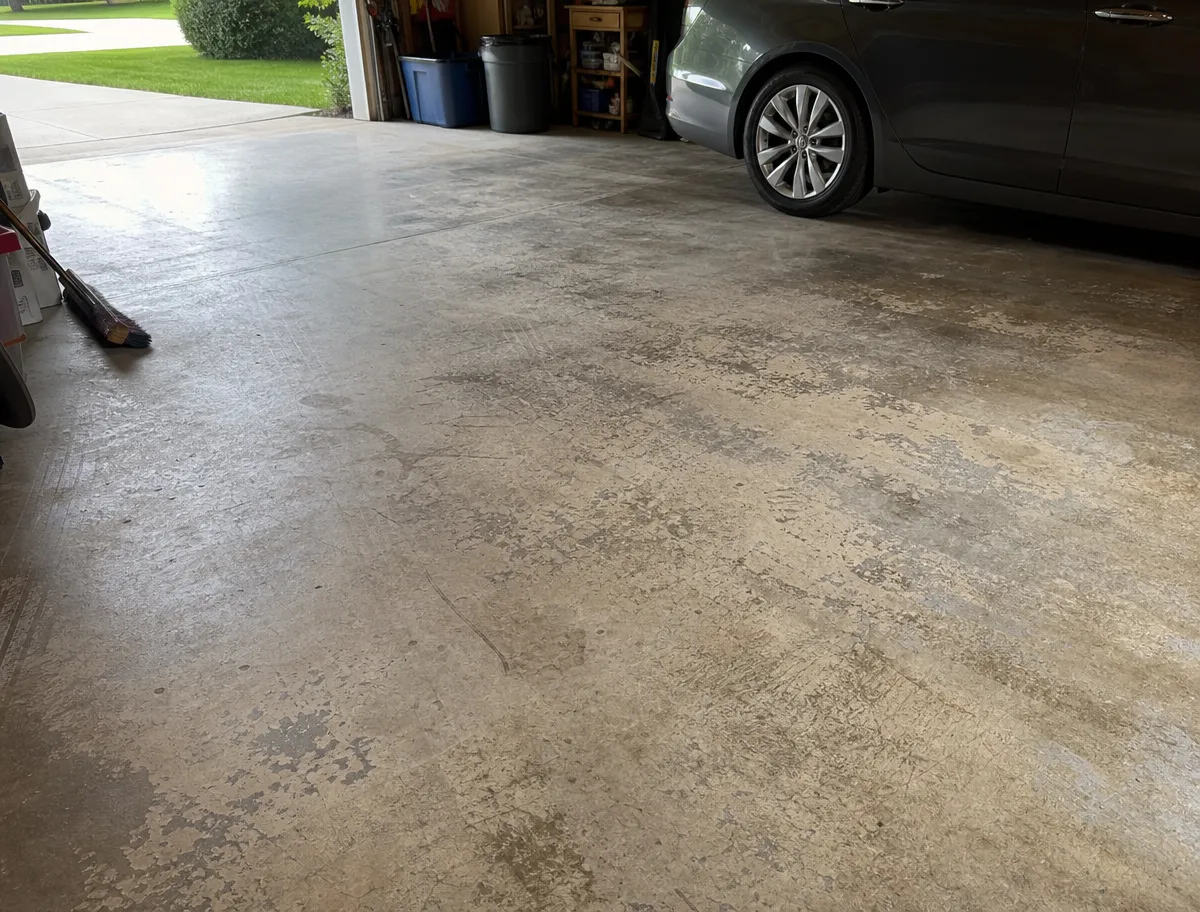
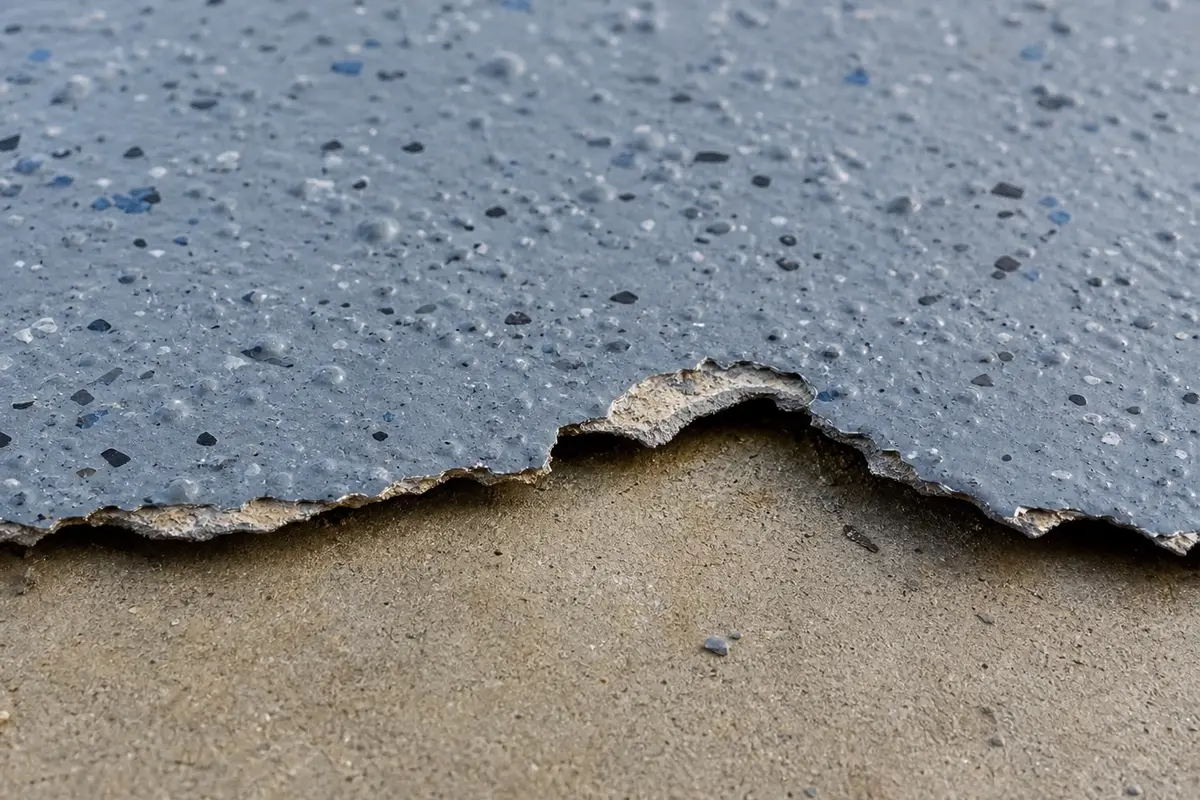
| Delamination | Moisture breaking the coating’s bond to the slab | Sheets or sections lifting cleanly away from the concrete |
| Efflorescence staining | Mineral salts carried to the surface by moisture | White, chalky residue appearing under or around the coating edge |
| Adhesion failure at edges | Moisture concentrating near walls and perimeter | Peeling starting at room edges before the field of the floor |
Prepping an NE Ohio Slab Right
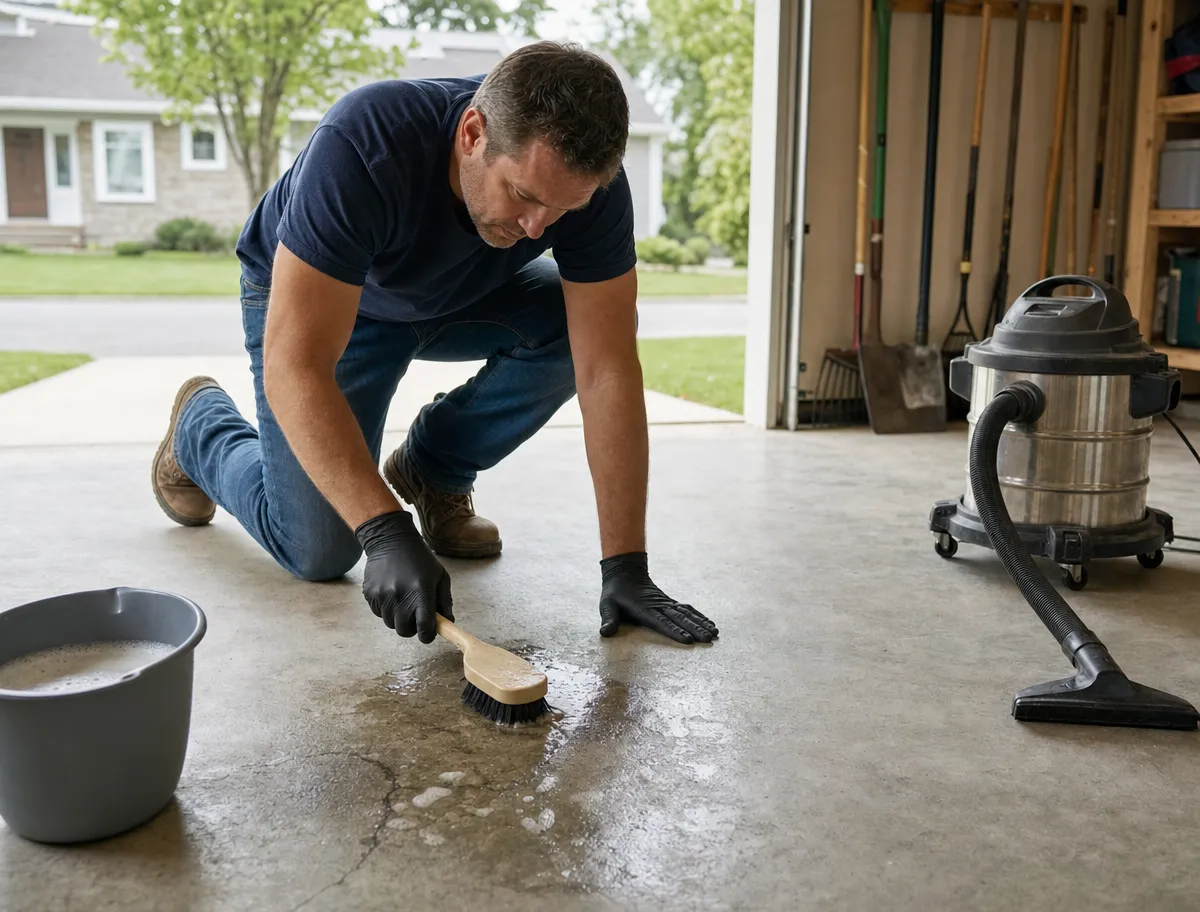
Proper prep for a Cleveland-area slab starts with the moisture test itself, then follows with mechanical diamond grinding to open the concrete’s surface pores for a real mechanical bond — not an acid etch, which only reaches a shallow profile. If test results come back elevated, a moisture-mitigating primer system designed to tolerate higher vapor transmission rates gets specified before the base coat goes down, rather than proceeding with a standard system that assumes drier conditions. This is also where material choice matters: Duralast® polyaspartic flexes with the slab through temperature swings in a way rigid epoxy doesn’t, which matters directly for a floor moving through NE Ohio’s freeze-thaw cycle on top of whatever moisture is already present.
Garage Floors Face a Related but Different Risk
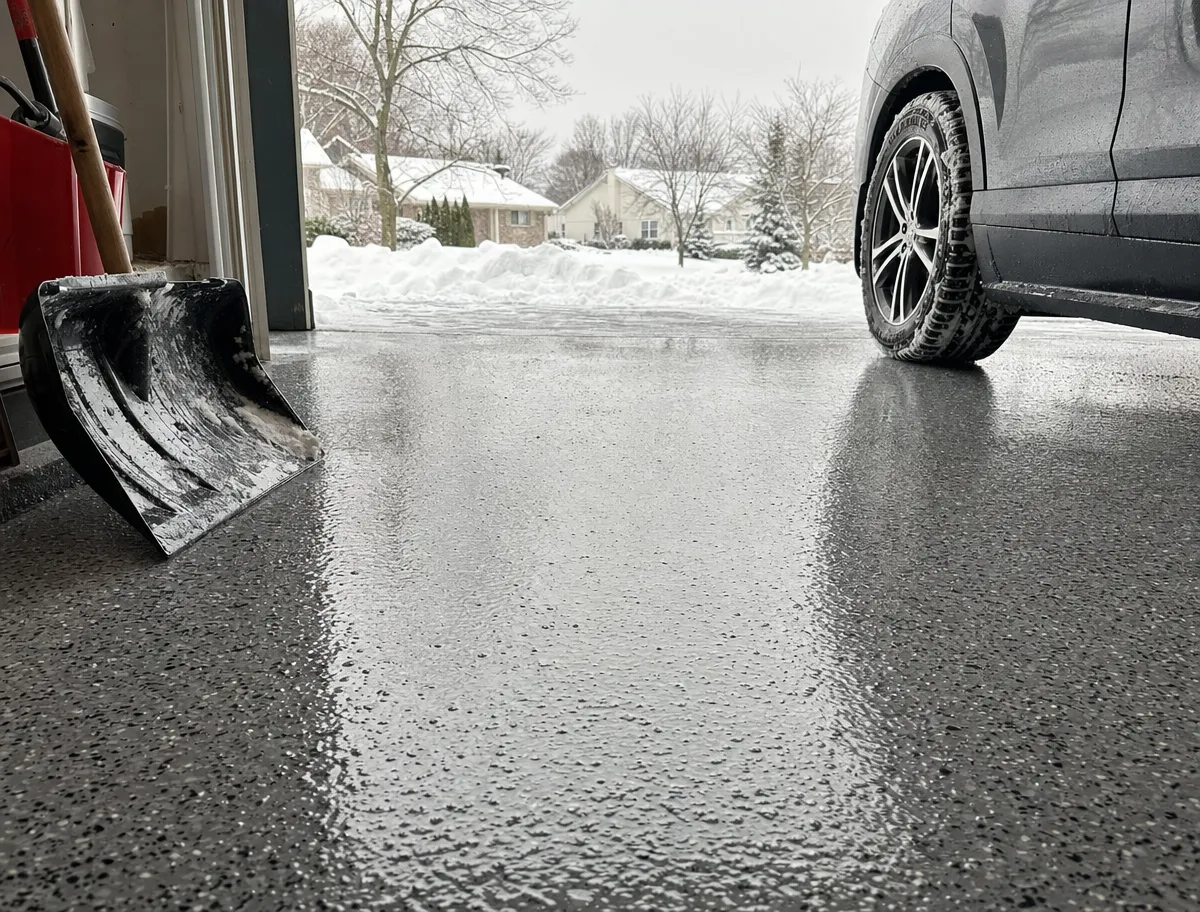
Garage slabs deal with less constant below-grade moisture pressure than basements, but road salt and de-icer tracked in through an NE Ohio winter create their own chemical stress on a coating — a different failure pathway than vapor transmission, but one that similarly rewards proper prep and the right material system over a quick, untested install.
Frequently Asked Questions
How do I know if my Cleveland basement slab has a moisture problem?
A musty smell, visible dampness after rain, or efflorescence (white mineral staining) on bare concrete are visible signs, but the only reliable way to know the actual moisture level is a proper test — ASTM F2170 relative humidity probes or an ASTM F1869 calcium chloride test — since many problem slabs show no obvious surface signs at all.
Can any floor coating handle Cleveland’s moisture levels?
Not without the right prep and, in higher-moisture cases, a vapor-mitigating primer system specified for the actual test results. Off-the-shelf DIY coatings applied without testing are the most common source of early failure on NE Ohio slabs specifically.
Will a floor coating fix a damp basement?
A coating addresses moisture vapor coming up through the slab and general dampness, but it isn’t a substitute for foundation waterproofing if you have active water intrusion through walls or a failing foundation — that needs to be resolved separately.
How long does moisture testing add to a coating project timeline?
A relative humidity test typically requires the drilled probe holes to sit undisturbed for roughly 24 hours before an accurate reading can be taken, per current ASTM F2170 guidance — a short delay against the cost of redoing a coating that fails within a year or two.
A Cleveland-area slab isn’t a generic concrete floor — it’s sitting on soil and climate conditions that push more moisture through it than most national coating advice accounts for. Testing before coating isn’t an upsell; it’s the one step that actually determines whether the finished floor lasts 15 years or 15 months.
Choose J&P Coatings for a Slab That’s Actually Ready
J&P Coatings is Cleveland’s #2 national Duralast® installer, and every job starts with a moisture assessment — not a rushed quote — because a coating is only as good as the slab prep underneath it.
Contact us today for a free, on-site slab assessment before you commit to any coating for your Cleveland-area basement or garage.
| Not sure if your slab is ready for a coating?
J&P Coatings tests every Cleveland-area slab for moisture before installing Duralast® — free, on-site, no guessing. Get a Free Slab Assessment | (440) 557-3141 |