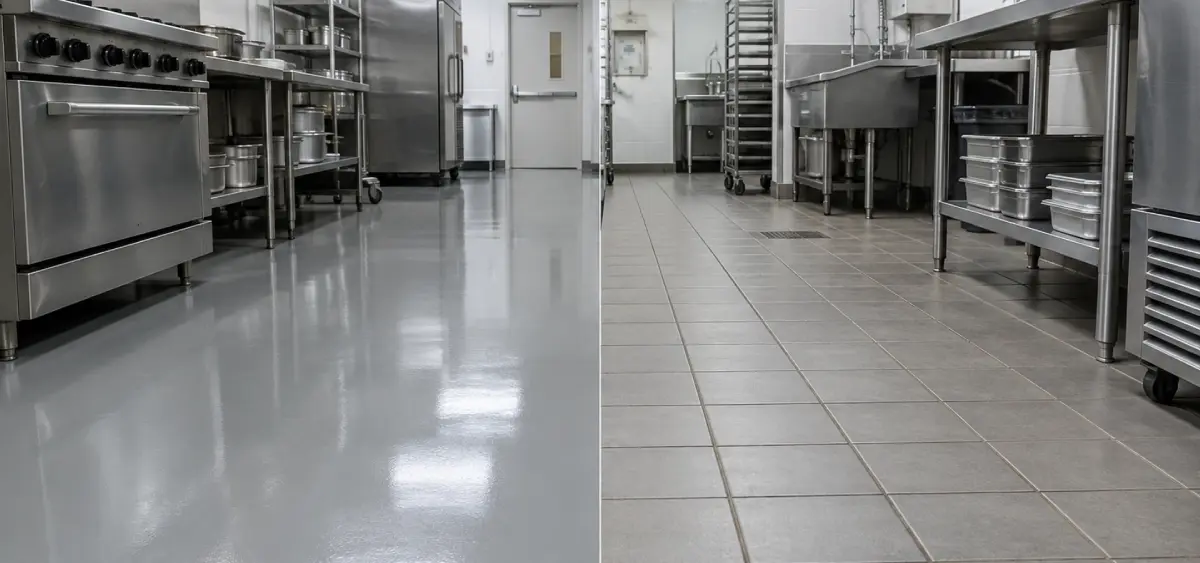
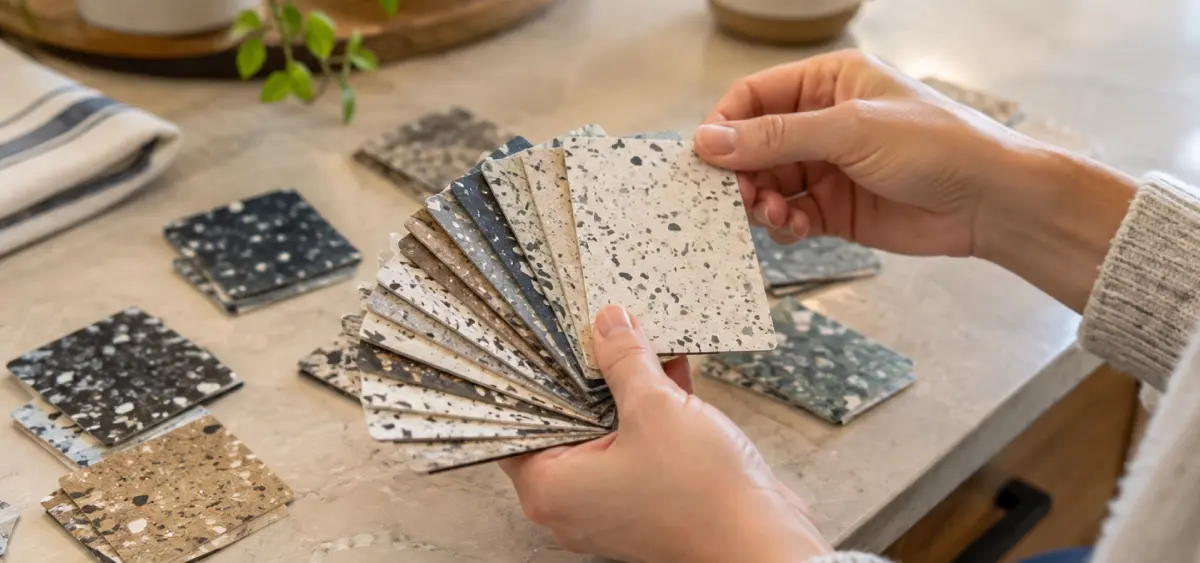
Both a professionally installed floor coating and luxury vinyl plank (LVP) can hold up in an Ohio basement — the right choice depends on your slab’s moisture situation, your budget, and how much you value a warmer feel underfoot versus a monolithic, seam-free surface. LVP is genuinely waterproof at the surface and typically costs less upfront; a floor coating handles below-grade moisture with no seams for it to hide behind. Here’s a fair, side-by-side look at both.
The Core Difference: How Each Handles Moisture
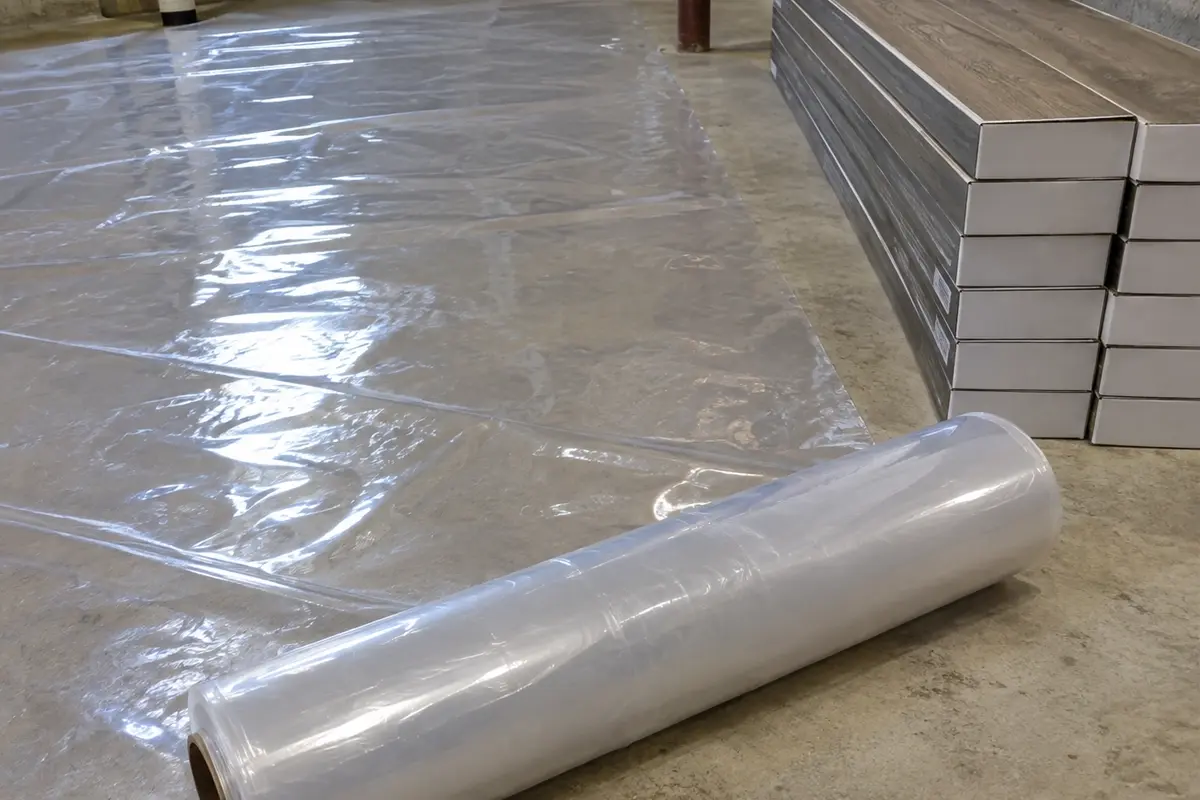
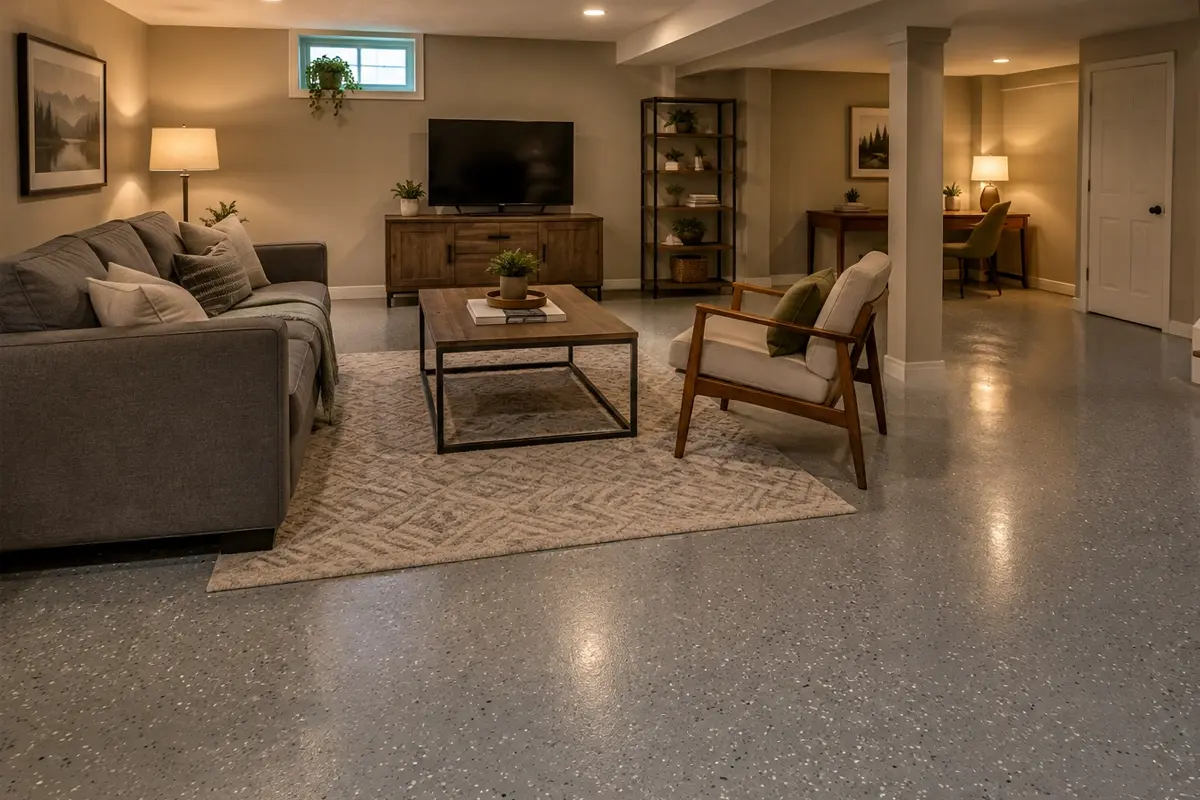
A basement floor coating is applied directly to the concrete after diamond-grinding, forming a single continuous, non-porous layer with no seams or joints. LVP, even in its waterproof click-lock form, is installed as individual planks over a vapor barrier and underlayment — genuinely effective when installed correctly, but it introduces a layered assembly (concrete, vapor barrier, underlayment, planks) rather than one continuous surface.
Side-by-Side Comparison
Both options have real strengths. This comparison lays out where each one actually wins.
| Basement Floor Coating | Luxury Vinyl Plank (LVP) | |
| Subfloor/prep required | Diamond-grind concrete; no separate subfloor needed | Vapor barrier + underlayment typically required over concrete |
| Moisture handling | Monolithic, no-seam seal; slab moisture-tested first | Waterproof surface, but moisture can get trapped beneath planks |
| Mold risk point | Minimal — no seams or gaps for moisture to collect | Click-lock seams and underlayment can trap moisture if vapor barrier fails |
| Typical lifespan | 15+ years (polyaspartic) | 10-20 years, varies by product quality and moisture exposure |
| Comfort underfoot | Firm, cooler surface | Warmer, slightly cushioned feel |
| Upfront cost | Higher material + labor cost | Generally lower material cost, DIY-friendly |
| Repair if damaged | Requires professional recoating of affected area | Individual planks can often be replaced |
The Click-Lock Seam Mold Risk, Explained Fairly
This is the point worth understanding clearly rather than dismissed on either side. LVP’s floating, click-lock installation relies on a properly installed vapor barrier to keep slab moisture from reaching the underside of the planks. When that barrier is installed correctly, LVP performs well in a basement. The risk shows up when the barrier is missing, damaged, or improperly sealed at seams — moisture from the concrete can then migrate upward and become trapped in the dark, sealed space beneath the flooring, where it has nowhere to evaporate. Per the EPA’s own guidance on mold and moisture, vapor barriers that aren’t located and installed properly can actually trap moisture against building materials rather than protecting them, creating exactly the hidden, damp conditions mold needs. This isn’t a flaw unique to LVP — it’s a genuine installation-dependent risk that a monolithic coating, with no barrier layer or seams to fail, doesn’t share in the same way.
To be fair to LVP: when the vapor barrier and installation are done correctly by an experienced installer, this risk is well-managed and LVP performs reliably in many finished basements. The point isn’t that LVP is unsuitable for basements — it’s that its moisture performance depends more heavily on installation quality than a coating’s does.
What Actually Determines the Right Choice
- Choose LVP if: your basement has a confirmed dry slab, you want the warmer feel underfoot, budget is the top priority, or you want the flexibility to DIY the installation.
- Choose a coating if: your slab has any history of moisture, you want the longest realistic lifespan with minimal ongoing maintenance, or you’re finishing a basement gym, workshop, or storage space where a seamless, easy-to-clean surface matters more than a soft feel.
Why Testing Comes Before Either Decision
Neither option should be chosen blind. A proper moisture test on the slab tells you whether you’re dealing with a genuinely dry basement (where either option can work well) or one with elevated moisture (where a coating’s monolithic seal, or a more rigorous vapor-barrier LVP installation, becomes the more important factor). For a fuller look at how coatings compare against concrete paint specifically, see our basement floor coating vs. paint comparison, and for cost specifics on the polyaspartic coating option, see our Cuyahoga County basement pricing guide.
Frequently Asked Questions
Is vinyl plank actually waterproof, or just water-resistant?
Genuine luxury vinyl plank (rigid core, SPC or WPC) is waterproof at the surface — it won’t swell or delaminate from surface water exposure. The moisture consideration is what happens beneath the planks if the vapor barrier isn’t installed correctly, not the plank material itself.
Can I install vinyl plank without a vapor barrier in my Ohio basement?
Most manufacturers require a vapor barrier for below-grade concrete installations, and skipping it is one of the more common causes of moisture problems and warranty issues with basement LVP installations.
Does a basement floor coating need a subfloor like LVP does?
No — a coating is applied directly to properly prepared concrete, which is part of why it avoids the layered vapor-barrier-and-underlayment assembly that LVP requires.
Which option is better for resale value?
Both can appeal to buyers when done well; the more relevant factor for resale is usually documented quality of installation and moisture management, not the specific material chosen.
Neither option is universally better — a floor coating and LVP solve the basement flooring question differently, and the right one depends on your slab’s actual moisture condition more than personal preference alone. Testing first is what makes either choice a confident one instead of a guess.
J&P Coatings: Honest About What Your Basement Actually Needs
J&P Coatings moisture-tests every basement slab before recommending a coating, and will tell you directly if waterproofing needs to come first — whichever flooring option you ultimately choose.
Contact us today for a free consultation to see what your specific slab actually needs.
Weighing your basement flooring options?
J&P Coatings offers a free, honest slab evaluation — including moisture testing — before you commit to either option.
Get a Free Slab Evaluation | (440) 557-3141