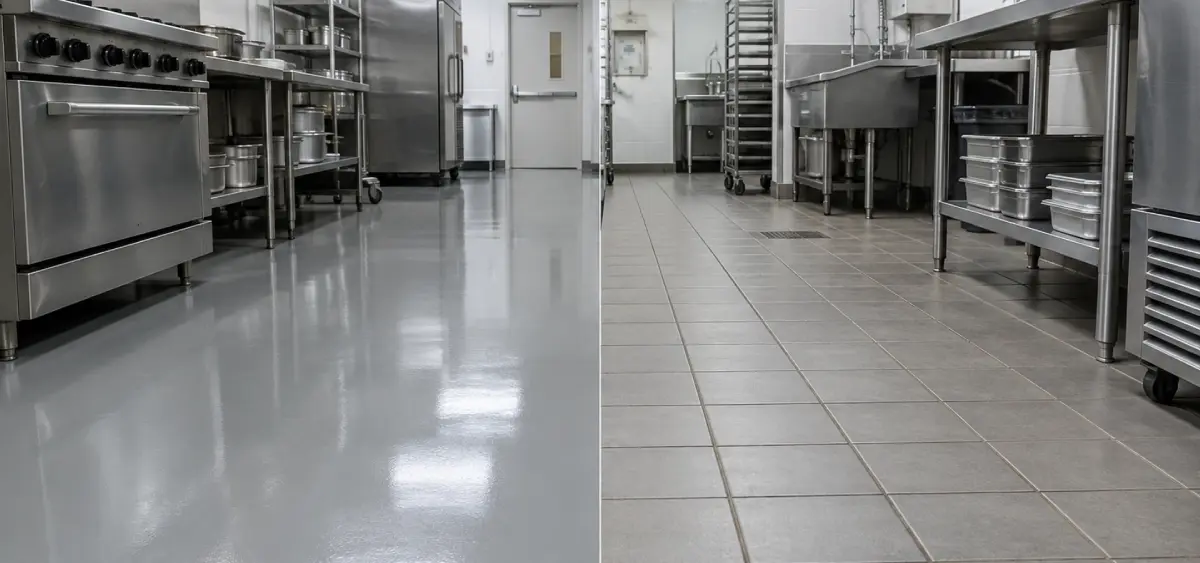
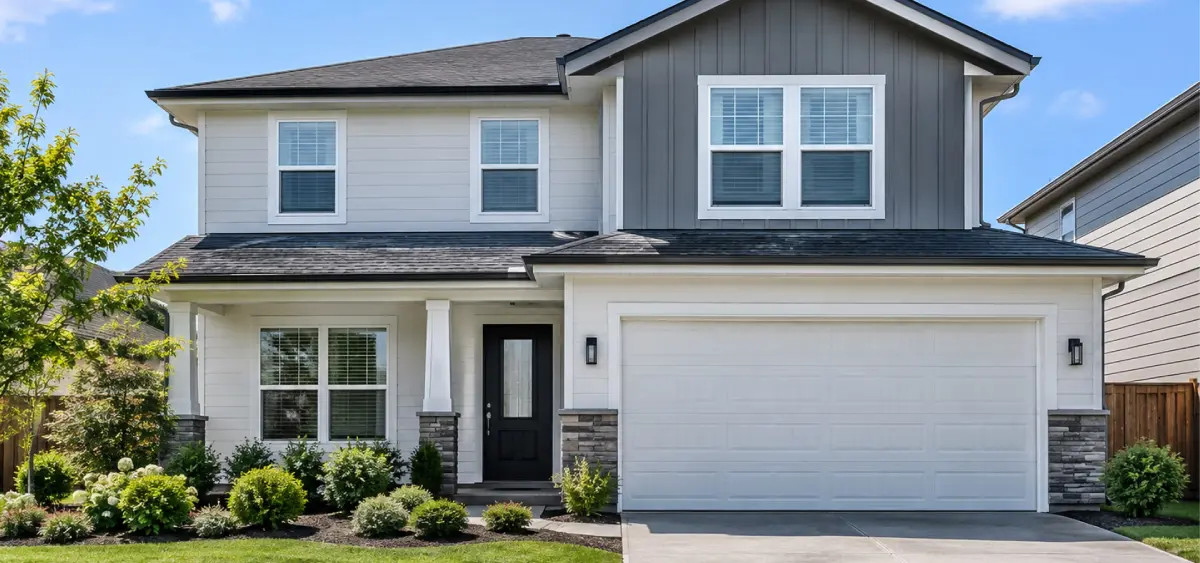
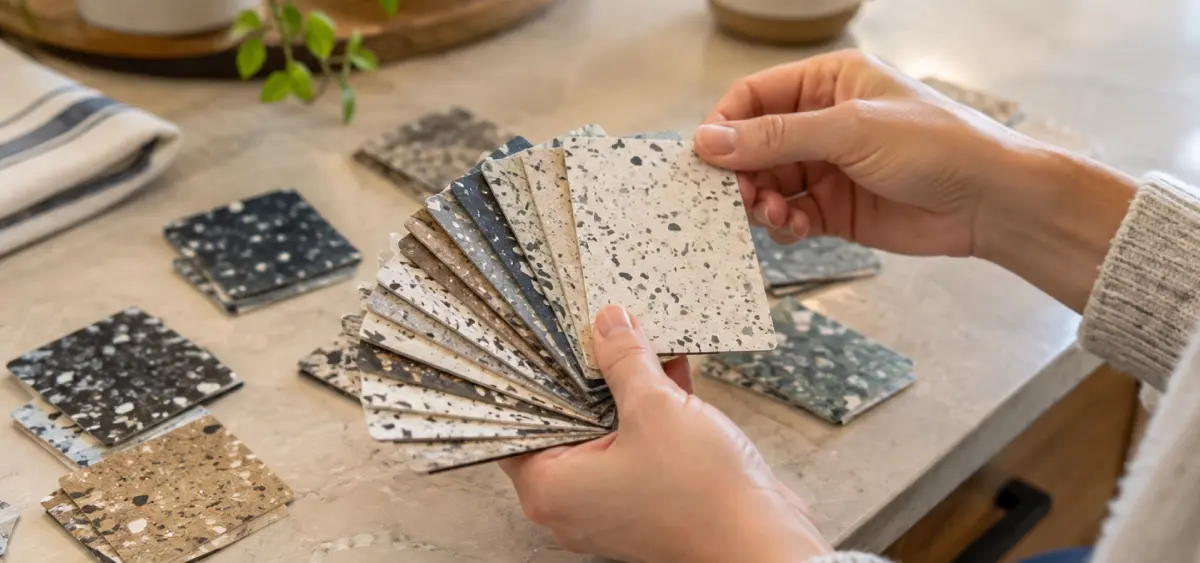
If you bought a newer-construction home in Solon, there’s a good chance your garage floor already has a coating on it — and there’s an equally good chance it’s already showing wear. Builder-grade epoxy, the thin single-coat system many developers apply as a standard finish, is a different product entirely from a professionally installed polyaspartic system, and the difference shows up fast in a climate like Northeast Ohio’s.
Why Newer Solon Homes Still Have a Garage Floor Problem
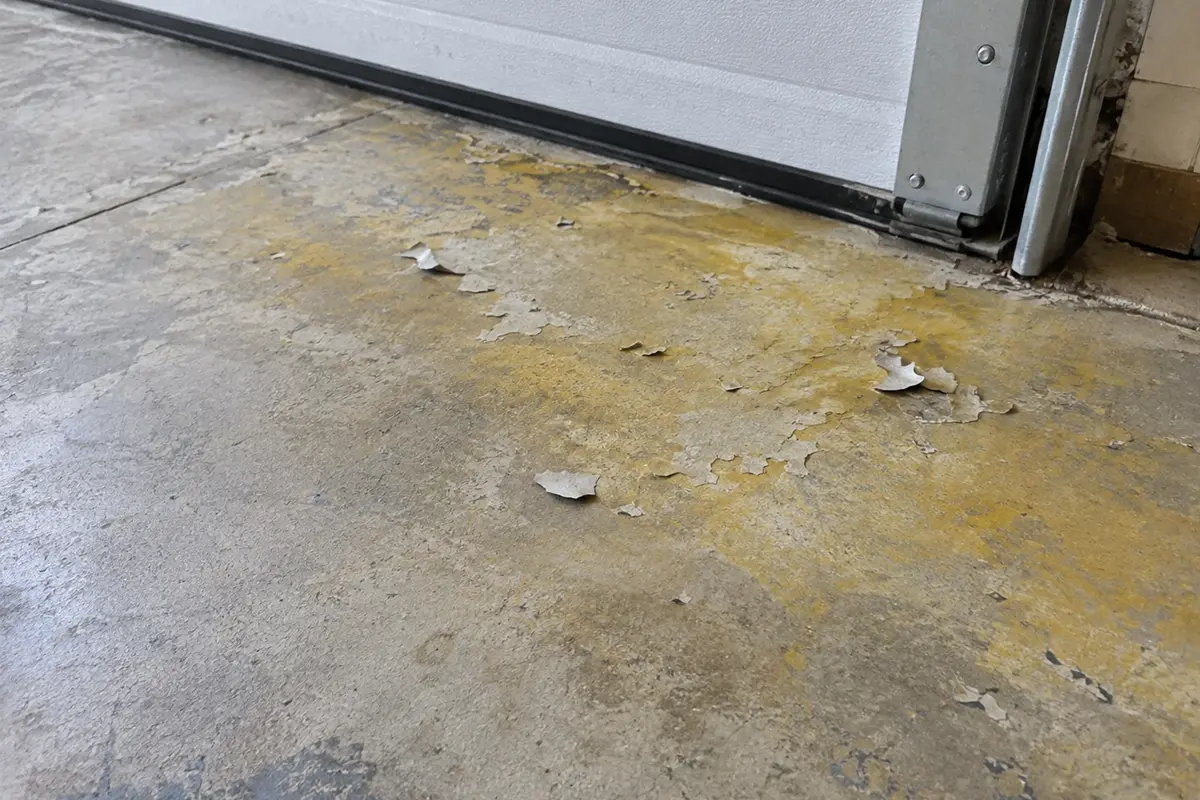
It’s a common assumption that a newer home means a newer, better-performing garage floor — but builder-grade epoxy is typically chosen for cost and speed during construction, not long-term durability. A thin, single-coat application over minimally prepped concrete looks fine at move-in, then starts showing hot-tire marks, peeling near the garage door, and yellowing within the first 1-3 years — well before the rest of a newer home shows its age.
Builder-Grade Epoxy vs. Duralast® Polyaspartic
The two systems aren’t different tiers of the same product — they’re built around different priorities entirely.
| Builder-Grade Epoxy | Duralast® Polyaspartic | |
| Cure time | 24-72 hours | 1-2 hours |
| UV stability | Ambers/yellows near garage doors and windows | UV-stable, won’t yellow |
| Hot tire resistance | Prone to lifting and hot-tire pickup | Resists hot-tire pickup |
| Relative strength | Standard | Rated roughly 5× stronger than epoxy |
| Typical builder application | Thin, single coat, minimal prep | N/A — not typically builder-installed |
Why this matters more in a newer home specifically: a newer Solon garage is often used harder — as a workshop, gym, or extra storage space — precisely because the rest of the house doesn’t need attention yet. Builder-grade epoxy wasn’t specified for that level of use, which is exactly why it tends to fail faster than homeowners expect.
What to Look For If Your Solon Garage Has Builder-Grade Epoxy
- Yellowing near the garage door or windows: a clear sign the coating lacks UV stability, common in south- or west-facing garages.
- Peeling or lifting where tires sit: hot-tire pickup is one of the most common builder-grade epoxy failures.
- Chalky or dull surface after a few winters: road salt and de-icers degrade a thin coating faster than a properly specified system.
What Upgrading Actually Involves
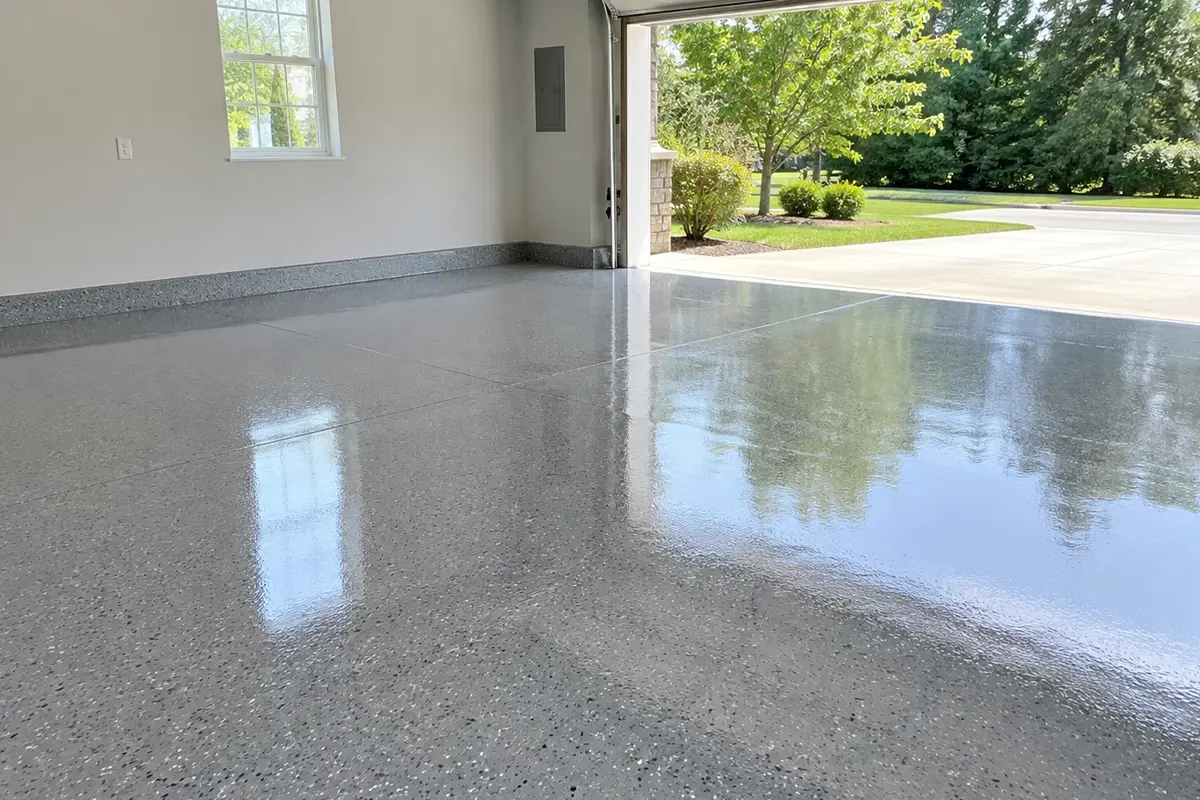
Upgrading from builder-grade epoxy isn’t simply recoating over the existing layer — a proper upgrade means diamond-grinding down to remove the failing coating and expose sound concrete, repairing any cracks or chips, then installing a Duralast® polyaspartic system that cures in about a day. Per the Association for Materials Protection and Performance (AMPP), a coating will only bond as designed when the surface underneath it has been properly prepared — which is exactly the step a thin builder-grade application typically skips. For a full comparison of coating systems, see our flooring options comparison page — and for actual Cleveland-area pricing, our garage floor coating cost guide breaks down what drives the number for a project like this.
Why This Is Worth Addressing Before It Gets Worse
A failing coating doesn’t just look worn — once it starts lifting, moisture and road salt reach the bare concrete underneath, which can lead to actual surface damage rather than just a cosmetic issue. Addressing it while the floor is only showing early wear is a smaller, more contained project than waiting until larger sections have failed and the underlying slab needs more extensive repair.
Frequently Asked Questions
Is builder-grade epoxy really that different from a professional coating?
Yes — it’s typically a thinner, single-coat application with less surface preparation, chosen by builders for cost and speed rather than long-term durability, versus a professionally diamond-ground and multi-layer system.
How soon after moving into a new Solon home should I expect the garage floor to need attention?
It varies by usage and sun exposure, but signs like yellowing, peeling, or hot-tire marks commonly appear within 1-3 years on builder-grade epoxy, well before most other parts of a new home need attention.
Can I just recoat over the existing builder-grade epoxy?
Generally not recommended. Coating over a failing surface without grinding it down first usually means the new coating fails along with the layer underneath it — proper prep means removing the old coating first.
Does Solon’s newer construction affect which coating system makes sense?
Not fundamentally — Northeast Ohio’s freeze-thaw winters and road salt affect any slab regardless of the home’s age. What differs is the starting point: a newer home typically needs the existing builder-grade coating removed first, while an older, uncoated slab goes straight to prep and installation. Either way, a free on-site assessment confirms the right approach for your specific floor.
A newer Solon home doesn’t guarantee a newer-performing garage floor — builder-grade epoxy was never built for the long haul, and recognizing the early warning signs is what keeps a straightforward upgrade from turning into a bigger repair.
J&P Coatings: Solon’s #2 National Duralast® Installer
J&P Coatings serves Solon and all of Cuyahoga County with a one-day Duralast® polyaspartic system, matched to newer-construction slabs and backed by a written warranty.
Contact us today to see what an upgrade from builder-grade epoxy actually looks like.
Not sure if your Solon garage floor needs an upgrade?
J&P Coatings gives every Solon homeowner a free, honest on-site assessment — no pressure, just a clear answer.
Get a Free Solon Estimate | (440) 557-3141