Quick Answer
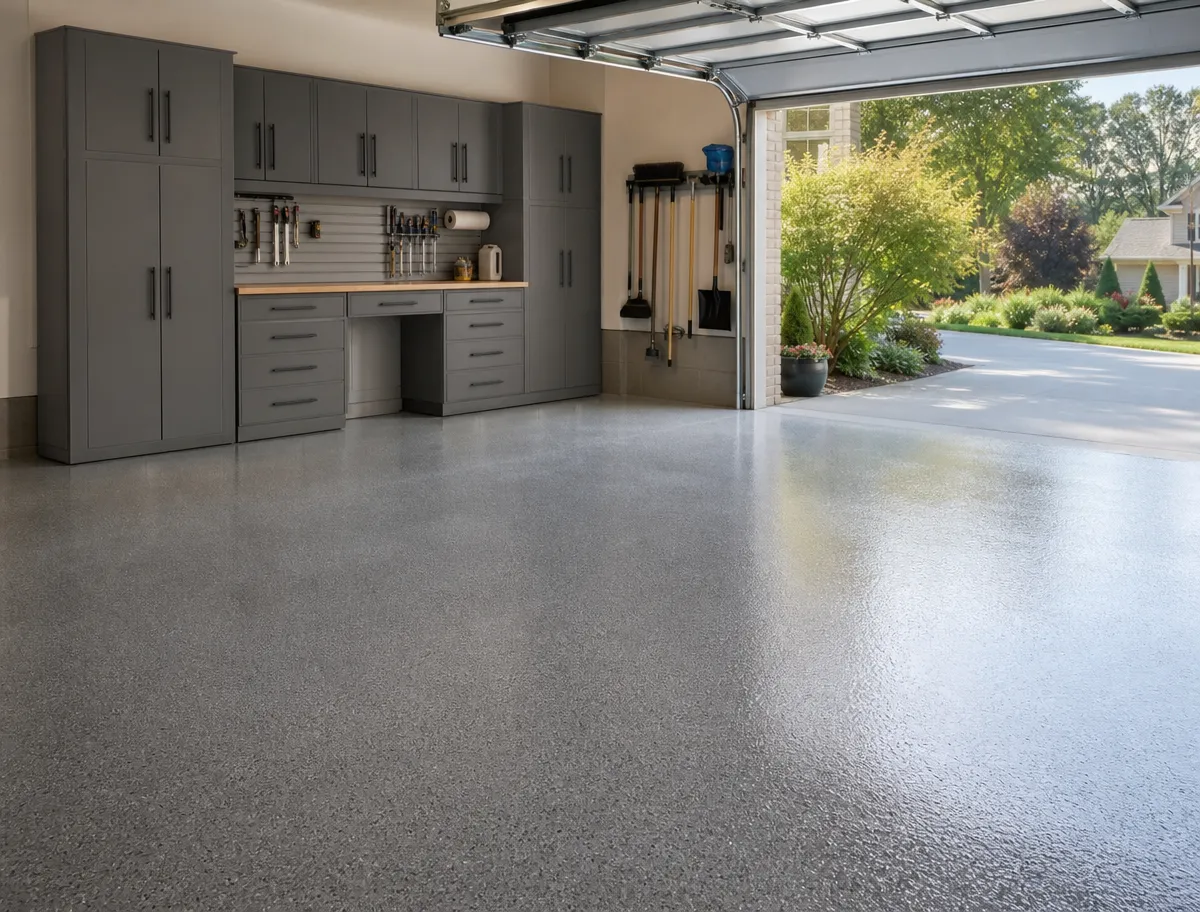
Ohio garage floors coated with J&P Coatings’ Duralast polyaspartic system require no routine resealing, unlike epoxy or DIY sealers that need reapplication every 1-5 years. Duralast delivers 20+ years of performance through high UV stability, chemical resistance, and abrasion resistance, standing up to Ohio’s road salt and freeze-thaw cycles without chalking, yellowing, or oxidizing.
What Are the Key Takeaways on Reseal Frequency for Ohio Garage Floors?
- Professional polyaspartic coatings require no routine resealing and perform consistently for 20+ years.
- J&P Coatings’ top-tier polyaspartic systems resist UV damage, chemicals, and freeze-thaw cycles without reapplication.
- Ohio garage floors with polyaspartic coatings outperform epoxy, lasting 15+ years versus epoxy’s 2-5 years.
- DIY epoxy kits need resealing every 1-5 years; professional polyaspartic eliminates this maintenance requirement entirely.
- Ohio’s DOT-certified sealer standards exist because standard sealers break down fast — see the Ohio Department of Transportation’s concrete sealer certification program for the baseline most sealers are held to.
How Often Should You Reseal Your Ohio Garage Floor?
Reseal frequency depends entirely on the coating type installed on a concrete garage floor. Traditional epoxy and standard sealer products generally need reapplication every 1 to 5 years, with the exact timeline driven by usage patterns and Ohio’s harsh environmental swings between summer heat and winter freeze. Salt brine, road grime, and repeated freeze-thaw cycling accelerate that breakdown, pushing many Ohio homeowners toward the shorter end of that range.
How often should I reseal garage floor Ohio surfaces coated with professional polyaspartic floor coatings? Far less often, if at all. Polyaspartic coatings, unlike DIY epoxy kits sold at hardware stores, do not require routine resealing and are engineered to perform for 20 years or more, though they may benefit from attention after 15-20 years of service.
Does Duralast Polyaspartic Coating Ever Need Resealing?
Under normal residential use, no. The formulation resists chipping and peeling, which eliminates the wear patterns that force epoxy owners back into a resealing cycle every few years.
What Does Installation Look Like for Ohio Homeowners?
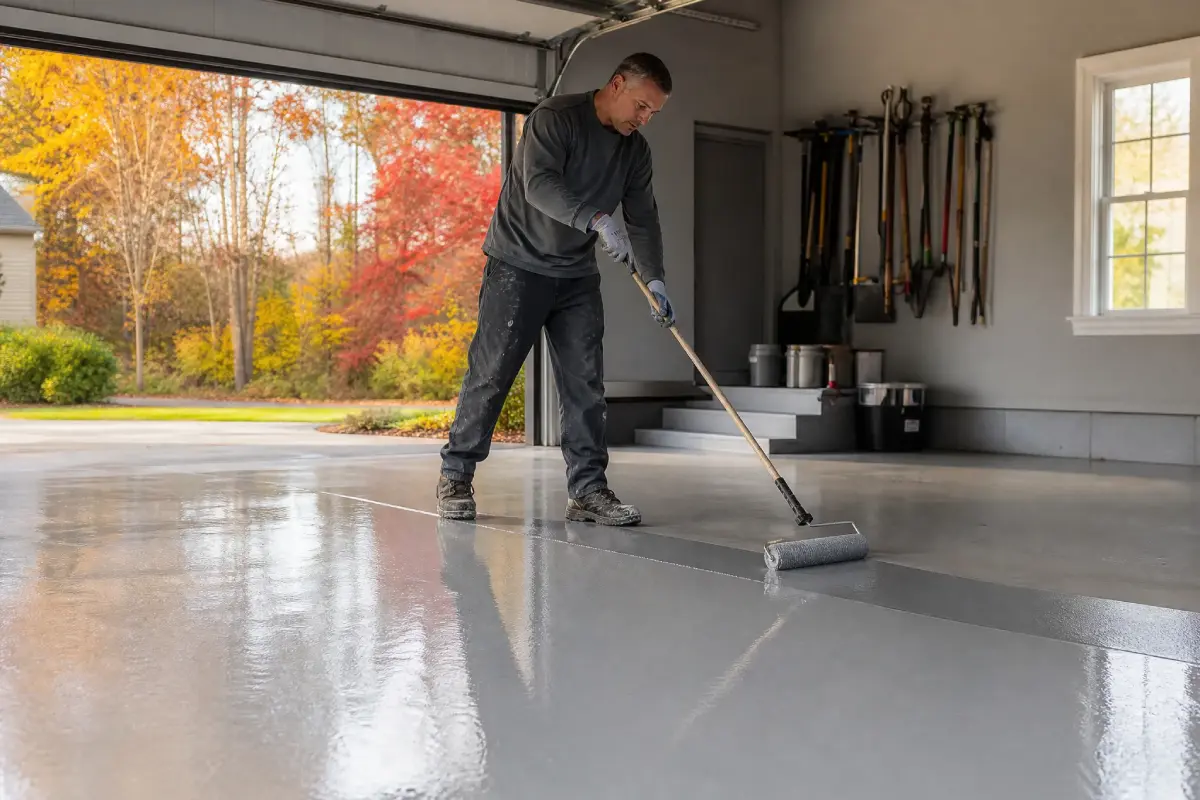
Duralast® Polyaspartic Coating installs in a single day, minimizing the time a garage sits out of commission. Property owners regain full use of the space quickly, without scheduling repeat garage floor coating cost maintenance visits down the road.
| Coating Type | Typical Reseal Interval |
| Standard epoxy/sealer | Every 1-5 years |
| Duralast Polyaspartic | Not routinely required; built for 20+ years |
For Ohio garages facing salt exposure and freeze-thaw stress, that difference translates directly into fewer maintenance calls and lower lifetime cost.
Not Sure Which Coating Is on Your Floor?
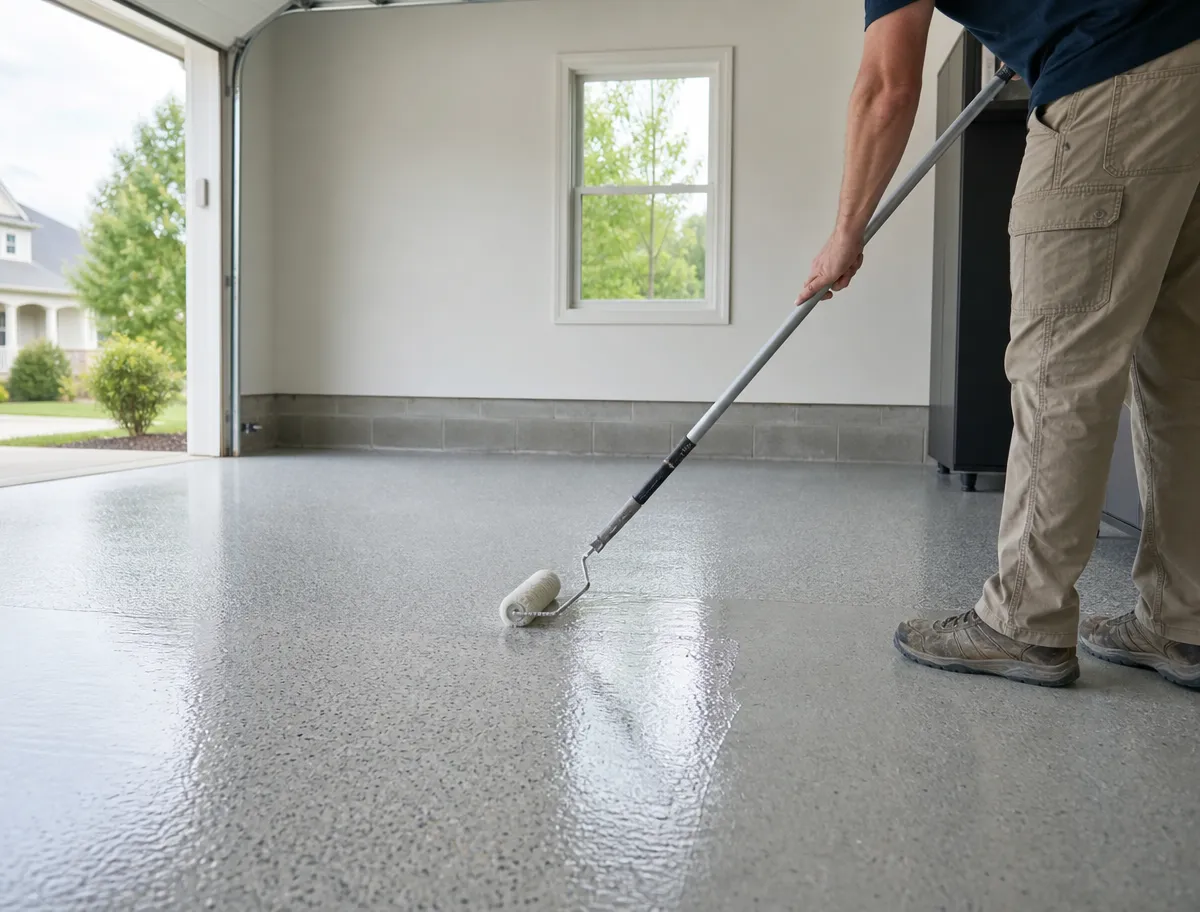
Get a free, no-obligation assessment from J&P Coatings. Schedule your free garage floor inspection and find out whether your floor needs resealing or qualifies for a Duralast upgrade.
Why Do Ohio Winters Demand Polyaspartic Durability?
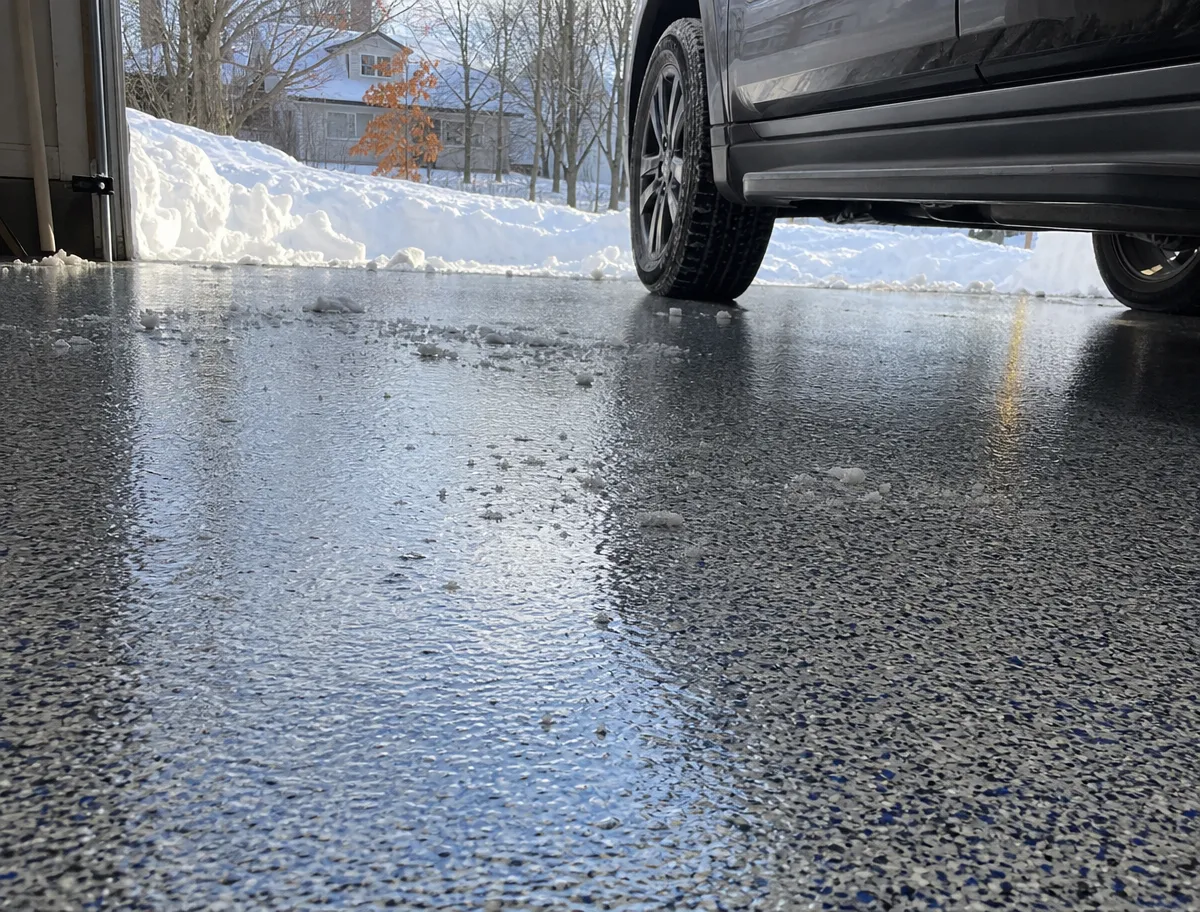
Ohio winters punish garage floors with repeated freeze-thaw cycling that ordinary sealers can’t survive. Concrete expands and contracts as temperatures swing from freezing nights to sunny afternoons. Weak coatings crack under that stress. Road salt tracked in from Ohio driveways compounds the damage, chewing through surfaces that lack chemical resistance.
Homeowners weighing how often they should reseal their garage floors in Ohio often assume all coatings age the same way. They do not. Polyaspartic chemistry cures even in below-freezing temperatures, flexes rather than cracks through freeze-thaw movement, and resists salt corrosion outright. That performance translates to a 15-plus-year lifespan, compared with epoxy’s typical 2-to-5-year run in Midwest winters.
Does Road Salt Actually Damage Garage Coatings?
Yes. Salt brine seeps into porous or compromised coatings and accelerates surface breakdown, especially near garage entry points. Duralast® Polyaspartic Coating is engineered to be salt- and oil-resistant, standing up to the de-icing chemicals Ohio vehicles carry in on tires all winter long.
Is Polyaspartic Really Stronger Than Epoxy?
Testing shows Duralast® is five times stronger than epoxy. That added strength resists abrasion from snow-plow debris, boots, and heavy winter traffic — exactly the conditions Ohio garages face for months at a time.
When Should You Consider Refreshing Your Coating?
Refreshing rarely becomes necessary for Ohio garages sealed with a genuine polyaspartic system. Ohio property owners asking how often should I reseal garage floor Ohio surfaces typically hear the same answer: not on a fixed schedule, but only when specific wear appears after fifteen to twenty years of service.
What Signs Indicate a Garage Floor Needs Attention?
Heavy micro-scratches across high-traffic zones signal one trigger point. Dulled gloss after years of tire rolling, salt exposure, and freeze-thaw cycling signals another. Neither issue demands immediate action, but homeowners who want a refreshed appearance can request one once these signs surface.
How Does Polyaspartic Compare to Epoxy for Long-Term Value?
Polyurea and polyaspartic coatings reach an expected service life of 20 to 25 years, according to concrete-coating expert Finn Kiger. That longevity also supports home resale value. Prospective buyers view a durable, salt-resistant garage floor as a genuine upgrade rather than routine maintenance.
Ohio homeowners gain further protection through structured guarantees:
- Limited transferable warranty covering every completed installation
- Referral program rewarding customers with $50 for each successful referral
These terms give property owners documented assurance long after installation crews leave the driveway.
Maintaining a polyaspartic garage floor coating in Ohio requires a commitment to proper care, periodic inspection to preserve its durability and aesthetic appeal, and attention to the wear patterns specific to Ohio’s climate conditions. By following these guidelines, you extend the lifespan of your investment significantly. J&P Coatings’ limited warranty coverage provides assurance that your floor receives professional-grade protection. Consult with our team to establish a resealing schedule tailored to your garage’s usage patterns and environmental exposure.
Frequently Asked Questions
How often does a J&P Coatings polyaspartic garage floor need resealing?
J&P Coatings’ Duralast polyaspartic system requires no routine resealing and performs consistently for 20+ years, unlike epoxy or DIY sealers that need reapplication every 1-5 years.
Why does polyaspartic outperform epoxy in Ohio garages?
Polyaspartic chemistry cures even in below-freezing temperatures, flexes rather than cracks through freeze-thaw movement, and resists salt corrosion, giving it a 15-plus-year lifespan versus epoxy’s 2-to-5-year run.
How long does J&P Coatings’ installation process take?
Duralast Polyaspartic Coating installs in a single day, letting homeowners regain full use of their garage quickly without scheduling repeat maintenance visits down the road.
Is polyaspartic coating worth it if I only plan to stay in my Ohio home a few years?
Yes. A durable, salt-resistant polyaspartic garage floor is viewed by prospective buyers as a genuine upgrade, and J&P Coatings’ limited transferable warranty carries the protection forward to the next owner.
How much does it cost to reseal a garage floor in Ohio?
Costs vary by garage size and existing coating condition; homeowners with standard epoxy typically budget for reapplication every 1 to 5 years, while J&P Coatings’ polyaspartic system eliminates that recurring cost for 20+ years.
TL;DR — Garage Floor Resealing in Ohio at a Glance
- Standard epoxy and DIY sealers need reapplication every 1-5 years in Ohio’s climate.
- Duralast polyaspartic coatings from J&P Coatings require no routine resealing for 20+ years.
- Freeze-thaw cycling and road salt are the two biggest threats to Ohio garage floor coatings.
- Polyaspartic is roughly five times stronger than epoxy and resists chipping, peeling, and salt corrosion.
- Ready to stop resealing for good? Get a free Duralast polyaspartic quote from J&P Coatings.
Related Resources
- Polyaspartic Floor Coatings
- Garage Floor Coatings in Cleveland, OH
- What Garage Floor Neglect Really Costs Ohio Homeowners
- Does a Polyaspartic Floor Yellow in Sunlight?
- Polyaspartic vs. Epoxy Durability Compared
- Polyurea vs. Epoxy Garage Floors in Ohio
- Why Is My Garage Floor Coating Peeling?
Get a Free Garage Floor Resealing Quote in Ohio
Whether your existing coating is due for resealing or you’re ready to eliminate that maintenance cycle for good, J&P Coatings can help. Request your free Duralast polyaspartic quote today and get a durable, salt-resistant garage floor built for Ohio winters.
About J&P Coatings
J&P Coatings installs Duralast polyaspartic garage floor coatings for homeowners across Northeast Ohio, including Cuyahoga, Geauga, and Lake counties. The team specializes in single-day installations engineered to withstand Ohio’s freeze-thaw cycles, road salt, and heavy winter traffic without routine resealing.