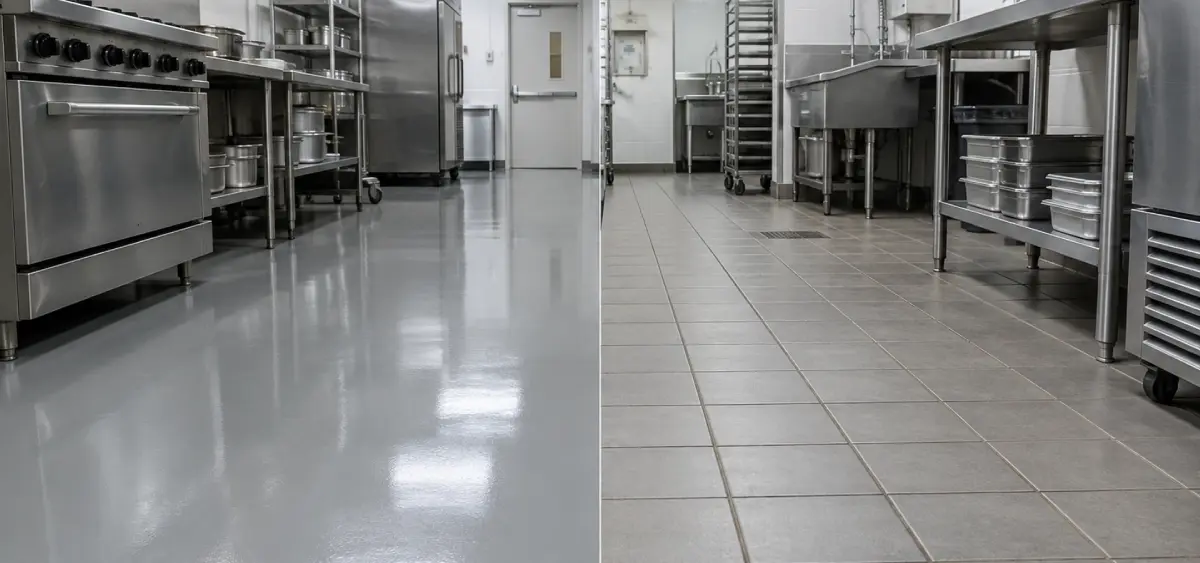
Choosing between epoxy and polyaspartic floor coatings is the most common question homeowners in Greater Cleveland ask J&P Coatings. Both systems protect concrete floors from vehicle traffic, oil, chemicals, and Northeast Ohio’s freeze-thaw cycles — but they differ significantly in cure time, UV resistance, temperature tolerance, lifespan, and cost. This guide compares both systems based on J&P Coatings’ 8+ years of installation experience across Cuyahoga, Lake, Geauga, and Erie (PA) counties, so you can decide which is right for your garage floor coating project.
Epoxy vs. Polyaspartic: Head-to-Head Comparison
Here is how J&P Coatings’ Duralast® polyaspartic floor coatings compare against standard epoxy floor coatings on the specifications that matter most:
| Feature | Duralast® Polyaspartic | Standard Epoxy |
|---|---|---|
| Curing Time | 1–2 hours | 24–72 hours |
| UV Resistance | Excellent — no yellowing | Poor — yellows over time |
| Temperature Range | 20°F – 120°F | 50°F – 90°F |
| Strength | 5× stronger than epoxy | Baseline |
| Hot Tire Resistance | Zero hot tire pickup | Can peel under heat |
| Installation Time | 1 day (same-day) | 3–5 days |
| Lifespan | 15+ years (residential) | 5–10 years |
| Cost (per sq ft) | $6–12 | $3–7 |
| 2-Car Garage Cost | ~$1,800–$3,000 | ~$900–$1,800 |
| Warranty | Transferable limited warranty | Varies by installer |
| VOC Emissions | Low/zero VOC | Higher VOC |
What Are the Key Differences Between Polyaspartic and Epoxy Floor Coatings?
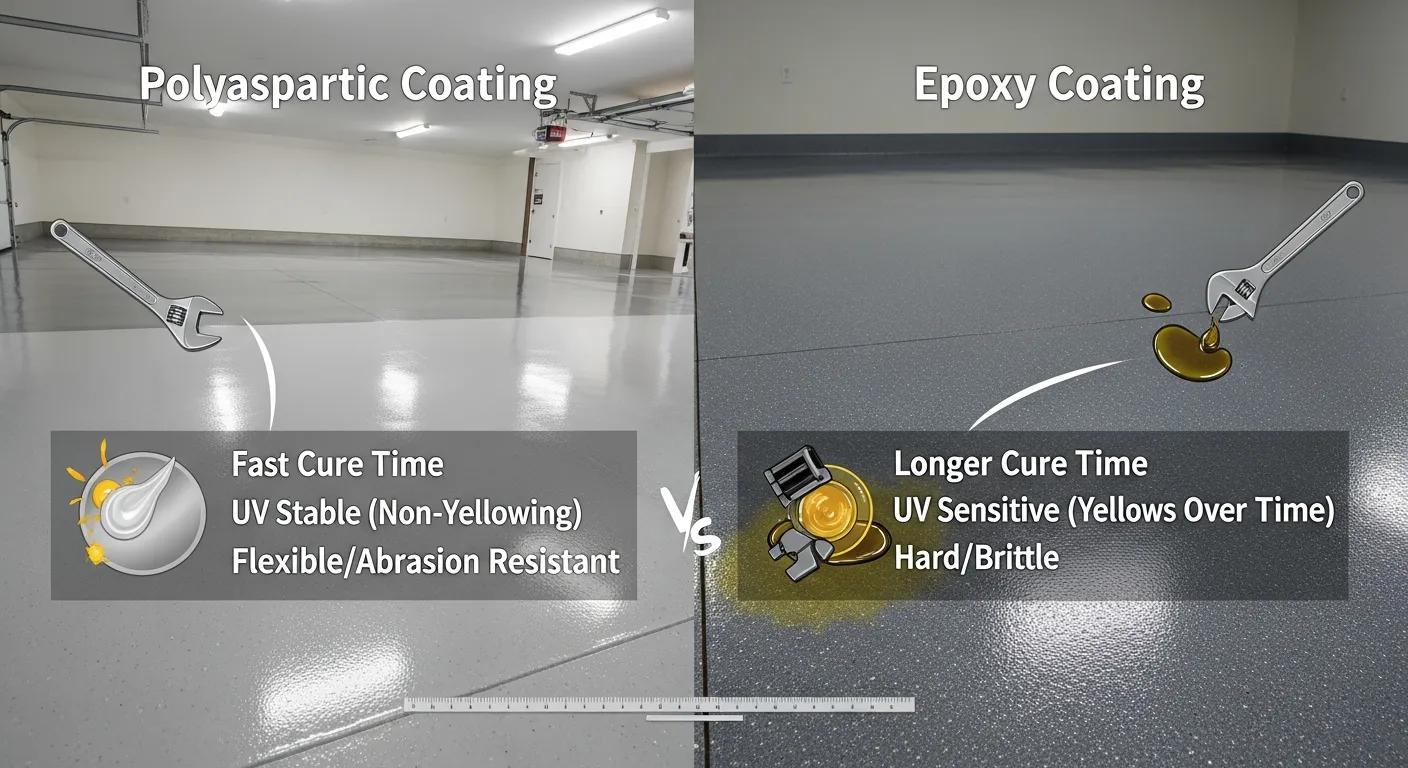
Polyaspartic and epoxy coatings differ significantly in chemical composition, curing time, and overall performance. Polyaspartic cures in as little as 1–2 hours, allowing same-day project completion, while epoxy typically needs 24–72 hours to cure, extending the installation timeline. Polyaspartic also offers superior UV stability and resists yellowing, making it ideal for garages and patios that see sunlight — whereas epoxy tends to yellow over time when exposed to UV.
Cost is the other major difference: polyaspartic generally carries a higher price than epoxy because of its advanced formulation and faster, year-round installation. For many homeowners, the longer lifespan and lower maintenance of polyaspartic justify that higher upfront investment.
How Do Chemical Compositions Affect Coating Performance?
The chemistry behind each coating drives its performance. Polyaspartic is an aliphatic polyurea, which gives it excellent flexibility and resistance to cracking, even as temperatures swing. Epoxy is a resin-and-hardener system that cures into a harder but more rigid surface, making it more prone to cracking under extreme conditions. Peer-reviewed work on polyaspartic coating formulation has shown that blending in acrylic copolymers can extend pot life and reduce brittleness without sacrificing the resin’s core strengths — one reason modern polyaspartic systems perform so well on concrete.
Many epoxy systems are also solvent-based, which can mean longer drying times and stronger odor during application. Polyaspartic coatings are typically lower in VOCs, producing fewer emissions and a more pleasant installation experience.
What Are the Typical Durability and Lifespan Metrics?
On durability, polyaspartic generally outperforms epoxy. A polyaspartic floor coating commonly lasts 15 or more years — often up to 20 with proper maintenance — while standard epoxy typically lasts 5 to 10 years. The difference comes down to polyaspartic’s superior chemical resistance and flexibility, which let it handle heavy traffic and harsh conditions. Independent research on the longevity of polyaspartic systems has likewise found they outlast traditional coatings in residential floor applications.
Polyaspartic also needs less frequent recoating, which makes it more cost-effective over the life of the floor — less time and money spent on upkeep compared with epoxy.
How Do Installation Time and Costs Compare Locally?
Installation speed and cost are decisive factors for most homeowners. Polyaspartic is typically installed in a single day; because it cures in 1–2 hours, the floor is usually ready for foot traffic the same evening and vehicle traffic within about 24 hours. Standard epoxy often requires 3–5 days start to finish, with 24–72 hours of cure time — an inconvenience for families who rely on their garage. If a garage is your project, compare finishes on our garage floor coating in Cleveland page.
On price, polyaspartic runs roughly $6–12 per square foot installed, versus $3–7 per square foot for standard epoxy. On a typical two-car garage (about 400 sq ft), that works out to approximately $1,800–$3,000 for polyaspartic and $900–$1,800 for epoxy. J&P Coatings currently offers $200 off two-car garage projects. For a full local breakdown, see our Cleveland garage floor coating cost guide.
What Are the Maintenance Requirements and Long-Term Cost Implications?
Polyaspartic is low-maintenance — usually just occasional cleaning with mild soap and water, with no frequent recoating required. Epoxy tends to need more attention over time, particularly in high-traffic areas where chips and wear show up sooner. When you factor maintenance and recoating into the total cost of ownership, polyaspartic’s higher upfront price often evens out or comes out ahead over 15–20 years.
How Does the Northeast Ohio Climate Influence Coating Selection?
Northeast Ohio’s cold winters, humid summers, and frequent freeze-thaw cycles put real stress on floor coatings. Polyaspartic is particularly well suited to this climate: it resists moisture and temperature swings and can flex through freeze-thaw cycles without cracking. Epoxy, while durable indoors, is more likely to crack or peel under extreme temperature changes, which makes polyaspartic the safer bet for Cleveland-area garages and exterior applications.
Which Coating Provides Superior Environmental Resistance?
Environmental resistance matters in a region where road salt and chemicals are part of daily life. Polyaspartic excels here, resisting chemicals, UV, and moisture better than epoxy. Epoxy still offers solid chemical resistance — research on waterborne epoxy for garage floors highlights resistance to chemicals and solvents as a key property — but it generally degrades faster than polyaspartic under sustained UV and harsh outdoor exposure.
How Do the Coatings Perform Under Seasonal Temperature Variations?
Polyaspartic keeps its flexibility and adhesion across a wide temperature range — roughly 20°F to 120°F — which is exactly why J&P Coatings can install it year-round, even in an Ohio winter. Epoxy needs application temperatures closer to 50°F–90°F and can become brittle in the cold, raising the risk of cracking. For off-season projects, polyaspartic is usually the only practical choice.
What Are the Steps for Proper Concrete Surface Preparation?
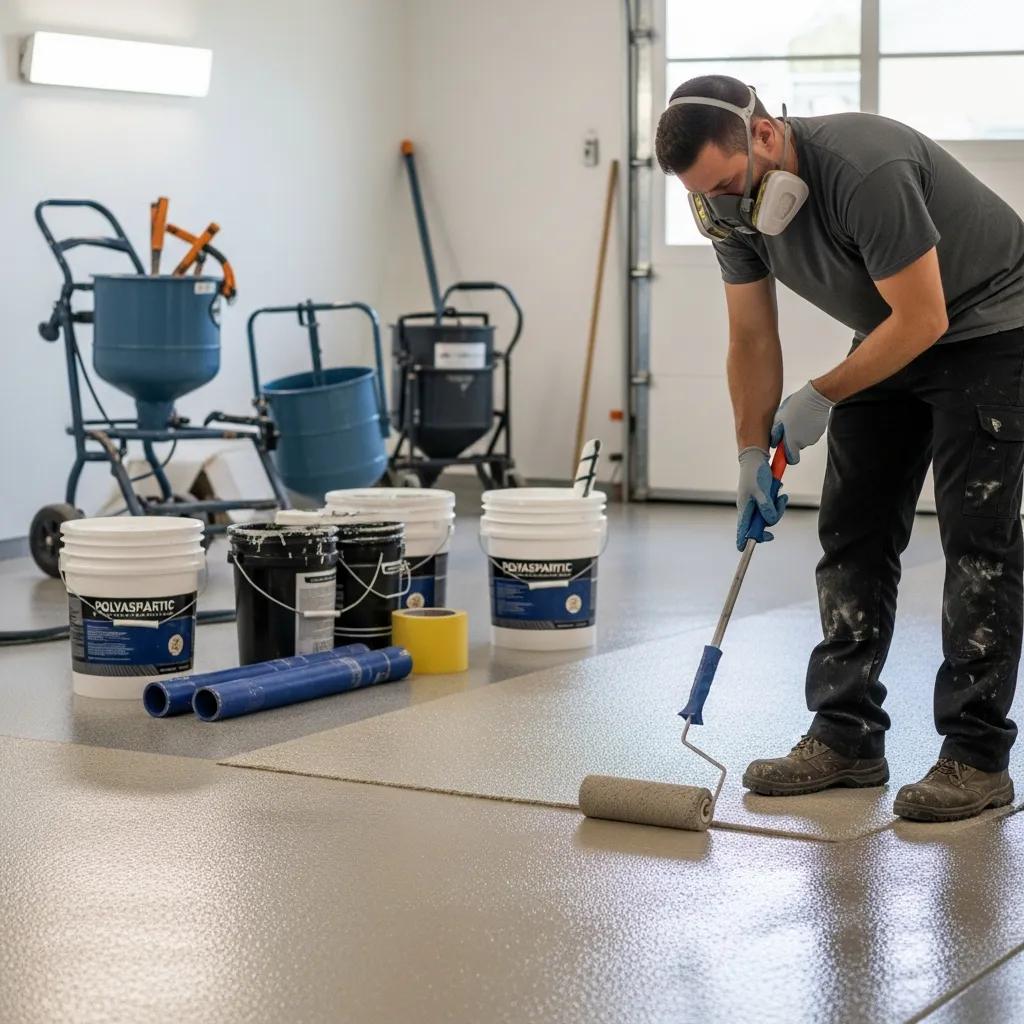
Whichever system you choose, surface preparation determines how well the coating bonds and how long it lasts:
- Cleaning: Remove all dirt, grease, and debris from the concrete surface.
- Degreasing: Use a degreaser to eliminate oil stains that could affect adhesion.
- Profiling: Mechanically grind or profile the surface to create texture that promotes bonding.
- Moisture Testing: Confirm the slab is dry enough for coating before application.
When to Choose Polyaspartic
Polyaspartic is the right choice for homeowners and businesses who need same-day completion (park in the garage tonight), year-round installation (Ohio winters included), maximum long-term durability (no recoating for 15+ years), UV stability for patios or sun-exposed areas, or the peace of mind of a transferable warranty. J&P Coatings recommends polyaspartic for the majority of Cleveland-area residential and commercial projects.
- Same-day installation required
- Garage, patio, or areas with sun exposure
- Long-term investment with warranty coverage
- Automotive shops or heavy commercial use
- Installation during fall or winter months
When to Choose Epoxy
Epoxy is a strong choice when budget is the primary concern and the project is an interior space without UV exposure, such as a basement or interior commercial area. Standard two-part epoxy from J&P Coatings costs $3–7 per square foot and lasts 5–10 years with proper prep. Avoid epoxy for garage floors that receive direct sunlight or for patios — UV exposure causes yellowing within 1–2 years.
- Budget-sensitive projects
- Interior-only applications (no UV exposure)
- Basement floors with no windows
- Areas with lower traffic volumes
What J&P Coatings Recommends for Cleveland Homeowners
Northeast Ohio’s climate — freeze-thaw cycles from October through April, road salt tracked in from driveways, and wide seasonal temperature swings — makes polyaspartic the more practical choice for most Cleveland-area garage floors. The ability to install in temperatures as low as 20°F means J&P Coatings can complete your project in any season, the 1–2 hour cure time means minimal disruption, and the 15+ year lifespan means you won’t be recoating in five years.
That said, epoxy remains an excellent value for indoor-only applications where UV is not a concern. J&P Coatings installs both systems — the right choice depends on your specific space, timeline, and budget.
Frequently Asked Questions
Is polyaspartic better than epoxy?
For most residential and commercial applications in Northeast Ohio, yes. Polyaspartic cures faster, lasts longer, resists UV without yellowing, and can be installed year-round. The higher upfront cost is offset by the longer lifespan and lower maintenance. J&P Coatings’ Duralast® Polyaspartic system is 5× stronger than standard epoxy per manufacturer specifications.
How much more does polyaspartic cost than epoxy?
Polyaspartic floor coatings from J&P Coatings cost approximately $6–12 per square foot, compared to $3–7 per square foot for epoxy. On a standard 2-car garage (about 400 sq ft), polyaspartic runs $1,800–$3,000 installed versus $900–$1,800 for epoxy. J&P Coatings currently offers $200 off 2-car garage projects.
Can I get polyaspartic in the same colors as epoxy?
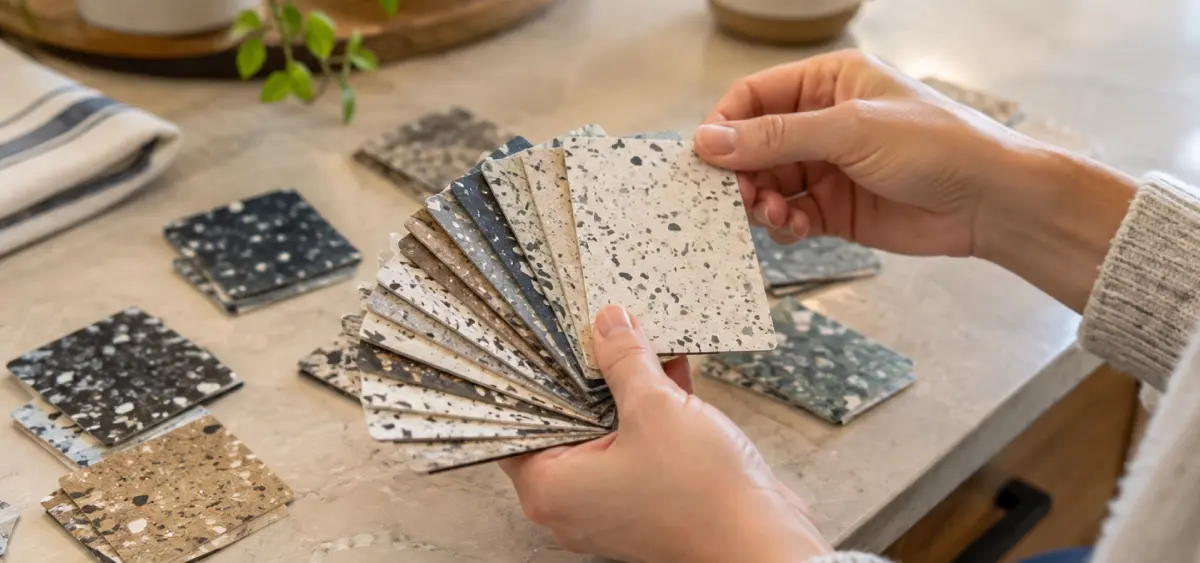
Yes. J&P Coatings’ Duralast® Polyaspartic system is available in the same full range of decorative color chip options as epoxy — solid colors, flake/chip finishes, and metallic effects. See our color chip gallery for available options.
What factors should I consider when choosing between the two?
Weigh your budget, the durability you need, installation timeline, UV exposure, and maintenance tolerance. Polyaspartic costs more upfront but lasts longer with less upkeep; epoxy is more affordable but needs more maintenance and isn’t suited to sunlight. Your garage’s usage and the local climate should drive the decision.
Are there any health concerns with epoxy coatings?
Epoxy can emit volatile organic compounds (VOCs) during application, which is why proper ventilation and protective gear matter while it cures. Many polyaspartic systems are lower-VOC, making them a cleaner option for enclosed spaces.
How do I maintain my floor coating over time?
Polyaspartic usually needs only a wash with mild soap and water and very occasional resealing. Epoxy benefits from more frequent inspection for chips or wear, especially in high-traffic areas; addressing damage promptly extends its life.
Can I apply these coatings myself, or should I hire a professional?
Professional installation is strongly recommended. The results depend heavily on surface preparation, application technique, and cure conditions — areas where pros avoid the adhesion failures and uneven finishes common in DIY jobs. Polyaspartic in particular has a short working window that is difficult to manage without experience.
How do I know if my garage floor is suitable for coating?
Check for cracks, moisture issues, and surface damage. The concrete should be clean, dry, and free of oil or grease. A simple moisture test — taping a plastic sheet to the floor and checking for condensation after 24 hours — tells you whether moisture needs to be addressed before coating.
Conclusion
Choosing between epoxy and polyaspartic comes down to your space, timeline, and budget. For most Cleveland-area garages, polyaspartic’s faster cure, year-round installation, UV stability, and 15+ year lifespan make it the stronger long-term investment — while epoxy remains a smart value for interior, low-UV spaces on a tighter budget. J&P Coatings installs both and can recommend the right system for your floor. Contact us for a free estimate to get started.